


Why Synthetic Oil Matters for Your Car’s Health and Resale Value
Why Choosing the Right Engine Oil Matters for Your Ford
I have spent over a decade in the service department helping drivers keep their vehicles running smoothly. One of the most common decisions our guests face during a routine maintenance visit is choosing between conventional and synthetic motor oil. The fluid running through your engine does more than just lubricate moving parts; it acts as a primary defense against heat, friction, and premature wear. Selecting the correct specification is crucial for keeping your vehicle in peak condition.
If you want to dive deeper into our maintenance tips, you can read through the Newton Ford South blog for expert advice. Our team is always ready to assist, and you can easily schedule a convenient service appointment online to have your oil checked. Using the right oil ensures that your engine components remain protected, which directly impacts how long your vehicle stays on the road and how well it performs over time.
For drivers commuting daily from Tullahoma, where the elevated terrain and rolling hills of Middle Tennessee place extra load on the powertrain, utilizing the correct engine lubricant is especially important. Certified technicians at our dealership understand exactly what your vehicle needs to handle these demands. Reading about why choose Newton Ford South shows how our team supports local owners. For questions about your specific maintenance schedule, feel free to give us a quick call or stop by our Shelbyville dealership location for personal assistance.
Table of Contents
- The Molecular Difference Between Synthetic and Regular Motor Oil
- How Viscosity Stability Protects Your Engine Under Heavy Loads
- How Documented Synthetic Oil Care Positively Impacts Resale Value
- Debunking the Myths of Switching Between Synthetic and Conventional Fluids
- Protecting Your Investment with Expert Service
The Molecular Difference Between Synthetic and Regular Motor Oil
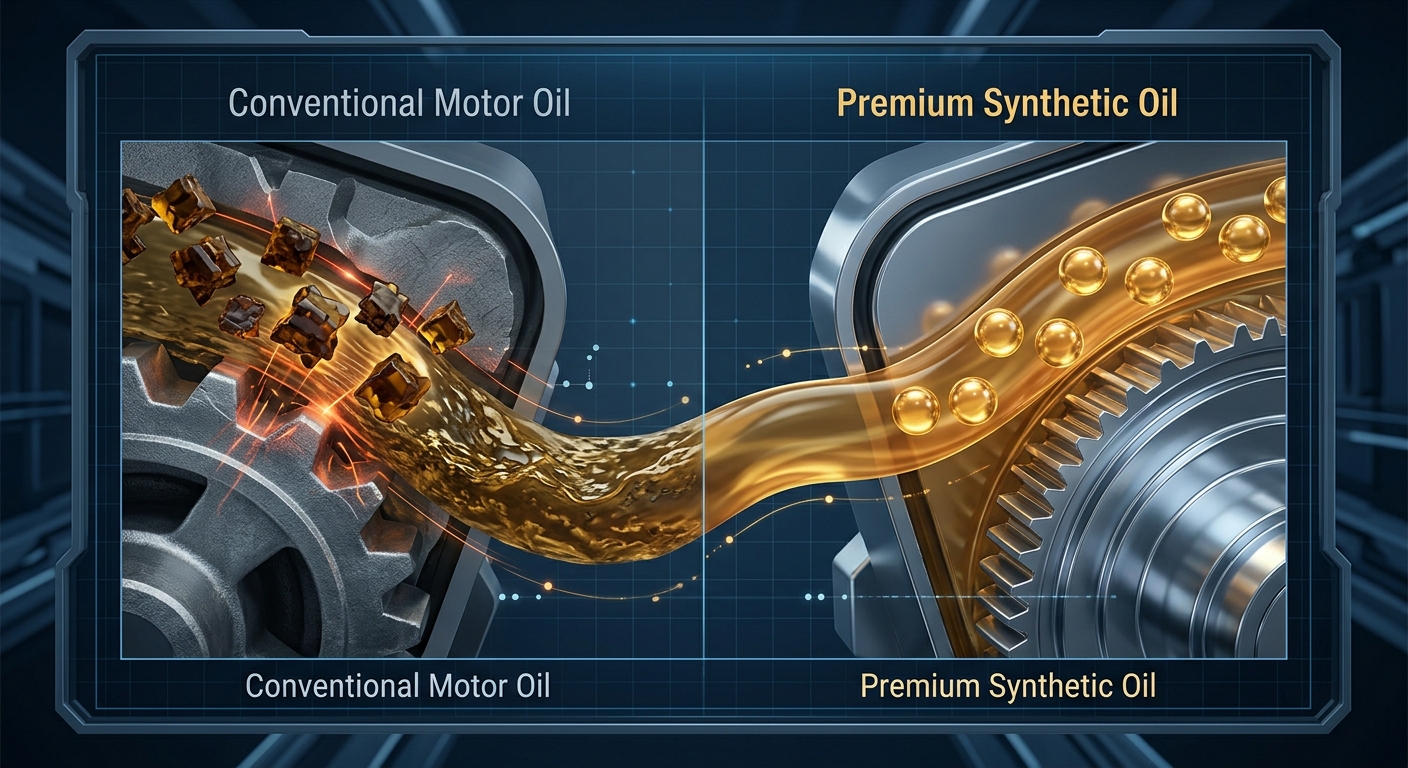
Let’s talk about the chemical structures that define different motor oils. Conventional motor oil is refined directly from crude oil, which leaves behind trace impurities and highly irregular molecular structures of varying sizes. Synthetic oil, on the other hand, is engineered in a laboratory setting to create uniform, highly consistent molecules that glide over metal surfaces with minimal resistance. This molecular uniformity is the foundation of synthetic oil’s superior performance.
This structural consistency allows synthetic fluid to resist oxidation and thermal breakdown far better than its conventional counterpart. It also contains advanced additive packages, including high-performance detergents and anti-wear agents, that actively prevent the formation of engine sludge. These detergents keep internal components clean, ensuring that older vehicles, like many options in our pre-owned inventory, continue to operate efficiently. Modern gasoline engines often require advanced standards like API SP and ILSAC GF-6A, which are specifically formulated to prevent low-speed pre-ignition and wear.
While heavy-duty trucks like those in our heavy-duty truck inventory rely on robust lubrication to protect their hard-working engines, all-electric vehicles like those in our electric truck lineup bypass engine oil completely. For internal combustion engines, however, the purity of synthetic oil translates directly to less internal friction and a cleaner, longer-lasting powertrain. Some low-viscosity applications even utilize the specialized GF-6B standard to maximize efficiency without compromising on protection.
How Viscosity Stability Protects Your Engine Under Heavy Loads
Another important thing to know about engine protection is how viscosity stability behaves under heavy loads. Viscosity refers to how easily a fluid flows at a given temperature, and maintaining this stability is where synthetic lubricants truly shine. Conventional oil tends to thin out rapidly when exposed to extreme engine heat and thicken into a sluggish gel during cold winter mornings. Synthetic oil is formulated to maintain a stable viscosity grade across a massive temperature range, providing immediate lubrication at startup and robust protection under high-stress conditions.
This stability is particularly vital for vehicles designed to tow or haul heavy payloads. For instance, drivers navigating the daily commute from Spring Hill to Nashville need consistent engine protection during stop-and-go highway traffic. If you are driving a versatile pickup from our compact truck inventory, synthetic oil ensures that the turbocharged engine remains protected even when hauling a full bed of weekend gear. Turbochargers run extremely hot, and conventional oil can quickly cook and form damaging deposits inside the turbo bearings.
While drivers of our fully electric models, such as those browsing our all-electric SUV inventory, do not have to worry about engine viscosity, owners of gas-powered models rely on this protection daily. You can explore our entire selection of vehicles by browsing our new vehicle inventory to find the right powertrain for your lifestyle. Keeping that powertrain properly lubricated is the single best way to protect your automotive investment over the long haul.
How Documented Synthetic Oil Care Positively Impacts Resale Value
The connection between documented maintenance and a vehicle’s long-term resale value is a critical factor for any owner. While a vehicle valuation guide will not have a specific checkbox that instantly adds a fixed dollar amount for using synthetic oil, a documented history of synthetic oil changes has a massive indirect impact on what your car is worth. When it comes time to value your trade-in, a complete folder of service receipts proving you used high-quality synthetic oil shows appraisers and future buyers that the vehicle received top-tier care.
This meticulous maintenance history provides strong peace of mind because synthetic oil prevents the internal wear and sludge buildup that can degrade engine performance over time. A clean engine runs more efficiently, maintains its original horsepower, and is far less likely to suffer from costly mechanical failures. For highly sought-after vehicles like those in our light-duty truck inventory, a spotless maintenance record can make your vehicle stand out to buyers who are willing to pay a premium for a well-maintained truck.
Using premium fluids also protects sensitive engine components, such as turbochargers and variable valve timing systems, from premature wear. If you prefer to handle minor maintenance tasks yourself, you can easily order the correct OEM-specified fluids and filters directly from our parts department. Ultimately, investing in synthetic oil changes preserves the mechanical integrity of your engine, which directly translates to a higher trade-in value when you decide to upgrade.
Debunking the Myths of Switching Between Synthetic and Conventional Fluids
Many drivers wonder about the potential risks of switching between synthetic and conventional fluids. One of the most common misconceptions is that once you make the switch to synthetic oil, you can never go back to conventional fluid without damaging your engine seals. Modern engine lubricants are fully compatible, meaning you can safely switch between synthetic and conventional oils, or even use a synthetic-blend oil, without causing any harm to your vehicle’s internal components.
Another common myth is that synthetic oil is too thin for older engines and will cause them to leak. While synthetic oil flows more easily at low temperatures, it conforms strictly to the same viscosity parameters as conventional oil when the engine reaches operating temperature. If you are driving a capable midsize truck like those in our midsize truck inventory, or a spacious family vehicle from our full-size SUV inventory, following the manufacturer’s oil specification is always the safest path to ensure longevity.
Understanding these maintenance facts helps you make informed decisions that protect your vehicle’s long-term value. When you are ready to transition into a new vehicle, our team can help you get pre-approved by submitting an online financing application. Keeping your current vehicle properly maintained with the right oil ensures you get the maximum trade-in value toward your next purchase.
Protecting Your Investment with Expert Service
Protecting a vehicle investment requires a combination of high-quality fluids and regular professional maintenance. Whether you are driving an iconic sports car from our sports car inventory or a dependable family SUV, our factory-trained technicians are here to provide expert care. We use high-quality fluids that meet strict manufacturer specifications to keep your engine running at its absolute best.
For added peace of mind on the road, every new Ford vehicle comes backed by comprehensive roadside support. If you ever experience an unexpected issue, you can quickly contact Ford Roadside Assistance: 800-241-3673 for immediate help with towing, flat tires, or emergency services. This manufacturer-backed protection ensures that you are never left stranded, maintaining the same high standard of care that we provide in our service bays.
We invite all local drivers to visit our service center to keep their vehicles performing at their peak. Finding our facility is simple by getting directions to our Shelbyville dealership, or you can give our service advisors a quick call to discuss your vehicle’s lubrication needs. Our experienced team is ready to help maximize any vehicle’s life and long-term resale value today.
0 comment(s) so far on Why Synthetic Oil Matters for Your Car’s Health and Resale Value