


What I’ve Learned About Keeping Heavy-Duty Diesels on the Road
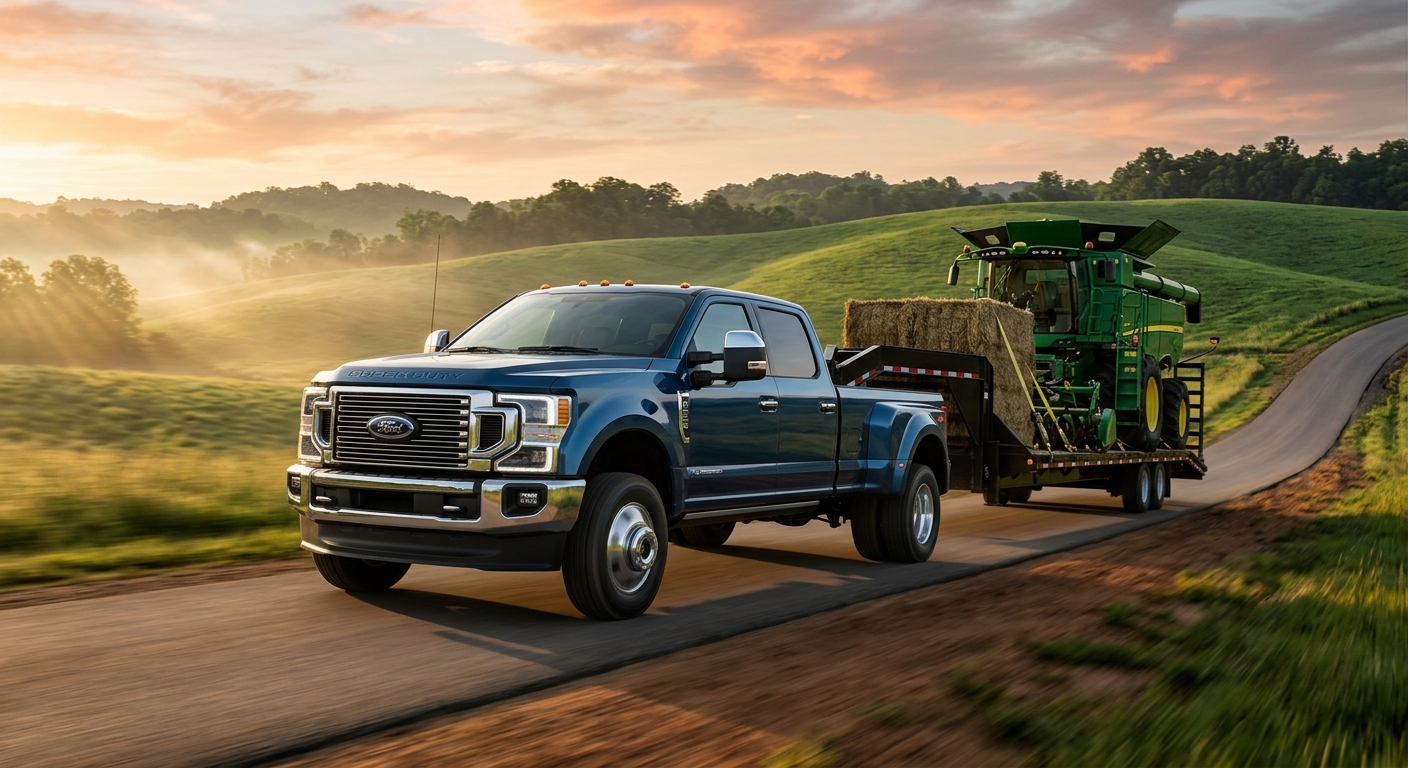
Why Tullahoma Heavy Haulers Depend on Diesel Power
If you are navigating the steep grades around Tullahoma, you need an engine that does not have to scream at high revolutions just to maintain highway speeds. That is where a powerhouse like the 6.7L Power Stroke V8 Turbo Diesel shines, delivering up to 1,200 lb-ft of torque to handle the toughest climbs. This massive low-end power is why so many commercial fleet operators and local farm owners refuse to pull with anything else.
At Newton Ford South, we understand that your truck is not just a daily commuter; it is a vital tool for your livelihood. We invite you to learn more about why choose Newton Ford South for your commercial and personal truck needs. If you want to discuss your fleet requirements or speak with one of our diesel advisors, you can give our team a quick call to get started. For those ready to bring their vehicle in for an inspection, dropping by our service center on US Highway 231 is the easiest way to get face-to-face expert advice.
Table of Contents
- Which Engine Type Has a Longer Lifespan Under Heavy Towing Conditions
- Strict Maintenance Standards for the 6.7L Power Stroke
- Key Differences in Servicing Light-Duty and Commercial Diesel Trucks
- Navigating Modern Diesel Diagnostics and Emissions Systems
- Partnering with Newton Ford for Professional Diesel Service
Which Engine Type Has a Longer Lifespan Under Heavy Towing Conditions
When local diesel owners visit our service bays, the question I hear most often is whether a heavy-duty diesel really outlasts a large gas engine when pulling maximum loads day in and day out. Under continuous, heavy towing conditions, a diesel engine typically achieves a much longer lifespan than a gasoline engine. While a hard-working gasoline engine might begin showing significant wear after 150,000 miles of heavy hauling, a properly maintained diesel engine frequently surpasses 300,000 miles and can sometimes reach 500,000 miles before requiring a major overhaul.
This longevity comes down to fundamental differences in engine design and physics. Diesel engines are constructed with much thicker cylinder walls, heavier engine blocks, and stronger forged steel internal components to withstand the incredibly high compression ratios required to ignite diesel fuel. Furthermore, a diesel engine operates at much lower rotational speeds than a gas engine. When pulling a heavy trailer up a steep grade, a gas engine like the 7.3L Godzilla V8 might need to rev at 4,000 rpm to find its peak power, whereas a diesel can easily handle the same climb at a relaxed 2,000 rpm. Fewer engine revolutions over time translate directly to less friction, less heat, and significantly reduced wear on internal moving parts.
In places like Shelbyville, where the deep-rooted equestrian culture means owners are constantly pulling heavy multi-horse trailers to regional pastures and competitive events, this durability is a major financial consideration. Towing several tons of livestock puts continuous, high-thermal stress on a powertrain. Diesel fuel itself acts as a light lubricant, which helps protect fuel system components, whereas gasoline acts as a solvent. For drivers looking to purchase a pre-owned truck for heavy hauling, our team can guide you through our pre-owned truck inventory to find a durable option. If you want to meet the professionals who inspect and certify these hardworking vehicles, you can read more about our team on our expert staff page.
Strict Maintenance Standards for the 6.7L Power Stroke
Operating a high-performance diesel engine under heavy towing conditions requires strict adherence to a professional maintenance schedule. For a modern 6.7L Power Stroke, Ford specifies engine oil and filter changes at approximately every 7,500 miles or once per year under normal driving conditions. However, when you are frequently towing heavy loads, idling for long periods, or operating in dusty environments, our service team recommends shortening that interval. Heavy towing increases engine temperatures and soot loading, which breaks down engine oil much faster.
The oil capacity for the 6.7L Power Stroke is a robust 13 quarts, which helps dissipate heat and suspend combustion byproducts. While a standard 10W-30 weight oil is recommended for normal operating temperatures, we strongly advise switching to a full synthetic 5W-40 oil for severe-duty use and extreme temperature ranges. This heavier synthetic oil provides superior film strength under extreme heat, protecting vital engine bearings from wear during heavy hauls.
Another critical aspect of diesel health is the fuel system. Unlike gasoline engines, diesel trucks utilize high-pressure fuel injectors that operate under extreme pressures and tight tolerances. Ford recommends replacing both the primary frame-mounted fuel conditioning module filter and the secondary engine-mounted fuel filter simultaneously at approximately every 15,000 miles. Failing to change these filters on time, or neglecting to drain the water-separator module when indicated on your dashboard, can allow water and contaminants to reach the high-pressure fuel pump, leading to catastrophic system failure.
To keep your truck running reliably, our parts department stocks genuine Motorcraft filters and fluids designed specifically for your powertrain. You can easily schedule a routine maintenance appointment online to have our certified technicians handle your oil and fuel filter services. If you want to learn more about our commitment to quality service, you can read about our philosophy on our dealership information page.
Key Differences in Servicing Light-Duty and Commercial Diesel Trucks
Servicing a light-duty diesel passenger truck involves different parameters and components than maintaining a heavy-duty commercial vehicle. A light-duty diesel, such as a Ford F-250, is designed to balance daily drivability with towing capability, featuring lighter suspension setups and emissions systems optimized for a mix of highway and suburban driving. In contrast, commercial medium-duty trucks like the Ford F-550 operate under continuous maximum payloads, requiring heavier chassis components, robust air or hydraulic brake systems, and significantly larger fluid capacities.
Lubrication requirements also differ based on the vehicle’s classification and usage. While both light- and heavy-duty diesel engines typically utilize high-quality oils meeting the API CK-4 standard, commercial applications often run a heavier 15W-40 conventional or synthetic blend to handle continuous high-load operations. Commercial trucks also require more frequent chassis lubrication, with multiple grease points on heavy-duty steering linkages and drive shafts that must be serviced at every oil change to prevent premature wear under load.
When managing a commercial fleet or upgrading to a heavy-duty work truck, understanding these operational differences helps you plan for long-term maintenance costs. If you are looking to expand your business fleet or purchase a new commercial vehicle, you can start the process by completing our secure online credit application to explore your options.
Navigating Modern Diesel Diagnostics and Emissions Systems
Modern diesel trucks rely on complex emissions control systems to meet clean air standards while delivering high torque output. The primary components of this system include the Diesel Exhaust Fluid system, the diesel particulate filter, and the selective catalytic reduction catalyst. These systems work together to trap soot and convert harmful nitrogen oxides into harmless nitrogen and water vapor. However, short trips and excessive idling can prevent the exhaust system from reaching the high temperatures required to perform an automatic active regeneration cycle, leading to soot accumulation and potential system blockages.
Diagnosing issues within these advanced emissions systems requires specialized electronic diagnostic tools. Our technicians utilize factory-grade Ford diagnostic software to read proprietary fault codes, perform manual soot regeneration cycles, and monitor sensor data in real time. Attempting to diagnose these complex electronic systems with a basic code reader often leads to misdiagnosis and unnecessary parts replacement.
If your current diesel truck is beginning to require more frequent emissions services or diagnostic troubleshooting, it may be time to consider upgrading to a newer model with updated technology. We can help you estimate your trade-in value online, allowing you to transition your current vehicle’s equity into a newer, more efficient truck.
Partnering with Newton Ford for Professional Diesel Service
Our service department at Newton Ford South is fully equipped with the specialized diagnostic tools, heavy-duty lifts, and factory-trained technicians required to keep your diesel truck operating at peak performance. Whether you are driving a hardworking truck or a passenger model, our team has the brand-specific expertise to perform everything from routine fluid changes to complex engine diagnostics. Additionally, every new Ford truck comes backed by a comprehensive five-year/100,000-mile powertrain warranty, giving you peace of mind on every journey.
Should you ever encounter an unexpected issue on the road, you can rely on the manufacturer-backed support of Ford Roadside Assistance: 1-800-241-3673. This service provides exclusive benefits, including towing to the nearest authorized Ford service center, flat tire changes, and fuel delivery, ensuring your vehicle is handled by technicians who understand your specific powertrain. Our dealership team is always ready to coordinate with roadside services to get your truck into our bays and back on the road as quickly as possible.
If you are interested in exploring our latest lineup of capable vehicles, we invite you to browse our comprehensive new vehicle inventory. For those with specific towing and hauling needs, you can check out the highly capable new Ford Super Duty inventory, or explore our versatile midsize and light-duty options like the new Ford F-150 and the new Ford Ranger. We also offer efficient daily drivers, including the compact new Ford Maverick, the spacious new Ford Expedition, the family-friendly new Ford Explorer, and the rugged new Ford Bronco or new Ford Bronco Sport. If you are looking for efficient commuter options, consider the new Ford Escape, the electric new Ford F-150 Lightning, the stylish new Ford Mustang Mach-E, or the iconic new Ford Mustang.
To streamline your buying experience, we offer the Newton Fastpass online buying tool, which allows you to customize your purchase details from the comfort of home. For more expert automotive advice, maintenance tips, and industry updates, feel free to explore our Newton Ford South blog. If you are ready to visit our showroom, you can easily get directions to our dealership and speak with our friendly team in person. You can also reach our main office directly by giving us a quick call to discuss any of your sales or service questions.
0 comment(s) so far on What I’ve Learned About Keeping Heavy-Duty Diesels on the Road