


Unlocking the Secrets of a Vehicle History Report
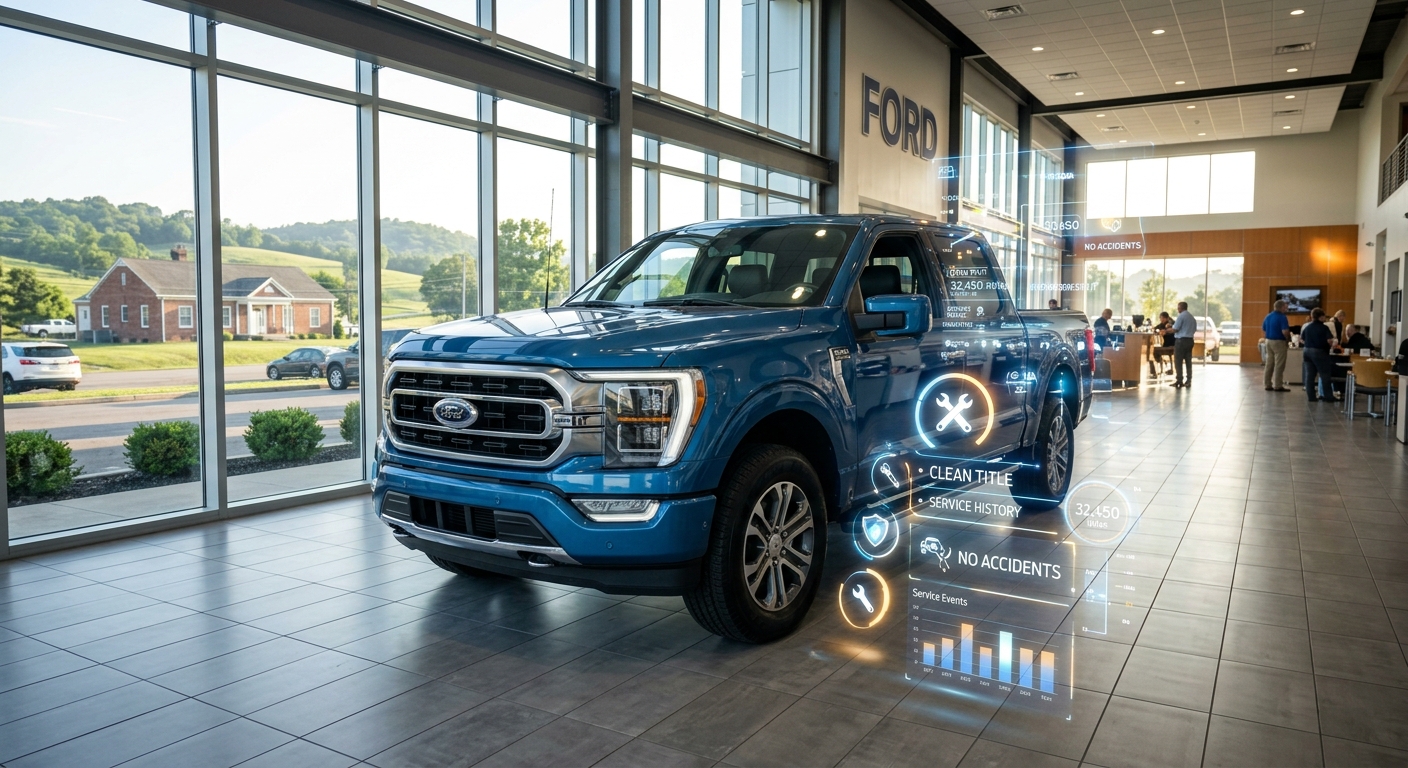
A vehicle history report serves as the biological record of a pre-owned car, offering a transparent look into its past lives before it arrives on a lot in Shelbyville. While many shoppers focus on the exterior shine or the smell of the cabin, the data contained within these reports often tells a different story. These documents aggregate records from insurance companies, state titling agencies, and repair facilities to provide a timeline of ownership, service, and incidents. Understanding how to navigate this data is the first step in avoiding a costly mistake.
When you examine a report, you are looking for a consistent narrative of care. A vehicle that has moved through several states in a short period or shows gaps in registration can indicate potential issues with its documentation or mechanical state. We often see that the most reliable used options are those with a clear, linear history. If you are just beginning your search, exploring our new-vehicle inventory can provide a benchmark for the standards we maintain, even for our pre-owned selections.
The report also highlights critical safety data, such as open recalls that have not been addressed. For instance, a 2026 Ford F-150 might have specific software updates or component inspections required by the manufacturer. If a history report shows these are outstanding, it suggests the previous owner may have been lax with essential upkeep. If you have questions about a specific VIN or want to see a report in person, you can reach us at (931) 536-4424 to speak with a member of our team. For those planning a visit to review our current stock, our Shelbyville location is easy to find and staffed with experts ready to pull these reports for you.
Table of Contents
- Title Brand Disasters That Demand a Hard Pass
- Odometer Discrepancies and the Danger of Mileage Fraud
- Structural Integrity and the Legacy of Severe Accidents
- Evaluating Maintenance Gaps and Frequent Ownership Transfers
- Navigating the Middle Tennessee Used Car Market Safely
- Answers to Crucial Used Vehicle History Questions
- Securing a Verified Used Vehicle at Newton Ford South
Title Brand Disasters That Demand a Hard Pass
A “branded” title is perhaps the most significant red flag you can encounter, as it indicates that a state agency has permanently labeled the vehicle due to a major loss or safety issue. Salvage titles are issued when an insurance company determines the cost of repairs exceeds the vehicle’s value, often after a collision or natural disaster. While some of these vehicles are “rebuilt,” they rarely return to factory specifications. This matters because a rebuilt vehicle may not perform as intended in a subsequent accident, potentially compromising the IIHS TOP SAFETY PICK standards that models like the 2026 Ford F-150 are designed to meet.
Pricing
MSRP and destination charges (source: MarketCheck VIN Decode (consensus))
| Feature | XL | STX | Police Responder | XLT | Lariat | Tremor | King Ranch | Raptor | Platinum |
|---|---|---|---|---|---|---|---|---|---|
| Starting MSRP | $49,116 | $51,983 | $56,475 | $65,271 | $74,568 | $74,652 | $79,568 | $85,137 | $85,358 |
Lowest starting MSRP: XL at $49,116
Flood damage is another catastrophic title brand that is particularly deceptive. Water can migrate into the most sensitive electrical connectors and computer modules, leading to intermittent failures that may not appear for months. Corrosion starts from the inside out, affecting everything from the 5.0L V8 engine’s sensors to the infotainment system. Even if a car looks pristine, a flood brand on the history report is a signal to walk away immediately. The complexity of modern vehicles means that once the wiring harness is compromised by silt and moisture, it is nearly impossible to guarantee long-term reliability.
The financial implications of a branded title are just as severe as the mechanical ones. Most traditional lenders will not provide a loan for a salvage or rebuilt vehicle, and insurance companies often refuse to provide comprehensive or collision coverage. Furthermore, the resale value is permanently suppressed. If you find yourself needing components for a vehicle you already own, our parts department can help you source genuine items to maintain your vehicle’s integrity, but we always advise starting with a “clean” title to begin with. For context on what a high-quality, unbranded truck is worth, consider that a new F-150 XL starts at $49,116, while the feature-rich Raptor begins at $85,137.
Odometer Discrepancies and the Danger of Mileage Fraud
Odometer rollback is a deceptive practice where the mileage on a vehicle is illegally altered to make it appear less used than it actually is. In a vehicle history report, this shows up as an “odometer discrepancy” or “rollback alert.” This usually happens when a vehicle is serviced at 80,000 miles, but the next registration or service entry shows 55,000 miles. Such a red flag suggests intentional tampering, which is a federal offense and a clear sign of a dishonest seller.
Fuel Economy
EPA-estimated fuel economy ratings
| Feature | XL | STX | Police Responder | XLT | Lariat | Tremor | King Ranch | Raptor | Platinum |
|---|---|---|---|---|---|---|---|---|---|
| City MPG | 19 mpg | 22 mpg | — | 24 mpg | 24 mpg | 24 mpg | 24 mpg | 15 mpg | 24 mpg |
| Highway MPG | 24 mpg | 24 mpg | — | 28 mpg | 27 mpg | 24 mpg | 27 mpg | 18 mpg | 27 mpg |
| Combined MPG | 22 mpg | 23 mpg | — | 26 mpg | 26 mpg | 24 mpg | 26 mpg | 17 mpg | 26 mpg |
Standard across all trims: Fuel Type Unleaded
Best combined fuel economy: XLT at 26 mpg
High mileage isn’t necessarily a dealbreaker if the maintenance is documented, but fraudulent mileage hides the true wear on critical components. A vehicle that has traveled 100,000 miles through the rural terrain of Christiana will have different suspension and drivetrain wear than the dashboard might suggest if it has been tampered with. This fraud affects your ability to predict when major services, like timing belt replacements or transmission flushes, are due. For a modern vehicle like the 2026 Ford Escape, which achieves an impressive 42 city / 36 hwy mpg in its Active trim, knowing the true mileage is essential for maintaining that efficiency over time.
Beyond the mechanical risks, mileage fraud severely impacts the vehicle’s valuation. You could end up paying a premium for a “low-mileage” car that is actually near the end of its reliable lifespan. When you are ready to secure a vehicle with a verified history, you can start the process by applying for financing online to see which terms you qualify for based on a legitimate vehicle value. Accurate mileage ensures that the basic 3 years / 36,000 miles or powertrain 5 years / 60,000 miles warranty terms are applied correctly.
Structural Integrity and the Legacy of Severe Accidents
Not every accident results in a branded title, but “structural damage” or “frame damage” notations in a history report are serious warnings. The frame or unibody of a vehicle is engineered to absorb energy during a crash through specific crumple zones. Once that metal has been bent or compromised, it loses its original strength. Even with high-tech pulling equipment, a repaired frame may never react the same way in a second collision. This is why we emphasize looking for “clean” reports for vehicles like the 2026 Ford Explorer, which relies on its structural integrity to protect up to 7 passengers.
Engine & Performance
Powertrain specifications across trim levels
| Feature | XL | STX | Police Responder | XLT | Lariat | Tremor | King Ranch | Raptor | Platinum |
|---|---|---|---|---|---|---|---|---|---|
| Engine | 5.0L V8 | 5.0L V8 | 3.5L V6 | 5.0L V8 | 3.5L V6 | 3.5L V6 | 3.5L V6 | 5.2L V8 | 3.5L V6 |
Standard across all trims:
| Feature | Included |
|---|---|
| Transmission | Automatic |
| Drivetrain | 4WD |
Severe accidents can also lead to “curbstoning,” where private sellers try to flip a wrecked and poorly repaired car without disclosing its history. A report might show a vehicle was sold at a salvage auction but never received a salvage title because it moved between states with different reporting laws. We look for these “title washing” signs to protect our inventory. If a report shows a “total loss” entry from an insurance company but the current title is clean, it is a major red flag that the vehicle’s safety has been compromised.
When evaluating a used vehicle, it is helpful to compare it against a known standard. For example, the 2026 Ford F-150 Lariat comes with a 3.5L V6 and 4WD standard, providing a robust platform for both work and safety. If a used version of such a truck shows evidence of frame repair, its towing and payload capacities may no longer meet the original factory ratings. If you are considering trading in your current car for a safer, more reliable model, you can estimate your trade-in value using our online tool to see how your current vehicle’s history affects its market price.
Evaluating Maintenance Gaps and Frequent Ownership Transfers
A vehicle that has changed hands four times in three years is often a “problem child” that owners keep offloading once they realize something is wrong. While some frequent transfers can be attributed to short-term leases or corporate fleet rotations, a pattern of private owners selling the car after only a few months is a behavioral red flag. It suggests the vehicle has an undiagnosed or expensive-to-fix issue that only becomes apparent after a few weeks of daily driving. We prefer to stock vehicles with fewer, longer-term owners who have a vested interest in the car’s longevity.
Warranty
Factory warranty coverage
| Coverage | Duration |
|---|---|
| Basic | 3 years / 36,000 miles (bumper-to-bumper) |
| Powertrain | 5 years / 60,000 miles (powertrain) |
| Corrosion | 5 years / unlimited miles (corrosion—sheet metal/perforation only excluding aluminum) |
| Roadside Assistance | 5 years / 60,000 miles (Roadside Assistance Program) |
Maintenance logs within a history report are just as telling as accident records. A well-maintained vehicle should show regular oil changes, tire rotations, and brake inspections at consistent intervals. For instance, a 2026 Ford Escape requires specific care for its 1.5L I3 engine to maintain its longevity. If a report shows a 30,000-mile gap with no recorded service, it is a sign of “deferred maintenance.” This neglect can lead to sludge buildup in the engine or premature wear on the transmission, issues that a simple pre-purchase wash can’t hide.
To ensure your vehicle stays in peak condition, we recommend following a strict service schedule. You can easily schedule a service appointment with our factory-trained technicians who understand the specific needs of the Ford lineup. Our team can perform a multi-point inspection to catch what a history report might miss. If you want to know more about the professionals who will be working on your car, you can visit our staff page to meet our service advisors and master technicians who serve the local community.
Navigating the Middle Tennessee Used Car Market Safely
Buying a used vehicle in the Lynchburg area requires a different set of considerations than in a flat, urban environment. The rolling terrain and agricultural roots of the region mean that many used trucks and SUVs have spent their lives hauling trailers or navigating gravel back roads. This makes a thorough history report and physical inspection even more critical. A truck used for heavy farm work in the country may show more suspension wear than a city-driven equivalent, even if the mileage is the same.
We take pride in our transparent process, ensuring that every vehicle on our lot meets a high standard of quality before it ever reaches a customer. Whether you are looking for a rugged 2026 Ford Explorer with the new Tremor off-road package or a fuel-efficient commuter, we provide the history and context you need to make an informed choice. Our pre-owned vehicle selection is curated to include options that have passed our rigorous safety and mechanical checks, giving you peace of mind that you aren’t inheriting someone else’s problem.
We believe that building a relationship with our neighbors is the most important part of our business. You can learn more about our commitment to the community and our history of serving local drivers. We understand that a vehicle is a major investment, and we want to ensure that investment is protected by a clean history and a reliable mechanical foundation. By focusing on transparency and local expertise, we help you navigate the complexities of the used market without the stress of hidden “red flags.”
Answers to Crucial Used Vehicle History Questions
Q: Can a vehicle history report be 100% accurate?
While these reports are highly reliable, they only include information that has been officially reported to agencies or repair facilities. If an owner performed their own repairs after a minor accident or used a shop that doesn’t report to data aggregators, that information might be missing. This is why we always recommend a professional physical inspection alongside the paperwork.
Q: What should I do if the report shows a “Manufacturer Buyback”?
A manufacturer buyback, often called a “Lemon Law” vehicle, occurs when the maker repurchases a car due to a recurring defect that couldn’t be fixed in a reasonable timeframe. While these vehicles are often repaired before being resold, they carry a permanent title notation. We generally advise caution with these, as they can be difficult to value and may have lingering issues.
Q: How do I know if a vehicle was used as a rental or for ride-sharing?
The history report will specifically list the “use type” of the vehicle, such as personal, lease, rental, or commercial. High-turnover use like rentals often means the car was driven by many different people, which can lead to more interior wear and tear. However, many rental fleets follow very strict maintenance schedules, which can be a point in their favor.
Q: Is a single accident an automatic reason to walk away?
Not necessarily. A minor “fender bender” with documented professional repairs is very different from structural or frame damage. If the report shows a minor accident and the car passes a structural inspection, it can still be a great purchase. We look for the severity of the damage and the quality of the subsequent repair.
Q: Does a history report show if the warranty is still active?
The report will show the original “in-service date,” which is when the factory warranty clock started ticking. You can use this date alongside the current mileage to determine if the 3 years / 36,000 miles bumper-to-bumper or 5 years / 60,000 miles powertrain warranty is still in effect. Our team can also verify the remaining coverage through the manufacturer’s database.
Securing a Verified Used Vehicle at Newton Ford South
Choosing the right pre-owned vehicle doesn’t have to be a gamble when you have the right team supporting you. We focus on providing a transparent buying experience that eliminates the guesswork often associated with the used car market. From the versatile 2026 Ford Explorer to the innovative 2026 Ford F-150 Lightning, every model we offer is backed by our commitment to quality. You can see the difference for yourself by visiting our showroom in Shelbyville, where we can walk you through the history reports of any vehicle on the lot.
For those who prefer to start their journey online, our Newton Fastpass tool allows you to browse, value your trade, and even begin the credit process from the comfort of your home. We also invite you to explore our Newton Ford South blog for more tips on vehicle maintenance and buying strategies. If you have specific questions about our current inventory or want to schedule a test drive, give us a quick call today.
We carry a wide range of the latest Ford models, and you can explore our specific inventory pages for the following:
- New Ford F-150
- New Ford Explorer
- New Ford Escape
- New Ford Bronco
- New Ford Super Duty
- New Ford Maverick
Whether you are looking for the rugged capability of a truck or the efficiency of a hybrid SUV, there are many reasons why local drivers choose us for their next vehicle. We look forward to helping you find a car that fits your lifestyle and your budget without any hidden surprises.
0 comment(s) so far on Unlocking the Secrets of a Vehicle History Report