


The Truth About Synthetic vs. Regular Oil From Our Service Bay
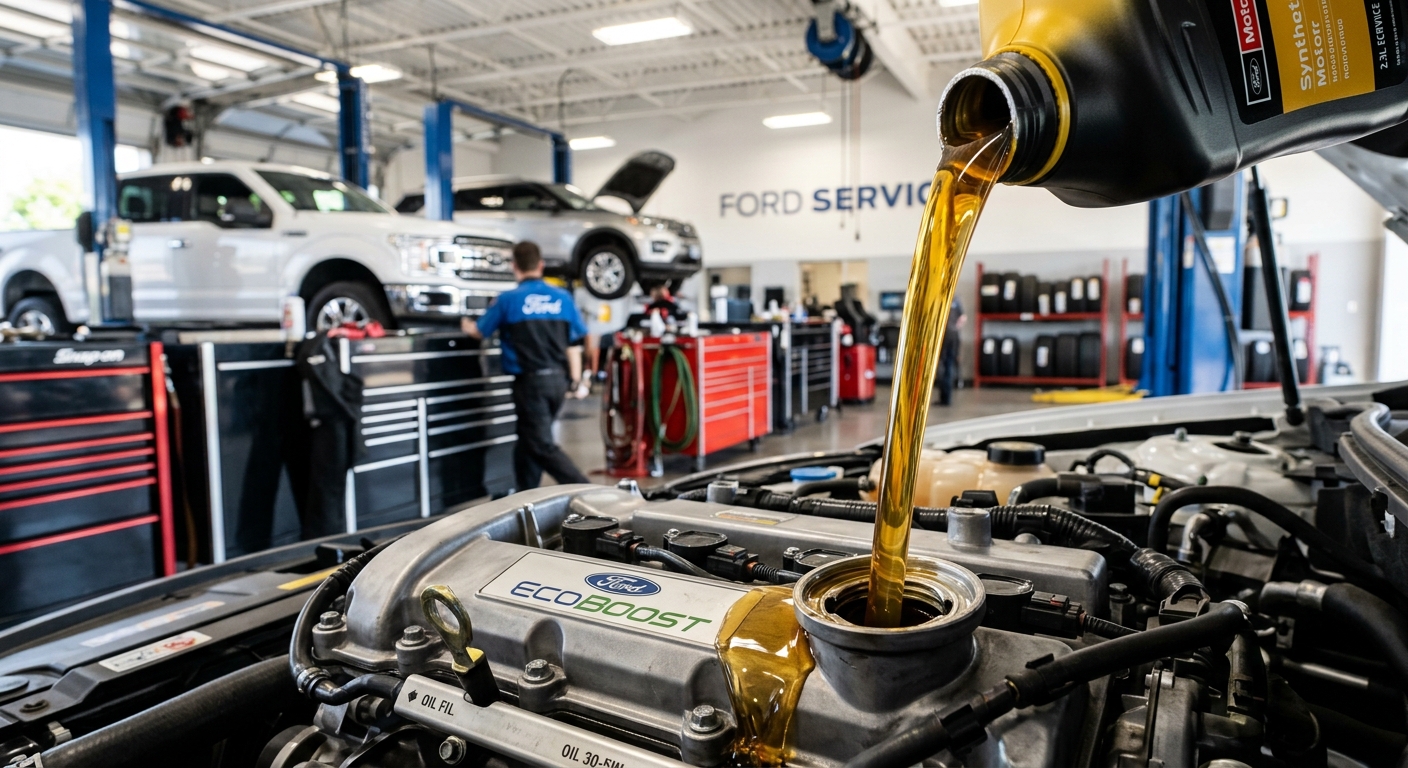
The Truth About Synthetic vs. Regular Oil From Our Service Bay
This engineering matters because those uniform molecules in synthetic oil slide past each other with less friction than the irregular shapes found in conventional oil. For local drivers, this translates to better protection against the heat and stress of daily driving. If you are ready to see the difference in how your vehicle runs, you can find our Shelbyville showroom easily for a consultation. Our team is always available; give us (931) 536-4424 a quick call to discuss which oil meets the **WSS-M2C961-A1** standard for your specific model. We also make it simple to stay on top of your maintenance by scheduling a service visit online through our portal.
Many people assume all oil is basically the same once it is inside the engine, but synthetic oil includes high-performance detergents and dispersants that are much more effective at preventing sludge buildup. In my experience, engines that have run exclusively on synthetic oil for years look significantly cleaner during teardowns than those using conventional oil. This cleanliness is vital for maintaining the efficiency and longevity of your powertrain, especially when you are putting in long hours on the road. We always ensure that every oil change uses products carrying the **API Certification Mark** to guarantee your engine is getting the exact protection the factory intended.
## Why Viscosity Stability Matters Under Hood Heat and Southern Winters
Engine oil has a tough job because it has to stay thin enough to flow the moment you turn the key, but thick enough to protect parts when the engine is running at full operating temperature. In the rolling hills around Lynchburg, where morning temperatures can dip while summer afternoons are scorching, viscosity stability is your engine’s best friend. Synthetic oils are designed to maintain their viscosity across a much wider temperature range than regular oil. This means on a cold Tennessee morning, synthetic oil flows more readily to the top of the engine to lubricate the valvetrain, reducing the wear that occurs during those first few seconds of startup.
When you are driving a heavy-duty vehicle like the 2026 Ford F-150 with the **5.0L V8** engine, that oil has to withstand incredible pressure and heat. Conventional oil tends to thin out more rapidly under extreme heat, which can compromise the protective film between moving parts. We often share detailed maintenance tips on the Newton Ford South blog to help you understand how these fluids react to our local climate. This technical advantage is one of the primary reasons why local drivers choose us for their routine maintenance, as we prioritize using lubricants that won’t break down when the work gets hard. If you are currently shopping for a reliable vehicle, you can also browse our pre-owned inventory to see Ford models that have been meticulously maintained with these high-quality standards.
The **3.5L V6** found in many of our modern trucks relies on this stability to keep the internal components moving smoothly. Synthetic oil resists thermal breakdown and oxidation much better than mineral-based oils, which helps prevent the formation of harmful acids and deposits. This is particularly important for vehicles that see a lot of stop-and-go traffic or frequent towing, where engine temperatures stay elevated for long periods. By choosing a lubricant that maintains its structural integrity, you are providing a safety net for your engine that conventional oil simply cannot match over the long term.
Table of Contents
- The True Cost of Maintenance and Extending Your Service Intervals
- Protecting Turbochargers and Performance Engines in Modern Fords
- Addressing Common Myths About Switching Oils and Engine Leaks
- Maximizing Your Vehicle Value and Keeping a Clean Maintenance Record
The True Cost of Maintenance and Extending Your Service Intervals
The math behind oil changes has shifted significantly over the last decade. While synthetic oil has a higher upfront cost, it typically allows for much longer service intervals. Many modern Ford vehicles using synthetic oil can safely go **7,500 to 10,000 miles** between changes under normal driving conditions, whereas conventional oil usually requires a change every **5,000 miles**. When you look at the total cost over a year of driving, the fewer trips to the shop often make synthetic the more economical choice. For those performing their own maintenance, ordering genuine Motorcraft parts ensures you are using the same high-quality filters and fluids we use in our service bays.
Engine & Performance
Powertrain specifications across trim levels
| Feature | XL | STX | Police Responder | XLT | Lariat | Tremor | King Ranch | Raptor | Platinum |
|---|---|---|---|---|---|---|---|---|---|
| Engine | 5.0L V8 | 5.0L V8 | 3.5L V6 | 5.0L V8 | 3.5L V6 | 3.5L V6 | 3.5L V6 | 5.2L V8 | 3.5L V6 |
Standard across all trims:
| Feature | Included |
|---|---|
| Transmission | Automatic |
| Drivetrain | 4WD |
We see this value play out clearly with our commercial and heavy-duty customers. For example, those operating new Ford Super Duty trucks often find that the extended intervals mean less downtime for their fleet. The same logic applies to the latest Ford Ranger models, where owners want to maximize their time on the trail or the job site rather than in the waiting room. If you are looking at a new truck, the **XL** trim starts at an **MSRP $49,116**, and protecting that investment with the best possible lubrication is a smart financial move. Even moving up to the **STX** at an **MSRP $51,983** or the **Police Responder** at an **MSRP $56,475**, the long-term savings on engine wear and fuel efficiency are measurable.
It is also worth noting that using the correct oil is a requirement for maintaining your **3 years / 36,000 miles** bumper-to-bumper warranty and your **5 years / 60,000 miles** powertrain warranty. Ford specifies that any oil used must meet the **WSS-M2C9xx** family of specifications. Using a sub-standard oil that leads to engine damage could potentially jeopardize this coverage. By sticking with the factory-recommended synthetic or synthetic blend, you are ensuring that your warranty remains fully intact while your engine stays in peak condition for years to come.
Protecting Turbochargers and Performance Engines in Modern Fords
Modern turbochargers operate at incredibly high speeds and temperatures, often exceeding 100,000 RPM. In an engine like the **2.3L I4** found in the 2026 Ford Explorer, the oil actually serves as a coolant for the turbocharger bearings. When you shut off a hot engine, conventional oil can “coke” or bake onto those hot bearings, creating deposits that eventually lead to turbo failure. Synthetic oil has a much higher flash point and thermal stability, meaning it can withstand those extreme temperatures without breaking down or leaving behind carbon deposits that could ruin a turbocharger.
Pricing
MSRP and destination charges (source: MarketCheck VIN Decode (consensus))
| Feature | XL | STX | Police Responder | XLT | Lariat | Tremor | King Ranch | Raptor | Platinum |
|---|---|---|---|---|---|---|---|---|---|
| Starting MSRP | $49,116 | $51,983 | $56,475 | $65,271 | $74,568 | $74,652 | $79,568 | $85,137 | $85,358 |
Lowest starting MSRP: XL at $49,116
This level of protection is essential for the entire EcoBoost lineup. Whether you are looking into new Ford Maverick inventory for a fuel-efficient daily driver or considering the all-electric Ford F-150 Lightning for a completely different kind of performance, understanding how components are protected is key. For those looking to upgrade, our team can help with applying for financing online to get you into a vehicle with the latest engine technology. Performance models like the Explorer **Tremor** are designed for rugged use, and the synthetic lubrication ensures the **20 city / 27 hwy** efficiency remains consistent by reducing internal drag.
I always remind owners that turbochargers are precision instruments. The uniform molecules in synthetic oil ensure that the tiny oil passages leading to the turbo stay clear of obstructions. If these passages become clogged with sludge—a common issue with older conventional oils—the turbocharger can be starved of lubrication, leading to a very expensive repair. Synthetic oil acts as a primary defense system, keeping the oil flowing freely through the most delicate parts of your high-performance engine.
Addressing Common Myths About Switching Oils and Engine Leaks
One of the biggest misconceptions I hear is that switching to synthetic oil will cause an older engine to start leaking. In reality, synthetic oil does not “create” leaks. What can happen is that the superior cleaning agents in synthetic oil remove the sludge and deposits that were actually plugging an existing hole in a worn-out seal. Modern synthetic formulations now include seal conditioners that help keep gaskets pliable and healthy. If you want to learn more about our team and our approach to high-mileage maintenance, we are always happy to walk you through the specifics of your vehicle’s history.
Safety & Driver Assistance
Safety ratings and driver assistance systems
| Feature | XL | STX | Police Responder | XLT | Lariat | Tremor | King Ranch | Raptor | Platinum |
|---|---|---|---|---|---|---|---|---|---|
| IIHS Rating | TOP SAFETY PICK | TOP SAFETY PICK | TOP SAFETY PICK | TOP SAFETY PICK | TOP SAFETY PICK | TOP SAFETY PICK | TOP SAFETY PICK | TOP SAFETY PICK | TOP SAFETY PICK |
Standard across all trims:
| Feature | Included |
|---|---|
| Front crash prevention: vehicle-to-vehicle (2.0) overall evaluation: P (with optional equipment) | ✓ |
| Side crash test overall evaluation: G | ✓ |
| Small overlap front (driver-side): G | ✓ |
| Small overlap front (passenger-side): overall evaluation not labeled with “A/B/C…”, but driver/passenger subsection evaluations are shown (driver-side overall G; passenger-side overall G on this page) | ✓ |
| Headlights overall rating (G) | ✓ |
Another myth is that once you switch to synthetic, you can never go back to regular oil. This is simply not true. While we recommend staying with synthetic for the performance benefits, modern engines can safely transition between the two without any damage to the seals or internal components. This flexibility is great for owners of the new Ford Mustang inventory, who might want the maximum protection of synthetic for track days but may have used a blend previously. For those driving new Ford F-150 models, the **5.0L V8** is robust enough to handle either, though synthetic remains the gold standard for longevity.
We also get asked if synthetic oil is “too thin” for older engines. While synthetic oil flows better at cold temperatures, its “operating” thickness or viscosity remains exactly what the engine was designed for, such as **SAE 5W-30** or **SAE 5W-20**. It provides better protection because it doesn’t thin out as much as conventional oil when the engine gets hot. This means you get the best of both worlds: easy starts in the morning and a rock-solid protective film when you are cruising down the highway at noon.
Maximizing Your Vehicle Value and Keeping a Clean Maintenance Record
A well-documented service history is one of the most powerful tools you have when it comes time to sell or trade in your vehicle. While there isn’t a specific “synthetic oil” button on a valuation tool, savvy buyers and dealerships look for a consistent history of high-quality maintenance. Showing that you used premium synthetic oil suggests that you didn’t cut corners on the rest of the vehicle’s care. If you are curious about what your current car is worth, you can start by valuing your trade-in through our online tool to see how your maintenance pays off.
When you are ready to upgrade to something from our new Ford inventory, having those records ready makes the process much smoother. You can visit our dealership location to speak with our staff about how your service history impacts your trade-in value. If you have any questions about your specific maintenance schedule, give us a call at (931) 536-4424 and we can pull up your records or help you start a new plan. Every Ford also comes with **5 years / 60,000 miles** of coverage through the Ford Roadside Assistance: 1-800-241-3673 program, giving you extra peace of mind on every journey.
Ultimately, the choice between regular and synthetic oil is about how long you want your engine to last and how much performance you want to extract from it. Synthetic oil is a superior lubricant that handles the heat of a Tennessee summer and the cold of a winter morning with ease. It keeps your engine cleaner, protects expensive components like turbochargers, and can even save you money by reducing the frequency of your service visits. We invite you to stop by and let our expert team help you make the best choice for your Ford, ensuring it stays on the road for many miles to come.
0 comment(s) so far on The Truth About Synthetic vs. Regular Oil From Our Service Bay