


The Modern Approach to Ford Preventive Maintenance
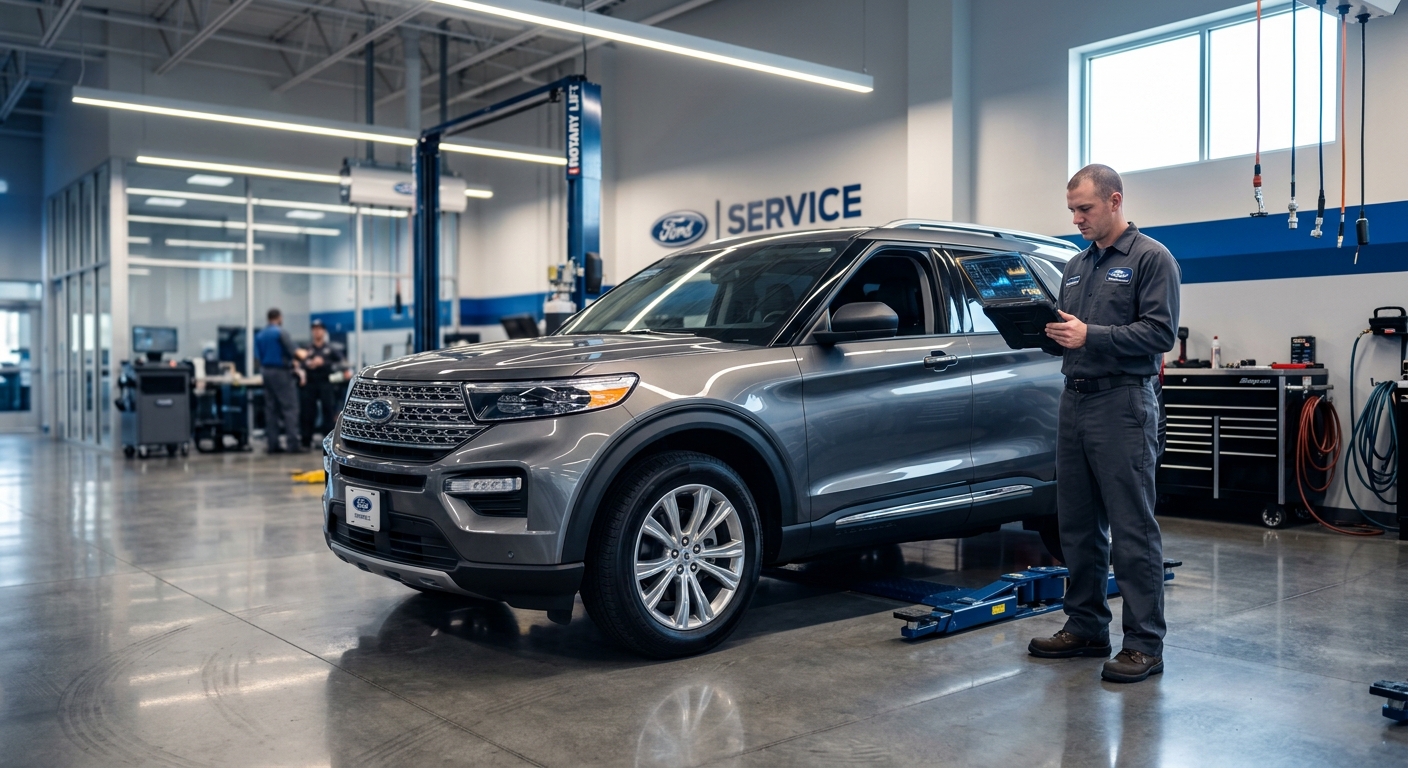
Regular maintenance is the foundation of vehicle longevity, ensuring your truck or SUV remains as dependable as the day you drove it off the lot. Modern engineering has transformed how we care for these machines, moving away from rigid, old-school schedules and toward smart, real-time monitoring. By utilizing advanced vehicle technology, owners can protect their investments while maximizing efficiency on every drive.
At the center of this modern approach is the Intelligent Oil-Life Monitor, a system that continuously evaluates engine temperature, driving habits, and climate conditions to determine exactly when your oil needs changing. For most 2026 models, this system can extend service intervals up to a maximum of 10,000 miles or one year, reducing unnecessary trips to the service bay while maintaining optimal engine protection. When the system alerts you, it is also time to perform other critical routine tasks, such as a tire rotation and a comprehensive multi-point inspection, which help catch minor wear before it turns into an expensive repair.
Piloting a light-duty cruiser or a heavy-duty workhorse requires consistent upkeep to preserve performance and safeguard warranty coverage. If you want to explore more tips on vehicle care, you can read through the Newton Ford South blog for expert advice on keeping your vehicle in peak condition. When you are ready to experience our customer-first philosophy, you can learn more about why choose Newton Ford South for all your automotive needs.
Taking care of your vehicle should never feel like a chore. Our certified technicians are trained to handle everything, including quick diagnostics and complex system flushes, ensuring that your vehicle receives specialized factory care. If your vehicle is due for its next checkup, you can easily schedule a routine service appointment online to secure a time that fits your day. If you prefer to speak with a service advisor directly to discuss your vehicle’s specific needs, feel free to give our team a quick call at (931) 536-4424, or visit us in person by getting directions to Newton Ford South.
Table of Contents
- Understanding Ford Mobile Service and Convenience Fees
- Standard Service Schedules for Gas and Hybrid Ford Models
- Specialized Maintenance for Ford Electric Vehicles
- Severe Duty and Heavy Towing Service Intervals
- Answers to Common Ford Service and Warranty Questions
- Common Questions About Ford Vehicle Maintenance
- Partnering with Newton Ford South for Your Maintenance Needs
Understanding Ford Mobile Service and Convenience Fees
Maximizing convenience is a primary goal of modern automotive care, which is why manufacturer-backed mobile maintenance programs have grown so rapidly. When our service advisors walk customers through their maintenance options, the question we hear most often is whether electing to have our mobile service van come to their driveway or office comes with an added surcharge. To be direct: there is no extra fee for Ford Mobile Service when you schedule routine maintenance within our standard service area. We perform these remote services for the exact same price as our in-dealership maintenance, utilizing the same certified technicians, diagnostic equipment, and factory-approved parts.
This flat-pricing model means you pay the standard rates for oil changes, tire rotations, cabin filter swaps, and software updates without any convenience fees tacked on. While some third-party mobile mechanics or other local dealerships might charge a dispatch fee or a travel premium, our program is designed to remove those barriers. If you live or work within our designated local radius, the travel time and vehicle operations are fully covered. This makes it incredibly easy to maintain highly capable trucks like the 2026 Ford F-150 XLT, which starts at an MSRP of $65,825 for the King Ranch trim or $59,560 for the Lariat trim, without needing to take a half-day off work to sit in a waiting room.
For owners of premium models like the Platinum trim, which starts at $68,800 (excluding the $2,795 destination charge), mobile service provides a seamless way to protect a significant investment. Our mobile service vans are outfitted with specialized containment systems for fluids, commercial-grade jacks, and official diagnostic computers that sync directly with your vehicle’s onboard systems. If you bought your truck new or selected a high-quality pre-owned option from our used vehicle inventory, you receive the exact same level of technical expertise at your home as you would inside our physical service bays.
To learn more about our commitment to hassle-free ownership and our dedication to local drivers, you can read our about us page to see how our team prioritizes convenience. By matching our in-shop labor and parts rates on the mobile van, we ensure that keeping your vehicle safe and efficient fits naturally into your busy routine.
Pricing
Pricing by trim
| Feature | King Ranch | Lariat | Platinum | Police Responder | Raptor | STX | Tremor | XL | XLT |
|---|---|---|---|---|---|---|---|---|---|
| Base MSRP | $65,825 | $59,560 | $68,800 | $52,350 | $79,005 | $41,855 | $64,915 | $37,290 | $44,695 |
| Destination charge | $2,795 | $2,795 | $2,795 | $2,795 | $2,795 | $2,795 | $2,795 | $2,795 | $2,795 |
Standard Service Schedules for Gas and Hybrid Ford Models
Operating a gas-powered or hybrid vehicle in Middle Tennessee requires adhering to a consistent maintenance schedule to counteract the effects of varying terrain and daily driving. In Tullahoma, where many residents commute near the Arnold Engineering Development Complex or travel past Beechcraft Park, vehicles frequently encounter rolling hills and elevated terrain that place steady demands on the powertrain. To keep vehicles running efficiently, following the factory-recommended maintenance milestones is essential.
For a highly popular family SUV like the 2026 Ford Explorer XLT, which features a 2.3L engine paired with a 10-speed automatic transmission and delivers an EPA-estimated 20 city / 29 hwy mpg, the service calendar revolves around specific mileage intervals. The standard schedule begins with an oil and filter change coupled with a tire rotation every 10,000 miles or one year, whichever comes first. Regular tire rotations at these intervals are critical for maintaining even tread wear, especially when navigating the winding rural routes surrounding local parks and farmlands.
As your vehicle accumulates mileage, other components require scheduled attention to preserve cabin comfort and mechanical integrity. The cabin air filter should be replaced every 20,000 miles to filter out dust and pollen, ensuring the climate control system operates efficiently. At roughly 30,000 miles, technicians will replace the engine air filter and perform a brake fluid flush. Ford recommends changing the brake fluid every 3 years regardless of mileage to prevent moisture contamination and maintain responsive stopping power. If you are looking to purchase a new vehicle equipped with these advanced hybrid or gas powertrains, you can browse our new vehicle inventory to find the perfect configuration for your lifestyle.
For owners who prefer to perform basic maintenance tasks themselves, securing genuine components is highly important. Utilizing factory-authorized filters, fluids, and spark plugs ensures complete compatibility and preserves your warranty coverage. You can order the exact components required for your specific model year directly through our parts department to guarantee a perfect fit.
Engine & Performance
Powertrain specs by trim
| Feature | King Ranch | Lariat | Platinum | Police Responder | Raptor | STX | Tremor | XL | XLT |
|---|---|---|---|---|---|---|---|---|---|
| Engine | 3.5L | 5.0L | 3.5L | 3.5L | 3.5L | 2.7L | 3.5L | 2.7L | 2.7L |
| Horsepower | 382 hp | 400 hp | 382 hp | 400 hp | 450 hp | 325 hp | 382 hp | 325 hp | 325 hp |
| Torque | 500 lb-ft | 410 lb-ft | 500 lb-ft | 500 lb-ft | 510 lb-ft | 400 lb-ft | 500 lb-ft | 400 lb-ft | 400 lb-ft |
| Transmission | 10-speed automatic | 10-speed automatic | 10-speed automatic | 10-speed automatic | 10-speed automatic | 10-speed automatic | 10-speed automatic | 10-speed automatic | 10-speed automatic |
| Drivetrain | Rear-wheel drive | Rear-wheel drive | Rear-wheel drive | Four-wheel Drive | Four-wheel Drive | Rear-wheel drive | Four-wheel Drive | Rear-wheel drive | Rear-wheel drive |
Fuel Economy
Fuel economy and range by trim
| Feature | King Ranch | Lariat | Platinum | Police Responder | Raptor | STX | Tremor | XL | XLT |
|---|---|---|---|---|---|---|---|---|---|
| MPG | 17 city / 25 hwy / 20 combined | 17 city / 25 hwy / 20 combined | 17 city / 25 hwy / 20 combined | — | 14 city / 18 hwy / 16 combined | 19 city / 25 hwy / 21 combined | 16 city / 21 hwy / 18 combined | 19 city / 25 hwy / 21 combined | 19 city / 25 hwy / 21 combined |
Specialized Maintenance for Ford Electric Vehicles
Transitioning to an electric vehicle changes your relationship with the service department, eliminating several traditional maintenance tasks while introducing a few unique requirements. In Spring Hill, where many professionals face a daily highway commute toward Nashville or travel near the local manufacturing plant, driving an electric vehicle offers exceptional efficiency and a quiet cabin experience. However, the absence of an internal combustion engine does not mean these vehicles are maintenance-free.
Fully electric models like the 2026 Ford Mustang Mach-E Select do not require engine oil changes, spark plug replacements, or emissions testing, which significantly simplifies their long-term upkeep. Instead, EV maintenance focuses heavily on chassis components, cabin comfort, and thermal management systems. Tire rotations remain a top priority and should be performed every 10,000 miles. Because electric vehicles deliver instant torque and carry heavy battery packs, their tires can wear faster than those on gas-powered equivalents, making regular rotations vital for maximizing tread life.
Other critical service intervals for electric models closely align with their gas counterparts but feature specialized fluids. The cabin air filter requires replacement every 20,000 miles to keep the interior air clean, while the brake fluid must be flushed every 3 years to maintain stopping performance. The most significant long-term milestone is the specialized battery coolant service, which is scheduled at 150,000 miles or 10 years to ensure the high-voltage battery pack remains properly conditioned. If you are considering upgrading to an electric vehicle to lower your daily operating costs, you can start the buying process by applying for financing online to secure competitive rates before visiting our showroom.
Severe Duty and Heavy Towing Service Intervals
Vehicles subjected to demanding work cycles, frequent trailering, or heavy off-road use require a more aggressive maintenance schedule to prevent premature wear. When a truck is regularly used to haul agricultural equipment, transport horses, or idle for extended periods at job sites, it operates under what the factory defines as severe duty conditions. Under these circumstances, relying on standard mileage intervals can lead to degraded fluids and accelerated component fatigue.
For a properly equipped 2026 Ford F-150 XLT, which features a potent 3.5L engine producing 382 hp and 500 lb-ft of torque paired with a robust 10-speed automatic transmission, the severe duty schedule is highly recommended if you regularly utilize its maximum towing capacity of 12,800 lbs or its payload capacity of 2,206 lbs. Instead of waiting for the standard interval, severe duty guidelines call for changing the engine oil and rotating the tires every 5,000 miles or 6 months. This frequent service ensures the engine oil retains its protective viscosity under high thermal loads, protecting vital internal components.
Heavy-duty trucks, such as the F-250 equipped with diesel engines, require even more specialized attention when operating under extreme conditions. For these commercial-grade workhorses, the diesel fuel filters and the engine air filter should be replaced every 30,000 miles to prevent fuel system contamination and maintain optimal airflow. Additionally, the automatic transmission fluid and filter should be serviced at 150,000 miles, though vehicles used primarily for heavy towing may require this service much sooner. If you are planning to upgrade your current truck to a more capable towing platform, you can easily value your trade-in online to see how much equity you can apply toward your next purchase.
Dimensions & Capacity
Capacity and dimensions by trim
| Feature | King Ranch | Lariat | Platinum | Police Responder | Raptor | STX | Tremor | XL | XLT |
|---|---|---|---|---|---|---|---|---|---|
| Seating | 5 | 5 | 5 | 5 | 5 | 5 | 5 | 6 | 6 |
| Cargo | 52.8 cu ft | 52.8 cu ft | 52.8 cu ft | 52.8 cu ft | 52.8 cu ft | 62.3 cu ft | 52.8 cu ft | 62.3 cu ft | 62.3 cu ft |
| Curb weight | 4,894 lbs | 4,844 lbs | 4,844 lbs | 5,065 lbs | 5,710 lbs | 4,641 lbs | 5,260 lbs | 4,391 lbs | 4,641 lbs |
| Towing | 12,800 lbs | 10,600 lbs | 12,800 lbs | 11,200 lbs | 8,200 lbs | 8,200 lbs | 10,200 lbs | 13,500 lbs | 7,500 lbs |
| Payload | 2,206 lbs | 1,900 lbs | 2,160 lbs | 1,950 lbs | 1,410 lbs | 1,670 lbs | 1,700 lbs | 2,440 lbs | 1,670 lbs |
Answers to Common Ford Service and Warranty Questions
Navigating vehicle warranties and emergency roadside programs can sometimes feel complex, but understanding your coverage ensures you never pay out of pocket for eligible repairs. New gas and hybrid vehicles are protected by a standard 3-year/36,000-mile bumper-to-bumper warranty alongside a 5-year/60,000-mile powertrain warranty. Electric models receive even longer coverage, featuring an 8-year/100,000-mile warranty on high-voltage battery components to provide long-term peace of mind.
Should you ever encounter an unexpected issue on the road, Ford provides a comprehensive, manufacturer-backed emergency program designed to get you back on transit quickly. This exclusive service includes flat tire changes, fuel delivery, battery jump-starts, and towing directly to an authorized service center. By utilizing this dedicated program, you ensure your vehicle is handled by technicians with brand-specific expertise who use genuine factory parts, preserving your warranty protection. If you need immediate emergency help, you can contact Ford Roadside Assistance: 800-241-3673 for prompt, factory-supported coordination.
For routine inquiries about what is covered under your specific warranty term or to discuss a personalized maintenance plan, our experienced service advisors are always ready to assist. You can meet our team of dedicated professionals by visiting our staff directory page to connect with an advisor who can guide you through your vehicle’s coverage.
Common Questions About Ford Vehicle Maintenance
Q: How often does the engine coolant need to be flushed?
The first engine coolant flush is recommended at 200,000 miles or 10 years, with subsequent flushes every 100,000 miles or 5 years. This extended interval is made possible by advanced organic acid technology in the factory coolant, which resists degradation far longer than older green formulas.
Q: When should the spark plugs be replaced in a 2026 F-150?
Spark plugs in a 2026 F-150 are typically scheduled for replacement at 100,000 miles under normal driving conditions. However, if you frequently use your truck for commercial hauling, heavy towing, or extended idling, our technicians recommend inspecting and replacing them sooner to prevent engine misfires.
Q: What is the battery coolant service interval for electric models?
The specialized battery coolant should be replaced at 150,000 miles or 10 years. This service is critical for maintaining the thermal management system, which regulates battery temperatures during DC fast charging and extreme weather.
Q: Does Ford offer any coverage for wear-and-tear items like wiper blades or brake pads?
Standard factory warranties do not cover normal wear-and-tear items, but you can purchase optional Ford Protect Extended Service Plans that include coverage for items like brake pads, wiper blades, and belts. These plans are highly customizable and can be integrated into your initial vehicle purchase.
Q: Can I use aftermarket parts for my routine maintenance without voiding my warranty?
While using aftermarket parts does not automatically void your warranty, any damage or failure caused directly by an aftermarket component will not be covered under the factory warranty. Using genuine factory parts is highly recommended because they are built specifically for your model and carry their own manufacturer-backed warranty.
Partnering with Newton Ford South for Your Maintenance Needs
Choosing a dedicated service partner makes all the difference in maintaining the safety, performance, and value of your vehicle over the years. At Newton Ford South, we are committed to providing streamlined, transparent automotive care that fits seamlessly into your lifestyle, whether you are visiting our advanced service bays or scheduling our complimentary mobile service van. From routine oil changes to complex system diagnostics, our factory-trained technicians possess the specialized knowledge required to keep your vehicle operating at its absolute best.
If you are in the market for a new vehicle, we offer an extensive selection of models designed to meet any driving need. You can explore the iconic performance of our new Mustang inventory, experience the versatile capability of our new Explorer models, or check out the compact efficiency of our new Escape inventory. For those who enjoy outdoor adventures, we stock the rugged new Bronco inventory as well as the agile new Bronco Sport models. Families requiring maximum space can browse our new Expedition inventory to find a full-size SUV that accommodates everyone comfortably.
Drivers looking for exceptional truck capability can view our new Maverick models, the midsize versatility of our new Ranger models, or the legendary strength of our new F-150 trucks. We also offer heavy-duty power through our new SuperDuty models for demanding commercial work. If you are ready to transition to electric power, you can view our new Mustang Mach-E inventory or the innovative utility of our new F-150 Lightning models. To make your purchase process as simple as possible, you can use our Newton Fastpass online buying tool to customize your terms from the comfort of your home.
When you are ready to visit our team, you can get step-by-step directions to our physical location at 2811 US, Shelbyville, TN 37160. For any questions regarding vehicle maintenance, parts, or scheduling, please give our service department a quick call at (931) 536-4424 to speak with a dedicated advisor today.
0 comment(s) so far on The Modern Approach to Ford Preventive Maintenance