


Is Synthetic Oil Worth the Extra Cost?
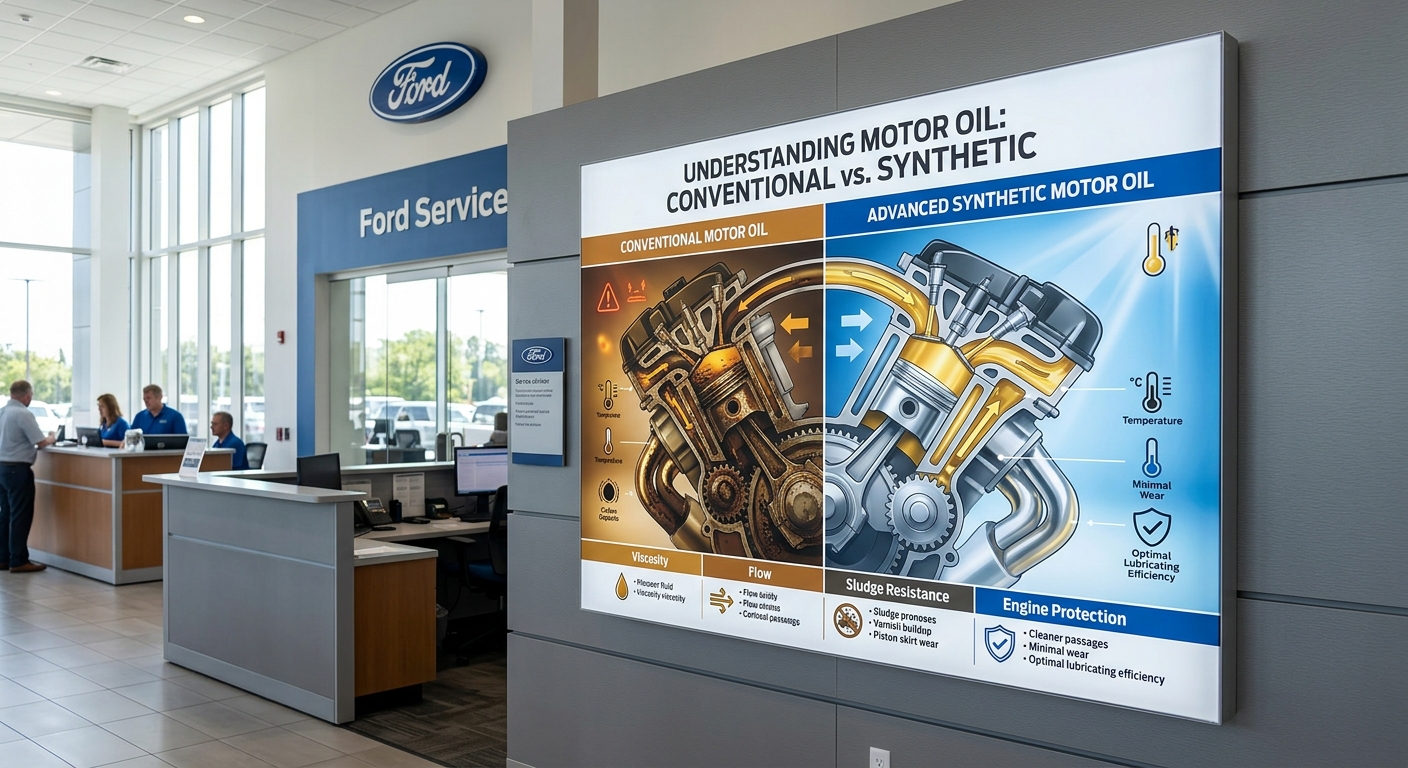
Deciding between conventional and synthetic motor oil is one of the most common choices drivers face during routine maintenance. While a standard oil change is initially more budget-friendly, synthetic oil offers superior chemical engineering that delivers better protection, longer intervals, and enhanced performance. For most modern vehicles, the upfront investment in synthetic oil pays off over time by reducing engine wear and extending the mileage between service visits.
If you are wondering whether synthetic oil is worth the extra cost, the answer depends on your vehicle’s engine design, your daily driving habits, and the age of your vehicle. Modern engines are built with tighter tolerances and often feature advanced engineering like turbochargers, which place immense thermal stress on lubricants. Standard crude-based oil degrades much faster under these conditions, whereas synthetic oil maintains its protective qualities.
For drivers navigating the elevated terrain and rolling hills around Tullahoma, the engine works harder to maintain speed climbing grades, especially when hauling gear or family tailgating supplies. Under these high-load conditions, conventional oil can break down and leave behind harmful deposits. Synthetic oil resists this thermal breakdown, keeping your engine clean and running efficiently.
If your vehicle is due for a checkup, you can easily book a service appointment with our factory-trained technicians. We can help you determine the exact oil specification required for your vehicle’s powertrain. For quick questions about our current service hours or to speak directly with an advisor, feel free to give our team (931) 536-4424 a quick call. If you prefer to drop by and consult with our maintenance staff in person, you can get turn-by-turn directions to our service center by using our showroom address to plan your route.
Table of Contents
- Understanding the Molecular Differences and Additives in Engine Lubricants
- How Viscosity Stability and Temperature Resistance Protect Your Engine
- Debunking Common Myths About Switching and Mixing Motor Oils
- Long Term Economic Value and Manufacturer Warranty Protection
- Common Questions About Synthetic Versus Regular Motor Oil
- Schedule Your Next Certified Oil Change
Understanding the Molecular Differences and Additives in Engine Lubricants
To understand why synthetic oil outperforms conventional options, it helps to look at the chemistry. Conventional motor oil is refined from crude oil pumped out of the ground. While the refining process removes many impurities, the resulting fluid still contains a mixture of hydrocarbons of varying sizes and shapes. This inconsistent molecular structure means that under friction and heat, the smaller molecules burn off quickly while the larger ones degrade into sludge.
In contrast, synthetic oil is chemically synthesized in a highly controlled laboratory environment. This process creates uniform, identical molecules that glide past one another with minimal resistance. This molecular consistency reduces internal friction, lowers operating temperatures, and prevents the oil from shearing under intense mechanical pressure.
Synthetic formulations also include robust additive packages designed to enhance performance. These chemical packages typically contain:
- Anti-wear agents that form a microscopic protective barrier on metal surfaces.
- High-performance detergents that actively clean the engine interior and suspend carbon deposits.
- Dispersants that prevent soot and dirt particles from clumping together to form sludge.
- Friction modifiers that maximize fuel efficiency by reducing drag between moving parts.
- Antioxidants that extend the life of the oil by resisting chemical breakdown when exposed to oxygen and high temperatures.
These advanced additive packages are particularly beneficial for highly efficient, smaller-displacement engines. For example, if you are driving a compact truck like those found in our new Ford Maverick inventory, the standard 2.0L EcoBoost engine relies on clean, high-quality oil to keep its turbocharger lubricated and cooled. Similarly, larger family haulers like those in our new Ford Expedition inventory utilize twin-turbocharged engines that demand the uniform molecular protection of synthetic oil to handle heavy passenger loads. If you are currently driving an older model and are considering trading up to a vehicle with a modern, high-efficiency powertrain, you can browse our used vehicle inventory to find a well-maintained car, truck, or SUV that fits your budget.
How Viscosity Stability and Temperature Resistance Protect Your Engine
An oil’s viscosity refers to its resistance to flow, commonly understood as its thickness. An ideal motor oil must remain thin enough in cold weather to flow quickly and protect vital engine parts at startup, yet stay thick enough at high operating temperatures to maintain a protective barrier. Synthetic oils excel at maintaining this balance, offering far superior viscosity stability compared to conventional lubricants.
During cold weather starts, conventional oil thickens and moves slowly, leaving upper engine components temporarily unprotected during the critical first few seconds of operation. Synthetic oil is engineered to flow immediately even in freezing temperatures, reducing cold-start wear. Conversely, when the engine reaches high temperatures, conventional oil can thin out excessively, allowing metal-to-metal contact. Synthetic oil maintains its structural integrity, resisting thinning and evaporation under extreme heat.
This thermal resilience is crucial for vehicles that undergo demanding duty cycles. If you are towing a trailer with a truck from our new Ford F-150 inventory, the engine experiences prolonged high-temperature operation. The same applies to family road trips in a vehicle from our new Ford Explorer inventory, where hours of highway cruising with a full cargo area generate significant internal heat. Synthetic oil ensures that your engine remains fully protected under these strenuous conditions. Drivers looking to upgrade to a vehicle built for these demanding tasks can explore our complete new vehicle inventory to find the perfect match for their towing and travel needs.
Debunking Common Myths About Switching and Mixing Motor Oils
A persistent misconception among vehicle owners is that once you switch to synthetic oil, you can never go back to conventional oil. This is a myth left over from the early days of synthetic lubricants when certain seal materials were incompatible with synthetic chemicals. Modern engine manufacturing and advanced oil formulations have completely eliminated this issue. You can safely switch between synthetic and conventional oil, or even use a synthetic blend, without damaging your engine or its seals.
Another common question is whether you can mix synthetic and conventional oils in an emergency. While it is always best to use the exact oil type recommended in your owner’s manual, mixing the two will not cause mechanical harm or chemical reactions. However, mixing conventional oil into a crankcase filled with synthetic oil will dilute the performance benefits and shorten the lifespan of the synthetic oil, meaning you will need to change your oil sooner than the standard synthetic interval.
When performing your own maintenance or purchasing top-off fluids, it is vital to use components that match OEM specifications. Our parts department stocks genuine Motorcraft lubricants and filters engineered specifically for your vehicle’s powertrain. Utilizing the correct parts and oil types ensures long-term reliability, whether you are maintaining a commuter car or a rugged off-roader like those in our new Ford Ranger inventory. To learn more about our commitment to quality service and genuine parts, you can read about our team on our about us page.
Long Term Economic Value and Manufacturer Warranty Protection
While a synthetic oil change has a higher initial price tag than a conventional one, looking at the long-term economics reveals a different story. Conventional oil typically requires replacement every 5,000 miles or six months. Synthetic oil, thanks to its resistance to degradation and deposit formation, easily lasts for 7,500 miles to 10,000 miles under normal driving conditions. By doubling the mileage between service visits, you reduce the annual number of oil changes, saving both time and money.
Beyond fewer service visits, synthetic oil contributes to better overall vehicle health and value retention. It keeps internal engine components cleaner, which helps maintain optimal fuel economy and prevents costly repairs down the road. If you plan to trade in your vehicle in the future, a documented history of synthetic oil changes is an excellent way to prove the engine has been meticulously maintained. You can easily value your trade-in online to see how keeping up with certified maintenance preserves your vehicle’s market value.
Using the manufacturer-recommended oil is also essential for maintaining your warranty coverage. Many modern turbocharged and high-performance engines explicitly require synthetic oil. Using conventional oil in these engines can void your powertrain warranty if an oil-related failure occurs. For owners of advanced electric-assist or high-performance vehicles, such as those in our new Ford F-150 Lightning inventory, keeping up with specialized maintenance is key to protecting your investment. If you are ready to transition to a new vehicle, you can speed up the buying process by applying for financing online to secure pre-approval before your visit.
Common Questions About Synthetic Versus Regular Motor Oil
Q: Do turbocharged engines require synthetic oil?
Yes, the vast majority of turbocharged engines require synthetic oil. Turbochargers operate at extremely high rotational speeds and temperatures, using engine oil to cool the turbo bearings. Conventional oil can quickly cook and form destructive carbon deposits in these hot areas, whereas synthetic oil resists this thermal breakdown.
Q: Can I use synthetic oil in an older, high-mileage vehicle?
You can absolutely use synthetic oil in older vehicles, and doing so often provides superior protection for aging engine components. However, if an older engine has existing worn seals, the superior flowing capability of synthetic oil might find and highlight pre-existing leaks. For older engines, a specialized high-mileage synthetic oil is often the best choice.
Q: Does using synthetic oil improve my vehicle’s fuel economy?
Yes, synthetic oil can slightly improve fuel economy. Because synthetic oil has uniform molecules, it reduces internal fluid drag and mechanical friction within the engine. This allows the engine to operate more efficiently, saving fuel over time compared to running on thicker, less consistent conventional oil.
Q: How does driving in heavy traffic affect my oil choice?
Frequent stop-and-go driving, short commutes, and idling are considered severe driving conditions that accelerate oil breakdown. For drivers navigating the daily stop-and-go traffic around Spring Hill, synthetic oil provides critical extra protection against the rapid heat cycles and fuel dilution that occur during short, congested trips.
Schedule Your Next Certified Oil Change
Keeping your engine lubricated with the correct oil is the single most important maintenance task you can perform to ensure vehicle longevity. At Newton Ford South, our certified technicians are trained to service your vehicle using the precise oil grade and filter specifications recommended by the manufacturer. Whether you are driving a daily commuter or a heavy-duty work truck from our new Ford Super Duty inventory, we have the expertise and genuine parts to keep your powertrain running at peak performance.
Our service center is fully equipped to handle all your routine maintenance needs, from rapid oil changes to comprehensive multi-point inspections. If you are ready to give your engine the protection it deserves, you can easily schedule your next service online. To plan your visit, you can get turn-by-turn directions to our dealership located at 2811 US, Shelbyville, TN 37160 by accessing our service center location map. If you prefer to speak with a service advisor directly to discuss your vehicle’s specific maintenance schedule, please call us at (931) 536-4424 today.
0 comment(s) so far on Is Synthetic Oil Worth the Extra Cost?