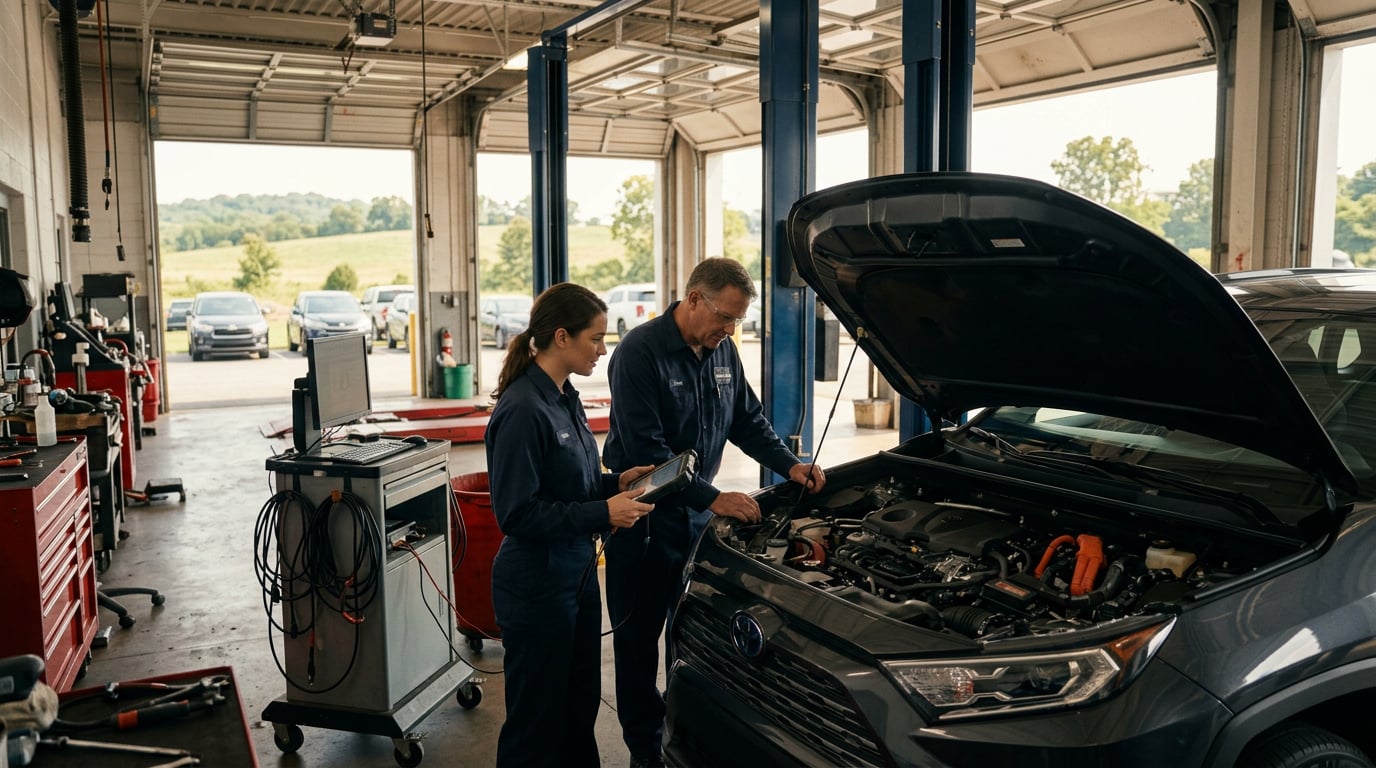
Yes, Certified Ford Dealers Can Service Every Component of Your Hybrid System
When drivers across Middle Tennessee ask whether a franchise dealership can handle high-voltage hybrid systems, the short answer is an unqualified yes. In fact, a factory-certified dealership like Newton Ford South is uniquely equipped, trained, and mandated by the manufacturer to service every single element of modern hybrid electric vehicles (HEVs) and plug-in hybrid electric vehicles (PHEVs). From the high-voltage lithium-ion traction battery pack to the dual-stage inverter/converter modules, permanent-magnet electric motors, regenerative braking stroke sensors, and dedicated liquid thermal management loops, authorized Ford dealership service bays are designed from the ground up to care for advanced electrified powertrains. Modern hybrid vehicles—such as the Ford F-150 PowerBoost Hybrid, Maverick Hybrid, Escape Hybrid, and Explorer Hybrid—are sophisticated mechanical and electronic ecosystems. Unlike traditional internal combustion engine (ICE) vehicles that rely solely on mechanical power and a standard 12-volt starter battery, hybrid vehicles blend gasoline engine operation with high-voltage electric propulsion operating at 300 to 400+ volts. Servicing these complex machinery matrices requires far more than standard wrenching; it demands high-voltage safety clearance, specialized factory diagnostic hardware like the Ford Integrated Diagnostic System (IDS) and Ford Diagnostic & Repair System (FDRS), and continuous technician certification through Ford Motor Company's rigorous training programs.
At Newton Ford South in Shelbyville, TN, our factory-trained Senior Master Technicians undergo rigorous EV and HEV specialized training to safely de-energize high-voltage systems, perform cell-level battery health diagnostics, balance voltage pack modules, service high-voltage inverter coolant loops, and recalibrate electronic control units (ECUs). Whether you live in Murfreesboro, Shelbyville, or Tullahoma, relying on a certified dealer ensures your high-voltage investment remains protected under factory warranty while operating at peak fuel efficiency and structural reliability for years to come.
What Does Factory Hybrid System Maintenance Actually Include?
Many vehicle owners mistakenly assume hybrid maintenance is identical to standard gasoline vehicle care or, conversely, that hybrids require zero mechanical maintenance beyond oil changes. The reality sits squarely in between. While hybrid powertrains reduce wear on components like brake pads and starter motors, they introduce specialized high-voltage components that require routine expert evaluation.
1. High-Voltage Battery Thermal Management & Filter Care: Hybrid batteries generate significant thermal stress during rapid charge and discharge cycles. Certified dealer maintenance includes inspecting high-voltage battery cooling fans, clearing auxiliary air intake ducts, replacing cabin thermal filters, and checking auxiliary electric cooling pumps to prevent battery overheating during hot Middle Tennessee summers.
2. Inverter & Motor Electronics Coolant Flushing: Hybrid systems utilize dedicated secondary cooling loops filled with specialized low-conductivity coolant to regulate inverter/converter modules and electric drive motors. Unlike engine coolant, this high-voltage cooling circuit requires factory-specified anti-corrosion fluid changes at specific mileage intervals to prevent electrical shorts and thermal throttling.
3. High-Voltage Bus Bar & Wiring Harness Inspection: Physical vibration, moisture, and thermal expansion can impact orange high-voltage cables and bus bar connectors. Technicians check insulation resistance, verify interlock circuit integrity, and inspect physical shielding for sign of damage or corrosion.
4. Software Module Flashing & Calibration: Ford frequently releases updated software calibrations for Powertrain Control Modules (PCM), Battery Energy Control Modules (BECM), and Transmission Control Modules (TCM). These updates refine regenerative braking blending, optimize battery state-of-charge algorithms, and smooth engine start-stop transitions.
5. Adapted Internal Combustion Engine (ICE) Service: Because hybrid gasoline engines stop and restart constantly under varying loads, engine oil accumulates fuel dilution and moisture differently than non-hybrid engines. Dealers use specialized full-synthetic low-viscosity oils and high-efficiency filters suited for frequent cold-restarts. You can easily schedule your next checkup using our online Service Appointment tool. High-Voltage vs Standard Repair: Why Independent Shops Often Avoid Hybrid Systems
Working on standard 12-volt vehicle electronics carries minimal risk of severe electric shock. By contrast, modern hybrid vehicles operate with high-voltage Direct Current (DC) battery packs capable of discharging 300 to 450+ volts with high amperage—voltage levels that can cause catastrophic arc flash injuries or fatal electric shocks if handled improperly. Consequently, OSHA and NFPA 70E mandate stringent workplace safety protocols for high-voltage automotive service.
Most independent, local repair shops simply do not invest in the necessary infrastructure, protective equipment, or ongoing safety certifications required to service high-voltage powertrains. Factory dealer service centers like Newton Ford South maintain specialized safety equipment including NFPA Class 0 1,000-Volt rated insulating gloves, arc-flash face shields, insulated fiberglass rescue hooks, insulated hand tools rated to IEC 60900 standards, and designated high-voltage service bay barricades.
Furthermore, generic aftermarket OBD-II scanners used by independent repair shops can only read standard global fault codes. They cannot communicate with Ford's proprietary module networks to read individual cell voltages, balance high-voltage battery contactors, or perform guided de-powering and re-energizing procedures through Ford's FDRS software.
Attempting to repair a hybrid vehicle at an uncertified shop risks damaging sensitive inverter chips, voiding your 8-year/100,000-mile factory battery warranty, or creating dangerous high-voltage short circuits. Trusting your vehicle to certified dealership experts ensures every procedure follows strict OEM safety guidelines and exact repair procedures.
How Does PowerBoost Hybrid Towing Compare to Standard EcoBoost Engines?
Truck owners across Middle Tennessee often wonder whether choosing an F-150 equipped with the 3.5L PowerBoost Full Hybrid V6 engine compromises heavy-duty towing capability compared to traditional EcoBoost twin-turbo V6 engines. The short answer: the PowerBoost Hybrid delivers instantaneous electric low-end torque while maintaining massive maximum towing capacities, making it a premier choice for pulling livestock trailers, boats, and heavy equipment across Bedford and Rutherford counties.
Instant Torque Fill
The PowerBoost Hybrid pairs Ford's twin-turbo 3.5L V6 with a 33 kW electric motor integrated into the 10-speed Modular Hybrid Transmission (MHT). This delivers an astounding 570 lb-ft of torque right off the line. While standard EcoBoost engines must wait for turbochargers to build boost, the electric motor provides instant mechanical thrust when pulling heavy trailers up steep grades along US-231 or I-24.
Thermal Management
Heavy towing creates substantial heat in both the engine and electric drive components. The PowerBoost Hybrid utilizes dual high-capacity cooling loops—one for engine coolant and oil, and a second liquid cooling system dedicated to the inverter and high-voltage traction battery. Proper dealer maintenance ensures both thermal loops maintain optimal pressure and fluid purity during arduous summer towing.
Pro Power Onboard
Beyond raw towing capacity, PowerBoost models offer available 7.2 kW Pro Power Onboard mobile generator capability. The 1.5 kWh lithium-ion battery functions as a heavy-duty generator to run power tools, camping gear, tailgating appliances, or job site equipment without needing to continuously idle an internal combustion engine. Explore our New F-150 SRP to see current PowerBoost availability. Key Warning Signs Your Hybrid System Needs Professional Dealer Diagnostics
High-Voltage Warning Icons
If your instrument cluster displays a yellow wrench light, a red battery symbol with an exclamation point, or the message 'Stop Safely Now', your vehicle's PCM has logged a fault code in the high-voltage interlock or isolation system. Immediate dealer evaluation using FDRS equipment is essential to prevent system shutoff.
Loud Fan Operations
Hearing an unusually loud cooling fan running under the rear seats (in hybrid cars/SUVs) or beneath the cab (in hybrid trucks) signals that high-voltage battery cell temperatures are spiking. This often indicates blocked air intake ducts, a failing thermal sensor, or compromised cell balance requiring service.
Unexpected MPG Drops
A sudden decrease in real-world fuel economy without external changes in driving style or tire pressure strongly points to reduced hybrid battery efficiency. When a high-voltage battery degrades or loses internal balance, the PCM relies more heavily on the gasoline engine, dropping your overall fuel economy.
Other symptoms including clunky electric-to-gas powertrain transitions, sluggish acceleration, or loss of regenerative brake charging should prompt a diagnostic checkup immediately. Ignoring early warning signs can convert minor electrical module adjustments into costly major hardware replacements. Reach out to our team directly by calling Call us at (931) 536-4424 to speak with a certified hybrid advisor. Understanding Factory Warranty Coverage for Hybrid Batteries and Components
One of the greatest financial protections when purchasing a Ford hybrid vehicle is the manufacturer's dedicated high-voltage component coverage. Every new Ford hybrid vehicle comes backed by an 8-year / 100,000-mile Unique Hybrid/Electric Vehicle Component Warranty. This factory warranty protects all major high-voltage hardware against defects in material and workmanship.
Covered Hybrid Components Include:
• High-Voltage Lithium-Ion Traction Battery Assembly
• Hybrid Power Electronics Control Module (HEV PCM)
• Inverter / Converter Module (DCDC Converter)
• Electric Drive Motor & Modular Hybrid Transmission (MHT)
• Battery Energy Control Module (BECM)
• High-Voltage Cables and Connectors
To maintain valid warranty coverage, Ford requires vehicle owners to perform scheduled maintenance according to OEM guidelines. Having your hybrid serviced at an authorized facility like Newton Ford South creates an official, tamper-proof electronic service record linked directly to your VIN in Ford's national database. If a high-voltage battery cell ever experiences premature degradation or failure, having full factory service records guarantees smooth warranty claim processing without delays or out-of-pocket dispute burdens.
If you are shopping for a pre-owned hybrid truck or SUV, exploring our Certified Inventory gives you access to Gold Certified Ford vehicles that pass a comprehensive 172-point inspection and include additional manufacturer-backed warranty coverage for added peace of mind. Do Ford Dealers Near Murfreesboro Offer Mobile Service or Pickup and Delivery?
For busy hybrid owners commuting between Murfreesboro, Shelbyville, and Tullahoma along US-231 and Highway 41A, taking time out of a busy workweek to sit in a waiting room can be inconvenient. Newton Ford South solves this problem by offering remote service options: Ford Mobile Service and Ford Pickup & Delivery.
With Ford Mobile Service, our custom-fitted service vans come directly to your home or office driveway. Certified technicians can perform routine hybrid maintenance—including synthetic oil changes, tire rotations, brake system inspections, 12V auxiliary battery testing, cabin air intake filter replacements, and FDRS software flashes—right where your vehicle is parked.
For more complex procedures requiring high-voltage lifts or isolation equipment, our complimentary Ford Pickup & Delivery service will pick up your hybrid vehicle from your residence, transport it to our Shelbyville dealership service department, complete all necessary maintenance, and return it directly to your driveway washed and ready to drive.
Hybrid Battery Health Diagnostics and Thermal Care in Middle Tennessee
Middle Tennessee experiences significant seasonal temperature shifts—from humid summer days exceeding 95°F to sub-freezing winter nights. These environmental extremes put unique stress on high-voltage lithium-ion and nickel-metal hydride traction batteries. Excessive heat accelerates chemical cell degradation, while extreme cold temporarily reduces usable electron mobility and battery capacity.
To counteract environmental degradation, Ford hybrid vehicles utilize advanced Battery Energy Control Modules (BECM) that actively monitor individual cell temperatures and internal resistance. During routine dealer maintenance, our factory technicians connect directly to the BECM using FDRS diagnostic software to perform comprehensive state-of-health (SOH) evaluations.
Key Dealer Battery Health Diagnostics Include:
• Individual Cell Voltage Balance Testing across all pack modules
• Internal Impedance & Resistance Logging
• Battery Thermal Sensor Calibration Checks
• High-Voltage Contactor Relay Reliability Tests
• Thermal Vent Cleaning & Debris Extraction
By identifying minor voltage imbalances between cell banks early, technicians can initiate software cell-balancing routines or replace individual sub-modules rather than waiting for an entire high-voltage battery pack failure. Learn more about our dealership values on our About Us page. Regenerative Braking Systems: How Dealer Techs Maintain Energy Recovery Systems
How Regenerative Braking Works
When you press the brake pedal in a Ford Escape Hybrid or F-150 PowerBoost, the vehicle first uses the electric traction motor in reverse as a generator, converting kinetic energy into electricity to recharge the high-voltage battery. Hydraulic friction brakes only engage during hard stops or under 5 mph.
Extended Pad Longevity
Because regenerative braking absorbs up to 90% of deceleration energy, physical brake pads and rotors experience drastically reduced wear. It is common for hybrid brake pads to last well beyond 80,000 to 100,000 miles when properly maintained.
Brake Sensor Calibration
However, electronic brake blending relies on high-precision brake pedal stroke sensors and Electro-Hydraulic Brake (EHB) control modules. Dealer technicians recalibrate these pressure sensors during maintenance to ensure smooth, seamless transitions between electric and friction braking.
Additionally, because hybrid brake calipers are used less frequently in light braking, caliper slide pins and hardware can corrode or bind due to moisture exposure in humid Middle Tennessee climates. Factory dealer service includes lubricating caliper guide pins and performing electronic brake fluid flushes to maintain system pressure integrity. Order genuine OEM brake hardware directly through our Parts Department. Which Ford Dealer is Closest to Murfreesboro and Shelbyville, TN for Hybrid Care?
For vehicle owners living in Murfreesboro, Shelbyville, Tullahoma, Manchester, or Lynchburg, Newton Ford South serves as the premier regional center for high-voltage hybrid and EV maintenance. Conveniently located at 2811 US-231 in Shelbyville, TN 37160, our state-of-the-art facility is just a short drive south down Highway 231 from Murfreesboro.
Why travel to crowded urban service centers when you can receive personalized, community-focused service from certified Master Technicians right here in Shelbyville? You can easily Get Directions to Newton Ford South or explore our custom buying options with Newton Fastpass. Newton Ford South Contact Information:• Address: 2811 US Hwy 231 N, Shelbyville, TN 37160 • Phone:Call us at (931) 536-4424
• Service Center Hours: Monday – Friday 7:30 AM – 5:30 PM, Saturday 8:00 AM – 4:00 PM
• High-Voltage Certified Technicians: On-site daily
• Customer Lounge: Free Wi-Fi, work stations, quiet seating, complimentary coffee Discover why local drivers consistently rate Newton Ford South as Middle Tennessee's top choice for vehicle sales and service by reading Why Choose Newton Ford South. Essential Preventative Maintenance Schedule for Hybrid Truck and SUV Owners
Following a dedicated preventative maintenance schedule is key to maximizing battery health, component longevity, and overall fuel efficiency. Below is the recommended factory service roadmap for Ford hybrid models operating under Middle Tennessee driving conditions.
Interval (Miles) | Service Items Covered | System Inspected |
|---|
10,000 Miles | Synthetic Oil & Filter Change, Tire Rotation, Multi-Point Inspection | 12V Auxiliary Battery & Coolant Levels |
20,000 Miles | Cabin Air Filter Replacement, Battery Cooling Vent Inspection | High-Voltage Wiring & Interlock Cables |
30,000 Miles | Engine Air Filter Replacement, Brake System & Caliper Pin Lube | Regenerative Brake Sensor Calibration |
60,000 Miles | Inverter Electronics Secondary Coolant Inspection & Top-Off | Battery Cell Voltage Balance Test (FDRS) |
100,000 Miles | Full High-Voltage Inverter Coolant Flush, Spark Plugs Replacement | Complete Powertrain Software Flash Update |
Whether you own an Escape Hybrid, Explorer Hybrid, Maverick Hybrid, or F-150 PowerBoost, adhering to this interval matrix protects your investment. You can easily apply for vehicle upgrades or trade-ins through our Value Your Trade or Financing portals. Schedule Your Certified Hybrid Service at Newton Ford South Today
Don't leave high-voltage powertrain care to chance. Trust the factory-certified Senior Master Technicians at Newton Ford South in Shelbyville, TN. From routine battery intake duct cleanings and inverter coolant flushes to complex diagnostic module troubleshooting, our team has the specialized tooling and high-voltage training to keep your hybrid performing at peak efficiency.
Whether you want to drop your truck off in Shelbyville, schedule our Mobile Service van to come to your Murfreesboro driveway, or take advantage of concierge Pickup & Delivery, booking your appointment takes just minutes online.