Why Do Different Vehicle Valuation Sites Give Different Estimates?
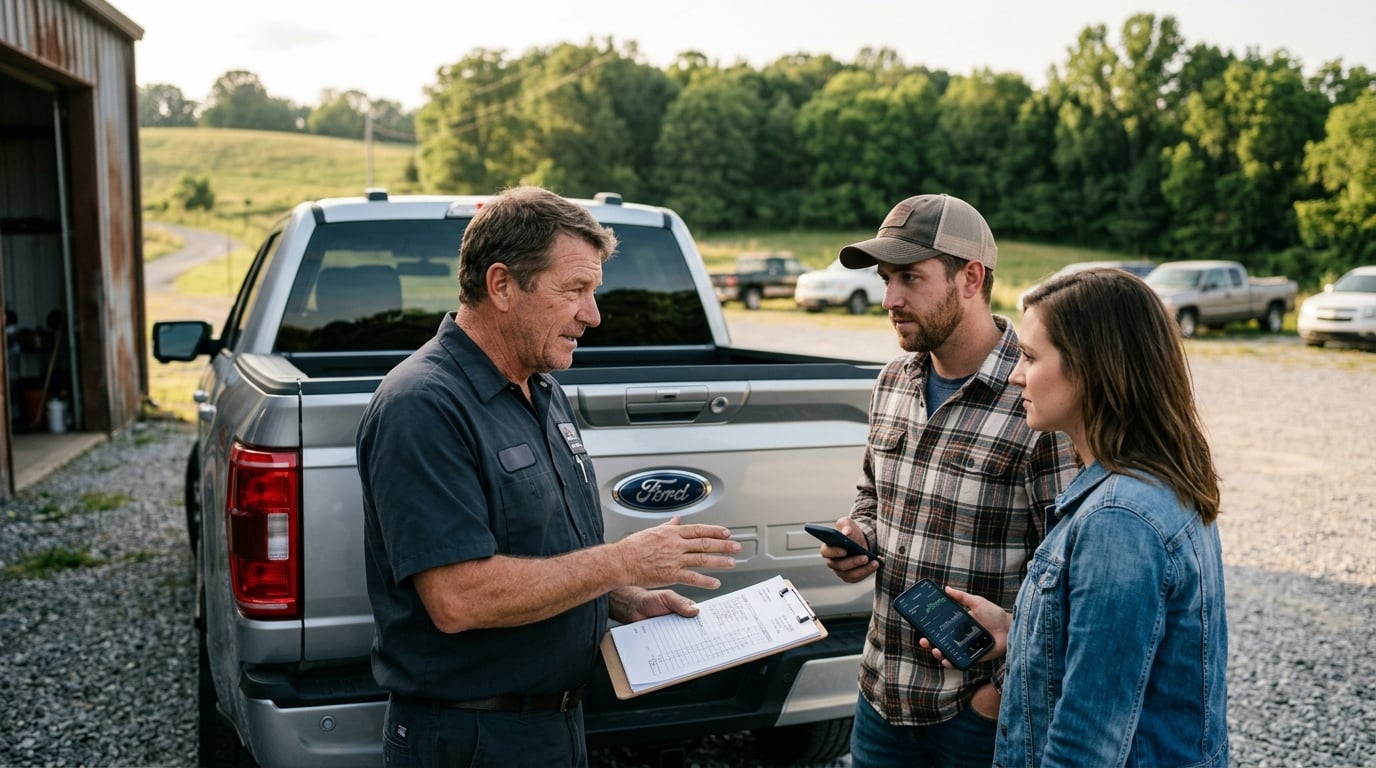
Valuation sites produce differing estimates because each platform uses proprietary evaluation algorithms, accesses different wholesale auction databases, and refreshes pricing metrics on distinct schedules. Certain valuation services emphasize nationwide retail listing averages, while others lean heavily on regional wholesale transaction records, resulting in noticeable variations for the exact same vehicle.
Understanding these discrepancies starts with recognizing how digital pricing tools aggregate data. Valuation algorithms analyze millions of historical sales, active dealer listings, and regional auction reports. However, no two digital platforms draw from the exact same data sources or weight market factors identically. One tool might prioritize live retail asking prices from internet listings across the country, while another focuses tightly on local wholesale transactions at regional dealer auctions. Because retail prices include dealer reconditioning expenses and profit margins, sites relying on retail data often show higher baseline numbers than those built strictly on wholesale trade figures.
Local demand plays a massive role in valuation variances as well. Regional preference for four-wheel-drive trucks, spacious family SUVs, or fuel-efficient commuter cars directly influences market value. A vehicle surrounded by open farmland and rolling terrain around Tullahoma often commands stronger regional demand than the exact same model in an urban market where compact cars dominate. Digital valuation engines update their regional adjustments at different intervals—some update weekly based on real-time sales, while others adjust monthly or quarterly. This delay creates temporary pricing gaps between online calculators.
To get a true picture of your car's worth, treat online estimates as general ranges rather than fixed guarantees. At Newton Ford South, our appraisal team compares multiple wholesale benchmark guides alongside live local market conditions to craft a fair, transparent offer. If you want to learn more about our customer-first approach, review why local drivers trust Newton Ford South for their vehicle appraisals. When you are ready for an accurate in-person evaluation, visit our Shelbyville showroom address or give our staff a quick phone call to speak directly with an appraiser.
Table of Contents
- What Is the Difference Between Trade-In Value and Private Party Value?
- How Do Sales Tax Credits and Existing Loans Impact Your Final Payout?
- How Reconditioning Costs, Vehicle History Reports, and Accidents Affect Valuation
- Can You Negotiate a Dealership Trade-In Offer?
- Common Questions Drivers Ask Most About Vehicle Trade-Ins
- Simple Steps to Prepare Your Vehicle for Appraisal
What Is the Difference Between Trade-In Value and Private Party Value?
Trade-in value is the wholesale cash or credit amount a dealership offers for a vehicle, whereas private party value represents the price an individual buyer pays directly to a private seller. Dealership trade-in offers typically run 15% to 25% below private party values because the dealer absorbs detailing costs, mechanical inspections, reconditioning fees, and inventory resale risks.
Selling a car privately can yield a higher gross sales figure, but it comes with substantial time investment, administrative effort, and financial risk. Private sellers must handle individual inquiries, arrange safe meeting locations for test drives, manage bank transfers or cashier's checks, and process title transfers at the local county clerk's office. Furthermore, private buyers frequently struggle to secure financing for older vehicles, leading to failed transactions or extended listing periods on public classified platforms.
In contrast, trading in your vehicle streamlines the entire process into a single, straightforward transaction. When you trade in your vehicle at a dealership, you eliminate the hassle of listing ads, negotiating with strangers, and waiting weeks for a serious buyer. The dealership handles all loan payoffs, title processing, and DMV paperwork on the spot.
Drivers looking to maximize their trade value can conveniently start the process online. You can quickly value your trade online using our transparent appraisal tool to get an instant baseline estimate. From there, applying that value directly toward our pre-owned vehicle inventory allows you to upgrade your ride with zero gap in personal transportation.
How Do Sales Tax Credits and Existing Loans Impact Your Final Payout?
Trading in a car reduces your overall purchase price and creates a significant tax credit in states that assess sales tax only on the net price difference between the new car and trade allowance. When an existing auto loan remains on the vehicle, the dealership settles the payoff balance directly with your lender, applying any positive equity to reduce your financing amount or rolling negative equity into the new loan contract.
The sales tax incentive is one of the most significant financial advantages of a dealership trade-in. For instance, if you purchase a new vehicle valued at $35,000 and receive $15,000 for your trade-in, you only pay state and local sales tax on the remaining $20,000 difference. This tax offset effectively narrows the price gap between trade-in offers and private party valuations, saving buyers hundreds or even thousands of dollars in upfront taxation.
Handling an active auto loan during a trade-in is equally seamless. Your dealership appraiser contacts your lienholder to obtain a 10-day payoff quote, which represents the exact principal and accrued interest required to clear the debt.
- Positive Equity: If your trade-in appraisal is higher than your remaining loan balance, the extra amount serves as positive equity, acting as a direct down payment toward your next vehicle.
- Negative Equity: If you owe more than the vehicle's current market value, the remaining balance can often be consolidated directly into your new vehicle's financing agreement, subject to credit approval.
Navigating loan payoffs and tax savings is simple when you work with experienced finance professionals. You can easily apply for vehicle financing online to explore personalized payment options. Whether you are eyeing a brand-new model or upgrading to our certified pre-owned vehicle lineup, structured financing makes the transition manageable for every budget.
How Reconditioning Costs, Vehicle History Reports, and Accidents Affect Valuation
Vehicle history reports and reconditioning evaluations directly impact a dealership's appraisal by uncovering hidden damage, structural repairs, or neglected routine service. Verified accident histories typically lower a vehicle's trade-in value by 7% to 12% compared to a clean-title counterpart, while documented maintenance records can increase an offer by 3% to 5%.
Automotive valuation tools rely on standardized usage benchmarks to establish baseline pricing. A vehicle is expected to accumulate roughly 12,000 miles per year, meaning a 3-year-old vehicle is evaluated against a 36,000 miles baseline. Exceeding this benchmark reduces value due to mechanical wear, while lower mileage boosts overall market appeal. Vehicle condition tiers range from Excellent to Poor:
- Excellent Condition: Represents flawless mechanical health, pristine paint, and zero cosmetic blemishes, which can add 5% to 8% above baseline market value.
- Fair or Poor Condition: Vehicles with visible body damage, worn tires, or illumination of the check engine light face trade-in reductions of 10% to 30% to cover necessary reconditioning work.
Long daily highway drives on the interstate route from Spring Hill often build up mileage quickly, making documented maintenance even more critical to retaining resale value. When local drivers bring in a vehicle for an appraisal, the first thing our team checks alongside the walk-around is the vehicle history report to verify complete service records. Skipping oil changes or manufacturer service intervals can reduce value by up to 9%, as appraisers must budget for potential internal component wear.
| Condition & History Factor | Estimated Impact on Trade-In Value |
|---|---|
| Excellent Condition + Full Records | 5% to 8% increase |
| Documented Regular Maintenance | 3% to 5% increase |
| Verified Accident History | 7% to 12% reduction |
| Missing Maintenance Records | Up to 9% reduction |
| Fair or Poor Overall Condition | 10% to 30% reduction |
To protect your vehicle's future resale value, stay proactive with routine maintenance by using our online portal to schedule a maintenance appointment with factory-certified technicians. Keeping your current vehicle in peak running order ensures maximum return when you are ready to shop our new Ford inventory.
Can You Negotiate a Dealership Trade-In Offer?
Dealership trade-in offers are fully negotiable when supported by documented service history, recent local market sales data, or clean vehicle history reports. Presenting organized repair receipts and realistic market appraisals gives vehicle appraisers a clear justification to raise their initial wholesale offer.
Negotiating a trade-in successfully relies on preparation rather than guesswork. Arrive at the dealership with printed copies of market estimates and a neatly organized folder containing your vehicle's service history. Demonstrating that your car received regular oil changes, tire rotations, and brake inspections proves that the vehicle requires minimal mechanical reconditioning, allowing the appraiser to pass those savings directly to you.
High-value vehicle accessories also add tangible value during negotiation. Upgrades like heavy-duty all-weather floor liners, step-assist running boards, or factory-installed trailer hitches enhance vehicle utility and buyer demand. Pointing out these features ensures they are factored into the final evaluation figure.
If your vehicle needs minor touch-ups or missing accessories before an appraisal, you can order OEM parts and accessories directly through our dedicated team to maintain factory specifications and presentation.
Common Questions Drivers Ask Most About Vehicle Trade-Ins
Q: Does a minor fender bender lower my vehicle's trade-in value?
Yes, even minor accidents recorded on vehicle history reports can lower trade-in valuation by 7% to 12% compared to similar clean-title vehicles. Appraisers adjust offers to account for diminished resale market value and potential hidden body repairs. However, providing official repair receipts from a certified collision center proves the restoration was completed properly, which helps minimize the overall reduction in value.
Q: What paperwork must I bring when trading in my car?
You should bring the original vehicle title (if paid off), current vehicle registration, a valid driver's license, proof of auto insurance, and all sets of key fobs. If you still owe money on an existing car loan, bring your current account statement along with your lender's payoff information. Having complete service records on hand also helps substantiate your car's condition.
Q: How long is a dealership trade-in appraisal quote valid?
Most dealership trade-in appraisals remain valid for 7 to 10 days or up to 500 additional driving miles, whichever comes first. This window gives buyers adequate time to review financing terms, compare inventory options, and gather necessary title paperwork without worrying about daily market fluctuations affecting their written offer.
Q: Can I trade in a vehicle if I owe more than it is worth?
Yes, you can trade in a vehicle with negative equity. The dealership calculates the difference between your trade-in appraisal and your remaining loan payoff balance. You can either pay that difference out-of-pocket at signing or roll the remaining balance directly into your new vehicle financing agreement, subject to credit approval.
Q: Should I repair minor dents or replace worn tires before trading in?
Major mechanical fixes or expensive paint overhauls rarely yield a 100% return on investment prior to trading in, as dealerships complete reconditioning at wholesale labor and parts rates. However, completing low-cost tasks like thoroughly detailing the cabin, washing the exterior, and replacing minor blown fuses or burnt-out exterior bulbs makes a strong visual first impression that positively influences the appraisal. To discover more details about our customer service standards, feel free to learn more about our team.
Simple Steps to Prepare Your Vehicle for Appraisal
Preparing your vehicle for an appraisal involves cleaning the cabin, washing the exterior, organizing service records, and bringing both keys along with your title or payoff document. Following these steps helps the appraiser evaluate your vehicle accurately and ensures you receive the highest possible trade-in allowance.
Maximizing your vehicle's trade-in value comes down to clear documentation and thoughtful presentation. Gathering your maintenance receipts, clearing out personal belongings, and addressing simple cosmetic details shows the appraiser that the car was genuinely cared for.
When you are ready to evaluate your current car and explore upgrade options, stop by our dealership in Shelbyville for a no-pressure, transparent evaluation. Our team is dedicated to providing fair market values and straightforward financing solutions tailored to your life. Start the conversation today by giving our team a quick call—your next vehicle is waiting at Newton Ford South.