What Is the Difference Between Trade-In Value and Private Party Value?
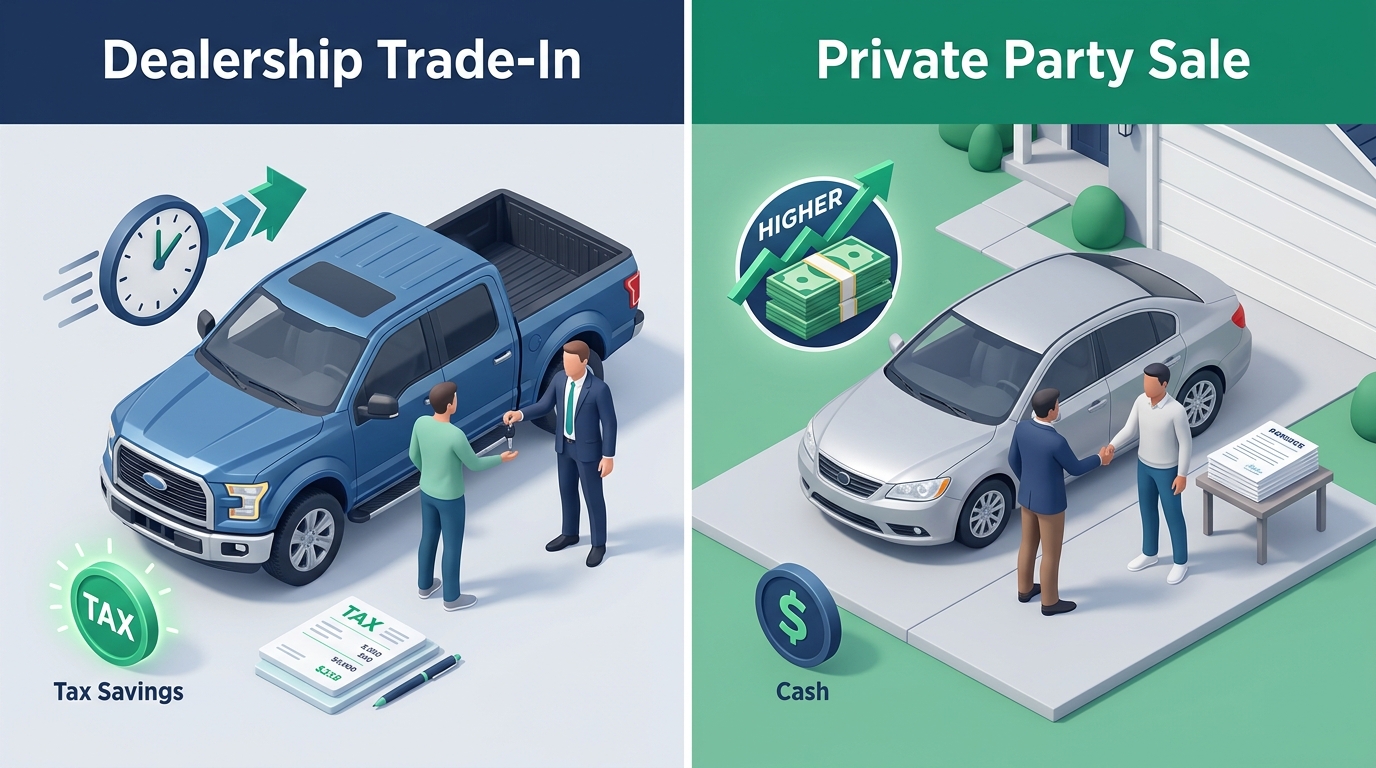
Trade-in value is the wholesale amount a dealership offers for your vehicle to apply directly toward another purchase, while private party value is the price you might receive selling the car yourself to an individual buyer. Private party transactions usually yield a higher gross sales price because you assume the advertising, test drives, and title transfer risks. However, trading in at a dealership eliminates private sales hassle, accelerates your purchase process, and provides an immediate state sales tax credit on your replacement vehicle.
Understanding the spread between these two figures starts with wholesale market dynamics. Dealerships determine trade-in values based on recent auction data, local market demand, necessary mechanical reconditioning, and safety inspections. Because a dealership must invest time and money into detailing, repairing, and marketing the car for resale—while also assuming the financial risk of carrying inventory—trade-in offers generally run roughly 15% to 20% below retail market rates.
In contrast, private party sales skip the middleman. You set your own listing price based on classified listings, meet with prospective buyers, handle negotiations, and process cash or cashier's check payments. While this direct route can net more money upfront, it requires significant effort. You must photograph the car, publish advertisements, answer inquiries, schedule meetings with strangers, and handle transfer paperwork at the local county clerk's office.
For many drivers, the state sales tax offset substantially narrows the actual financial gap between trading in and selling privately. In Tennessee, sales tax applies only to the net difference between your new car purchase price and your trade-in allowance. For example, if you trade in a vehicle valued at $20,000 toward a an example MSRP 2026 Ford F-150 STX 4x4 SuperCrew, you only pay state sales tax on the remaining balance. That tax saving often closes most of the gap between a wholesale trade offer and a private party sale, without any of the direct listing stress.
Our team makes evaluating your vehicle simple and transparent. When you are ready to explore your options, you can get directions to our Shelbyville showroom or start by giving our appraisal team a call today.
Table of Contents
- Why Do Valuation Sites Give Different Estimates for the Same Car?
- At What Mileage Milestones Does Vehicle Trade-In Value Drop Most?
- How Can You Avoid Negative Equity and Maximize Tax Savings on a Trade-In?
- How Long Are Instant Cash Offers Valid and Can You Trade In Without a Title?
- Frequently Asked Questions About Vehicle Trade-Ins
- How to Get the Highest Trade-In Offer
Why Do Valuation Sites Give Different Estimates for the Same Car?
Valuation sites give different estimates for the exact same car because each provider uses its own proprietary algorithm, pulls from distinct wholesale transaction databases, and updates pricing on varying schedules. One platform may heavily weight recent regional wholesale auctions, while another relies on national retail listing prices or user-submitted sale data, resulting in valuation variations of several thousand dollars.
When local vehicle owners discuss trade-in appraisals with our team, the question we hear most often is why online valuation guides show different figures than a physical dealer appraisal. The answer lies in how these digital tools process vehicle details. Online estimators rely on user-selected condition tiers—such as Excellent, Very Good, Good, or Fair. Studies indicate that fewer than 5% of used vehicles truly qualify for an "Excellent" rating, yet most owners naturally select higher condition tiers online, generating an unrealistically high digital quote.
Physical appraisals factor in concrete variables that automated online tools cannot fully evaluate:
- Paint depth, clear coat oxidation, and minor body panel scratches
- Tire tread depth and remaining brake pad life
- Interior odor, upholstery wear, and cabin trim condition
- Windshield chips, wheel scuffs, and undercarriage rust
- Complete vehicle history reports, including accident records and frame inspections
Regional supply and demand play an equally vital role. A fuel-efficient crossover like the 2026 Ford Escape with an EPA-rated 26 city / 32 hwy MPG might command premium trade value in suburban commuter corridors, while a 4x4 truck with a 3.5L engine and 10,400 lbs towing capacity holds higher demand in rural working areas. Online tools often apply broad geographic averages that fail to capture these localized buyer preferences.
Discover why local drivers choose Newton Ford South for straightforward, realistic vehicle appraisals. We cross-reference live regional market data with a thorough physical inspection to provide fair, transparent numbers, whether you intend to buy today or simply explore our current pre-owned inventory.
At What Mileage Milestones Does Vehicle Trade-In Value Drop Most?
Vehicle trade-in values experience their steepest drops at major warranty and psychological mileage thresholds, specifically at 36,000 miles, 60,000 miles, and 100,000 miles. Crossing these key markers triggers shifts in wholesale buyer demand, reconditioning requirements, and mechanical risk assessments.
The standard baseline for vehicle usage in evaluation guidebooks is 12,000 miles per year. Accumulating mileage faster than this baseline causes predictable depreciation, but the drop-off accelerates dramatically at these specific milestones:
- 36,000 Miles: This marks the expiration of most factory bumper-to-bumper warranties. Vehicles under 36,000 miles command premium trade value because they carry remaining factory coverage and qualify easily for manufacturer certified pre-owned programs.
- 60,000 Miles: This threshold represents the end of standard factory powertrain warranties for many manufacturers. It also coincides with major recommended service intervals, including transmission fluid flushes, brake replacements, and spark plug services.
- 100,000 Miles: The six-figure mark remains the most significant psychological barrier in auto retailing. Once an odometer hits 100,000 miles, commercial lenders restrict loan terms for second owners, automated valuation models drop condition ratings, and wholesale auction bidding becomes far more conservative.
For commuters tackling the rolling hills around Tullahoma, keeping up with routine maintenance and staying aware of annual mileage baselines helps preserve maximum trade equity. Even minor mechanical reconditioning costs—such as replacing worn tires or fixing minor paint blemishes—are deducted directly from wholesale trade values. Documented service records prove that major maintenance intervals were completed, mitigating the drop associated with higher mileage.
| Trim | Base MSRP | Destination Charge |
|---|---|---|
| XL Regular Cab 6-1/2’ Box | $37,290 | $2,795 |
| XL SuperCrew 5-1/2’ Box | $43,935 | $2,795 |
| STX SuperCrew 5-1/2’ Box | $47,190 | $2,795 |
| XLT SuperCrew 5-1/2’ Box | $48,055 | $2,795 |
| Lariat SuperCrew 5-1/2’ Box | $59,560 | $2,795 |
| King Ranch SuperCrew 5-1/2’ Box | $65,825 | $2,795 |
| Platinum SuperCrew 5-1/2’ Box | $68,800 | $2,795 |
| Tremor 4x4 SuperCrew 5-1/2’ Box | $64,915 | $2,795 |
| Raptor 4x4 SuperCrew 5-1/2’ Box | $79,005 | $2,795 |
If your vehicle is approaching one of these major mileage thresholds, assessing your equity early allows you to lock in maximum return. You can evaluate your vehicle's current standing using our online trade-in appraisal tool, upgrade to our new Ford lineup, or explore high-value certified pre-owned Ford vehicles.
Pricing
Pricing by trim
| Feature | King Ranch 4x4 SuperCrew 5-1/2’ Box | King Ranch 4x4 SuperCrew 6-1/2’ Box | King Ranch SuperCrew 5-1/2’ Box | Lariat 4x4 SuperCrew 5-1/2’ Box | Lariat 4x4 SuperCrew 6-1/2’ Box | Lariat SuperCrew 5-1/2’ Box | Platinum 4x4 SuperCrew 5-1/2’ Box | Platinum 4x4 SuperCrew 6-1/2’ Box | Platinum SuperCrew 5-1/2’ Box | Police Responder 4x4 SuperCrew 5-1/2’ Box | Raptor 4x4 SuperCrew 5-1/2’ Box | STX 4x4 SuperCab 6-1/2’ Box | STX 4x4 SuperCrew 5-1/2’ Box | STX SuperCab 6-1/2’ Box | STX SuperCrew 5-1/2’ Box | Tremor 4x4 SuperCrew 5-1/2’ Box | XL 4x4 Regular Cab 6-1/2’ Box | XL 4x4 Regular Cab 8’ Box | XL 4x4 SuperCab 6-1/2’ Box | XL 4x4 SuperCrew 5-1/2’ Box | XL 4x4 SuperCrew 6-1/2’ Box | XL Regular Cab 6-1/2’ Box | XL Regular Cab 8’ Box | XL SuperCab 6-1/2’ Box | XL SuperCrew 5-1/2’ Box | XLT 4x4 SuperCab 6-1/2’ Box | XLT 4x4 SuperCrew 5-1/2’ Box | XLT 4x4 SuperCrew 6-1/2’ Box | XLT SuperCab 6-1/2’ Box | XLT SuperCrew 5-1/2’ Box |
|---|---|---|---|---|---|---|---|---|---|---|---|---|---|---|---|---|---|---|---|---|---|---|---|---|---|---|---|---|---|---|
| :-- | :-- | :-- | :-- | :-- | :-- | :-- | :-- | :-- | :-- | :-- | :-- | :-- | :-- | :-- | :-- | :-- | :-- | :-- | :-- | :-- | :-- | :-- | :-- | :-- | :-- | :-- | :-- | :-- | :-- | :-- |
| Base MSRP | $69,625 | $69,930 | $65,825 | $63,360 | $63,965 | $59,560 | $72,600 | $72,905 | $68,800 | $52,350 | $79,005 | $48,655 | an example MSRP | $44,855 | $47,190 | $64,915 | $44,600 | $42,305 | $45,400 | $47,820 | $50,475 | $39,585 | $37,290 | $41,600 | $43,935 | $49,495 | $51,915 | $54,555 | $45,695 | $48,055 |
| Destination charge | $2,795 | $2,795 | $2,795 | $2,795 | $2,795 | $2,795 | $2,795 | $2,795 | $2,795 | $2,595 | $2,795 | $2,795 | $2,795 | $2,795 | $2,795 | $2,795 | $2,795 | $2,795 | $2,795 | $2,795 | $2,795 | $2,795 | $2,795 | $2,795 | $2,795 | $2,795 | $2,795 | $2,795 | $2,795 | $2,795 |
Fuel Economy
Fuel economy and range by trim
| Feature | King Ranch 4x4 SuperCrew 5-1/2’ Box | King Ranch 4x4 SuperCrew 6-1/2’ Box | King Ranch SuperCrew 5-1/2’ Box | Lariat 4x4 SuperCrew 5-1/2’ Box | Lariat 4x4 SuperCrew 6-1/2’ Box | Lariat SuperCrew 5-1/2’ Box | Platinum 4x4 SuperCrew 5-1/2’ Box | Platinum 4x4 SuperCrew 6-1/2’ Box | Platinum SuperCrew 5-1/2’ Box | Police Responder 4x4 SuperCrw 5-1/2’ Box | Raptor 4x4 SuperCrew 5-1/2’ Box | STX 4x4 SuperCab 6-1/2’ Box | STX 4x4 SuperCrew 5-1/2’ Box | STX SuperCab 6-1/2’ Box | STX SuperCrew 5-1/2’ Box | Tremor 4x4 SuperCrew 5-1/2’ Box | XL 4x4 Regular Cab 6-1/2’ Box | XL 4x4 Regular Cab 8’ Box | XL 4x4 SuperCab 6-1/2’ Box | XL 4x4 SuperCrew 5-1/2’ Box | XL 4x4 SuperCrew 6-1/2’ Box | XL Regular Cab 6-1/2’ Box | XL Regular Cab 8’ Box | XL SuperCab 6-1/2’ Box | XL SuperCrew 5-1/2’ Box | XLT 4x4 SuperCab 6-1/2’ Box | XLT 4x4 SuperCrew 5-1/2’ Box | XLT 4x4 SuperCrew 6-1/2’ Box | XLT SuperCab 6-1/2’ Box | XLT SuperCrew 5-1/2’ Box |
|---|---|---|---|---|---|---|---|---|---|---|---|---|---|---|---|---|---|---|---|---|---|---|---|---|---|---|---|---|---|---|
| :-- | :-- | :-- | :-- | :-- | :-- | :-- | :-- | :-- | :-- | :-- | :-- | :-- | :-- | :-- | :-- | :-- | :-- | :-- | :-- | :-- | :-- | :-- | :-- | :-- | :-- | :-- | :-- | :-- | :-- | :-- |
| MPG | 17 city / 23 hwy / 19 combined | 17 city / 23 hwy / 19 combined | 17 city / 25 hwy / 20 combined | 17 city / 23 hwy / 19 combined | 17 city / 23 hwy / 19 combined | 17 city / 25 hwy / 20 combined | 17 city / 23 hwy / 19 combined | 17 city / 23 hwy / 19 combined | 17 city / 25 hwy / 20 combined | — | 14 city / 18 hwy / 16 combined | 18 city / 23 hwy / 20 combined | 18 city / 23 hwy / 20 combined | 19 city / 25 hwy / 21 combined | 19 city / 25 hwy / 21 combined | 16 city / 21 hwy / 18 combined | 16 city / 24 hwy / 19 combined | 18 city / 23 hwy / 20 combined | 18 city / 23 hwy / 20 combined | 18 city / 23 hwy / 20 combined | 17 city / 23 hwy / 19 combined | 16 city / 24 hwy / 19 combined | 19 city / 25 hwy / 21 combined | 19 city / 25 hwy / 21 combined | 19 city / 25 hwy / 21 combined | 18 city / 23 hwy / 20 combined | 18 city / 23 hwy / 20 combined | 17 city / 23 hwy / 19 combined | 19 city / 25 hwy / 21 combined | 19 city / 25 hwy / 21 combined |
How Can You Avoid Negative Equity and Maximize Tax Savings on a Trade-In?
You can avoid negative equity by applying a larger cash down payment, selecting shorter loan terms, and utilizing the state sales tax offset created by your trade-in allowance. Negative equity—commonly called being "underwater" or "upside-down"—occurs when your remaining auto loan balance exceeds the vehicle's current market value.
When you trade in a car with negative equity, that unpaid balance must be satisfied. You can either pay the difference out of pocket in cash or roll the remaining debt into your replacement vehicle's loan. Rolling negative equity forward increases your new monthly payment and accelerates depreciation on the next car, compounding the financial challenge over time.
To avoid or correct negative equity during a vehicle purchase, consider these proven strategies:
- Make a 20% Down Payment: Putting down at least 20% in cash or trade equity absorbs early depreciation and keeps your loan balance lower than the vehicle's market value.
- Choose Shorter Loan Terms: Select financing terms of 48 to 60 months rather than extended 72- or 84-month contracts. Shorter loans pay down principal faster than the car depreciates.
- Utilize the State Sales Tax Credit: Trading in directly at a dealership reduces your taxable purchase amount dollar-for-dollar with your trade allowance. On a $25,000 trade-in allowance, a 7% state tax rate yields an immediate $1,750 tax savings, effectively boosting your total trade realization.
- Maintain Mechanical Condition: Keeping your current vehicle in top repair minimizes reconditioning deductions.
In agricultural and equestrian communities like Shelbyville, well-maintained trucks with clean undersides and documented maintenance histories fetch top dollar during appraisal. Completing minor repairs or taking care of open recall items before bringing your vehicle in protects every dollar of your trade equity. Our certified technicians can help keep your current ride in peak shape by scheduling a service appointment prior to appraisal.
How Long Are Instant Cash Offers Valid and Can You Trade In Without a Title?
Instant cash offers generated online are typically valid for 7 days or 250 to 500 additional miles, and you can still trade in a vehicle with a lost title if the dealership assists you in filing for a duplicate title or obtaining a lien payoff release. These time and mileage boundaries ensure that the market data and physical condition used to generate the offer remain accurate.
Online valuation tools calculate instant cash offers based on real-time wholesale market values. Because wholesale markets shift weekly based on auction trends and inventory demand, cash offers carry strict expiration limits. If you exceed the 7-day window or drive beyond the allowable mileage limit, the appraisal must be updated to reflect current market conditions and odometer readings.
Trading in a vehicle without a physical paper title is a routine procedure at established dealerships. Depending on your ownership status, the process works as follows:
- Vehicles with an Active Loan: If you are still making loan payments, the lender holds the title electronically or physically. Our finance department contacts your lender directly to obtain a 10-day payoff statement, pays off the remaining balance, and transfers the title directly from the bank.
- Paid-Off Vehicles with a Lost Title: If you own the vehicle outright but lost the physical paper title, our team can help you complete state duplicate title application forms (such as a power of attorney and title application) to obtain a replacement directly through the county clerk.
Having your driver's license, vehicle registration, all set of keys, and current loan account information ready accelerates the transaction. You can initiate your next transaction today by submitting an online financing application.
Frequently Asked Questions About Vehicle Trade-Ins
Q: Does aftermarket modification increase or decrease trade-in value?
Aftermarket modifications like lift kits, custom exhaust systems, or non-factory wheels generally decrease trade-in value or remain neutral. While custom upgrades are valuable to individual enthusiasts, dealerships must return modified vehicles closer to factory condition to satisfy general retail buyers, pass safety inspections, and qualify for warranty coverage. Factory-installed options always preserve resale value far better than third-party accessories.
Q: Can I trade in a vehicle if I still owe more than it is worth?
Yes, you can trade in a vehicle with negative equity. The dealership calculates your trade-in value, deducts that amount from your total loan payoff, and calculates the remaining deficit balance. You can pay that difference in cash at closing or, if lender credit guidelines permit, roll the remaining balance into your new financing package.
Q: What documentation do I need to bring for a trade-in appraisal?
You should bring your physical vehicle title (if paid off), current vehicle registration card, valid driver's license, all sets of factory key fobs, and proof of auto insurance. If you have an active car loan, bring your lender account details and a recent statement showing your account number to facilitate a 10-day loan payoff calculation.
Q: Are trade-in valuation estimates negotiable at the dealership?
Yes, trade-in valuations are negotiable. You can support a higher valuation request by presenting documented service records, bringing clean vehicle history reports, showing recent local sales of comparable models, and pointing out premium factory options like tow packages or leather seating.
Q: Should I fix minor dent and scratch damage before trading in my car?
In most cases, you should let the dealership handle body repairs. Dealerships perform reconditioning, touch-up paint, and dent repair at internal wholesale costs that are significantly lower than retail body shop rates. Spending $500 at a retail body shop rarely yields a full $500 increase in trade-in offer value.
Learn more about our transparent appraisal process by learning more about our team or maintain your vehicle with genuine components from our ordering genuine parts online store.
How to Get the Highest Trade-In Offer
Maximizing your vehicle trade-in value comes down to preparation, timing, and clear documentation. By addressing minor cosmetic details, gathering maintenance records, understanding your loan payoff, and taking advantage of state sales tax credits, you ensure that every bit of equity built into your vehicle works directly for you on your next purchase.
Before bringing your car in for a physical appraisal, wash the exterior thoroughly, vacuum the cabin, remove all personal items, and ensure all original equipment—including floor mats, cargo covers, and spare keys—is present. Having these items organized demonstrates pride of ownership and helps appraisers place your vehicle in the highest possible condition tier.
Our team at Newton Ford South is committed to providing straightforward, market-reflective valuations in a supportive, no-pressure environment. Whether you are looking to trade up to a brand-new Ford truck or simply want an accurate cash value for your current vehicle, we are here to help. You can start today by visiting our showroom at 2811 US, Shelbyville, TN 37160 or by calling our sales team directly at (931) 536-4424.
© 2026 Newton Ford South. All rights reserved.