Will Switching an Older High-Mileage Engine to Synthetic Oil Cause Leaks?
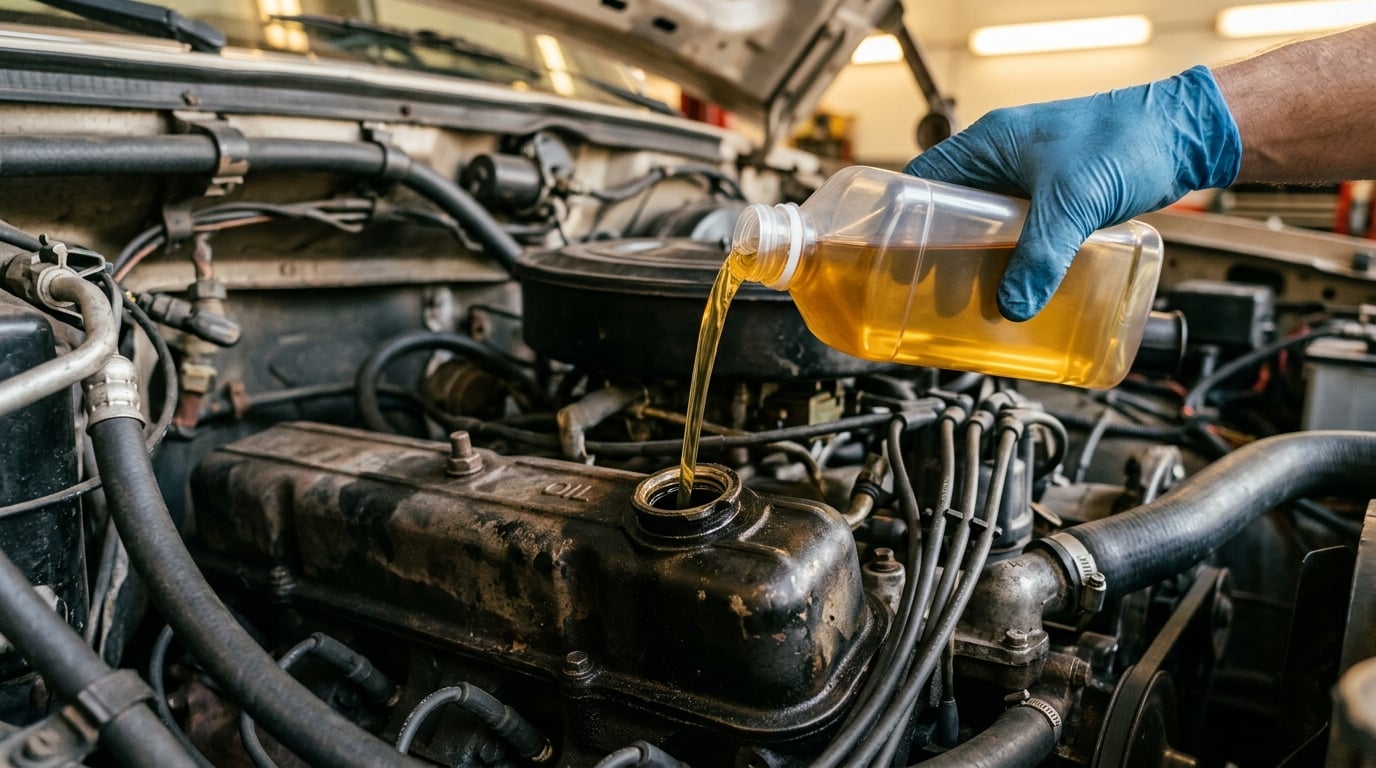
Switching an older high-mileage engine to synthetic oil does not cause seals or gaskets to fail, but it can expose existing leaks. Synthetic motor oil features active detergent additives that clean away sludge and carbon deposits that may be physically blocking tiny gaps in cracked rubber seals. Modern synthetic formulations also contain seal conditioners that help expand and restore flexibility to hardened gasket materials.
Drivers who bring higher-mileage vehicles into our service drive often ask if upgrading to full synthetic will cause oil leaks around aged valve covers or oil pan gaskets. In early automotive synthetics from decades past, certain ester base stocks reacted poorly with neoprene and silicone seals, causing them to shrink or crack. Modern chemical engineering resolved that issue long ago. Today, high-mileage full synthetic motor oils are blended with specific seal-swelling agents designed to preserve and rehydrate aging elastomer seals.
When a motor oil leak appears shortly after changing from conventional oil to synthetic oil, the lubricant itself is rarely the root cause. Years of running conventional oil can leave heavy varnish and carbon baked around main crank seals, front timing covers, and oil pan rails. While these deposits act as a temporary plug over compromised rubber, they also trap heat and accelerate wear underneath. When high-detergent synthetic oil dissolves those sludge dams, fluid flows through the pre-existing mechanical gaps.
For drivers in Tullahoma who regularly tow boats or haul cargo across rolling elevation changes, maintaining strong hydrodynamic oil film strength is vital for long-term engine survival. If an older engine exhibits minor oil weeping around a valve cover gasket but otherwise maintains steady pressure, moving to a quality synthetic blend or high-mileage full synthetic offers significantly better wear protection than remaining on mineral oil. If you suspect an existing seal issue, visiting our service center location allows our certified technicians to inspect your engine belly pan and address minor weeping before changing fluid types. You can also give our team a quick call to discuss your vehicle's service history.
Table of Contents
- What Is the Technical Difference Between Synthetic Oil and Conventional Motor Oil?
- How Does Synthetic Oil Protect Turbocharged and High-Performance Engines?
- Does Synthetic Oil Provide Better Viscosity Stability and Sludge Protection?
- Can You Switch Back to Conventional Oil After Using Synthetic Lubricants?
- What Do Drivers Ask Most About Synthetic Versus Regular Oil?
- Essential Steps for Maintaining Your Engine at Newton Ford South
What Is the Technical Difference Between Synthetic Oil and Conventional Motor Oil?
The core technical difference between synthetic oil and conventional motor oil lies in their molecular structure and refinement process. Conventional oil is refined directly from crude oil and contains irregular molecular structures along with natural impurities like sulfur and wax. Synthetic oil is chemically engineered from Group III or Group IV (PAO) base stocks, yielding uniform molecules that reduce internal fluid friction and resist thermal breakdown.
+------------------------+------------------------------------+------------------------------------+
| Characteristic         | Conventional Motor Oil             | Full Synthetic Motor Oil           |
+------------------------+------------------------------------+------------------------------------+
| Base Stock Origin      | Refined crude mineral oil          | Synthesized chemical base stock    |
| Molecular Uniformity   | Irregular sizes and shapes         | Uniform size and molecular structure|
| Thermal Oxidation      | Degrades quickly above 275°F       | Resists breakdown past 400°F       |
| Cold Flow Performance  | Thickers in low temperatures       | Rapid cold-cranking pumpability    |
| Viscosity Shear Loss   | Up to 15 percent over service life | Typically 3 to 6 percent shear loss|
+------------------------+------------------------------------+------------------------------------+
The manufacturing process of full synthetic oil allows chemical engineers to tailor the lubricant for precise mechanical tolerances. In modern high-efficiency powerplants, internal bearing clearances are often measured as tightly as 0.010 inches. Under those strict dimensions, conventional mineral oils struggle to maintain consistent lubrication during thermal spikes. Synthetic base stocks maintain their structural molecular chains under severe shear stress, ensuring the protective oil layer remains intact across rotating journals and camshaft lobes.
Additive packages further separate modern synthetic formulations from traditional mineral oils. Anti-wear chemistry such as zinc dialkyldithiophosphate, commonly known as ZDDP, works alongside advanced calcium and magnesium detergents to protect internal valve trains. Modern engines with aggressive cam profiles experience valve spring pressures that can exceed 1,000 PSI at peak lift. Under those extreme contact loads, synthetic lubricants maintain higher film strength at lower viscosity grades like 5W-30 or 5W-20.
For modern Ford engines like the 2.3L EcoBoost or 1.5L EcoBoost, factory specifications call for oils meeting exact engineering approvals such as WSS-M2C946-A or WSS-M2C945-A. Whether you are maintaining a daily driver or exploring our new Ford inventory, using fluids engineered to exact factory specs protects sensitive mechanical components. You can easily maintain your factory schedule by scheduling a professional service appointment online with our certified department.
How Does Synthetic Oil Protect Turbocharged and High-Performance Engines?
Synthetic oil protects turbocharged engines by resisting extreme thermal oxidation and deposit formation when residual heat soaks into the turbo center housing after engine shutdown. Turbocharger shaft assemblies routinely operate at rotational speeds exceeding 100,000 RPM with housing temperatures passing 1,000°F. Full synthetic base stocks maintain structural film strength and flow clean through tight oil feed lines under those severe conditions.
When a turbocharged engine turns off after highway driving, oil circulation immediately stops. The extreme thermal energy stored in the turbine housing soaks into the stationary fluid remaining inside the center bearing cavity. Conventional mineral oils break down rapidly when exposed to this static heat, oxidizing into hard carbon deposits known as coking. Over time, coking restricts oil feed lines, starving the high-speed turbo bearings of critical lubrication during subsequent engine starts and leading to shaft play or total turbo failure.
[Engine Running] ----> Turbo Housing Heat (>1000°F) ----> Continuous Synthetic Oil Flow (Cooling & Lubrication)
                                                                 |
                                                                 v
[Engine Shutdown] ---> Oil Circulation Ceases ------------> Heat Soaks Into Stationary Fluid
                                                                 |
                                                                 +---> Conventional Oil: Cooks, Oxidizes, Forms Carbon Coking
                                                                 |
                                                                 +---> Synthetic Oil: Resists Thermal Breakdown, Keeps Passages Clear
Full synthetic lubricants utilize low-volatility base stocks and advanced dispersant packages that hold combustion byproducts in suspension, preventing carbon varnish from adhering to hot internal surfaces. For commuters traveling along I-65 from Spring Hill into urban traffic, frequent start-stop cycles and highway merging put additional stress on forced-induction systems. Synthetic oil flows instantly upon cold start, reaching top-end valvetrain components and turbo bearings in a fraction of a second to mitigate initial metal-to-metal wear.
Owners considering browsing pre-owned vehicles with turbocharged powerplants should review fluid maintenance records carefully. Ensuring that previous owners used full synthetic or synthetic blend oils meeting factory viscosity recommendations is one of the most reliable indicators of long-term turbocharger health.
Does Synthetic Oil Provide Better Viscosity Stability and Sludge Protection?
Synthetic oil maintains superior viscosity stability because its high viscosity index prevents fluid from thinning rapidly under high operating temperatures or thickening in cold weather. Laboratory testing indicates that full synthetic oils lose roughly 3 to 6 percent of their viscosity over a standard service interval, compared to 8 to 15 percent shear loss in synthetic blends and even greater degradation in conventional mineral oils.
Cold-cranking performance highlights the physical flow advantages of synthetic chemistry. At temperatures near -30°C, a synthetic blend 5W-30 motor oil can register a cold-cranking viscosity near 5,400 centipoise, whereas a conventional 5W-30 mineral oil can exceed 7,000 centipoise. Full synthetic formulations post even lower cold-cranking resistance numbers. This low fluid resistance allows the engine starter to turn the crankshaft faster while reducing amperage draw on the battery during freezing morning starts.
Engine sludge forms when unburned fuel, moisture, soot, and oxidized oil molecules combine and settle in low-flow areas of the engine, such as the valve cover gallery and oil pan sump. Because synthetic oil is free from the natural paraffin waxes found in crude oil, it exhibits far lower volatility and oxidation rates. Detergents containing calcium and magnesium active compounds continually neutralize acidic combustion byproducts, preventing sludge precursors from agglomerating into harmful black deposits.
Vehicles purchased through programs like evaluating certified pre-owned options undergo rigorous inspection processes to verify that engine galleries remain free of harmful sludge and varnish buildup before being offered to buyers.
Can You Switch Back to Conventional Oil After Using Synthetic Lubricants?
Modern internal combustion engines can safely transition between full synthetic, synthetic blend, and conventional motor oils without damaging internal seals or valvetrain components. Contemporary motor oils share compatible chemical additive packages, allowing drivers to alternate between lubricant types whenever necessary provided the fluid meets the viscosity grade and API service category specified in the owner's manual.
The persistent myth that switching back to conventional oil causes engine damage stems from early synthetic products introduced decades ago that contained unique chemical formulations incompatible with standard mineral oils. Today, oil manufacturers formulate synthetic blends by mixing conventional mineral stocks directly with Group III or Group IV synthetic stocks. Because these base oils are fully miscible, topping off an engine running full synthetic with conventional oil in an emergency will not cause gelling, chemical separation, or seal failure.
While switching back to conventional oil is safe, doing so drops the overall performance threshold of the oil charge to the level of the conventional fluid. The motor oil will lose the superior thermal resistance, extended drain capability, and low-temperature flow characteristics of the full synthetic fluid. Drivers trading in older vehicles or utilizing an online vehicle trade-in valuation tool often ask how fluid choice affects residual vehicle value. Keeping detailed service records that reflect consistent oil changes using factory-approved synthetic or synthetic blend fluids demonstrates conscientious maintenance to future owners.
What Do Drivers Ask Most About Synthetic Versus Regular Oil?
Q: How often should engine oil be changed when using full synthetic oil?
Ford factory maintenance guidelines allow oil change intervals up to 7,500 to 10,000 miles or one year under normal driving conditions when using approved synthetic lubricants. However, vehicles subjected to severe operating conditions—such as frequent short trips, severe cold weather, continuous idling, or regular trailering—should follow shorter service intervals, typically around 5,000 miles.
Q: Does using synthetic oil void my Ford factory powertrain warranty?
Using an approved full synthetic motor oil that meets the designated Ford specification code and viscosity grade will never void a factory warranty. Ford explicitly lists Motorcraft full synthetic oils as approved optional upgrades alongside recommended synthetic blends in official vehicle manuals. Always ensure the oil container displays the matching WSS-M2C946-A or equivalent engineering specification.
Q: Can synthetic oil and conventional oil be safely mixed in an emergency?
Synthetic oil and conventional oil can be safely mixed without causing chemical reactions or harming engine components. Modern engine lubricants are designed to be fully compatible with one another. If your oil level is low and full synthetic is unavailable, adding conventional oil of the correct viscosity grade will maintain safe lubrication until your next complete oil change.
Q: Why do Ford EcoBoost engines require specific oil specifications like WSS-M2C946-A?
Ford EcoBoost engines utilize direct fuel injection and turbocharging, which place elevated thermal and mechanical stresses on engine oil. Specifications like WSS-M2C946-A require fluids to pass strict testing for low-speed pre-ignition prevention, chain wear protection, turbocharger deposit control, and aeration resistance that standard off-the-shelf conventional oils cannot satisfy.
Q: Will using a full synthetic oil extend my engine's overall operational lifespan?
Full synthetic oil helps maximize engine longevity by significantly reducing metal-to-metal wear during cold starts and maintaining film strength under extreme heat. By keeping internal components cleaner and preventing sludge accumulation, synthetic oil preserves proper oil flow to critical bearings and timing components over hundreds of thousands of miles.
Drivers interested in learning more about factory maintenance recommendations can start by discovering our team history and values or consult our advisors when submitting an online financing application for their next vehicle purchase.
Essential Steps for Maintaining Your Engine at Newton Ford South
Protecting your engine against premature wear requires matching the right oil specification to your driving habits and vehicle engine architecture. Whether your vehicle specifies a Motorcraft Premium Synthetic Blend or an optional full synthetic upgrade, adhering to recommended maintenance intervals ensures your valvetrain, turbocharger, and bearings receive uncompromising lubrication year-round.
Our factory-trained technicians inspect oil condition, filter integrity, and engine seal health during every routine service visit. If you prefer performing your own fluid changes at home, our service team can help you identify exact fluid capacities and filter part numbers for your specific model year.
When you are ready to arrange your next maintenance service or speak directly with our team, visit our Shelbyville facility address to receive expert service guidance. You can also reach our staff directly at (931) 536-4424 or save time by ordering OEM maintenance parts online for your vehicle.