What Happens If Your Car Is Worth Less Than Your Remaining Loan Balance?
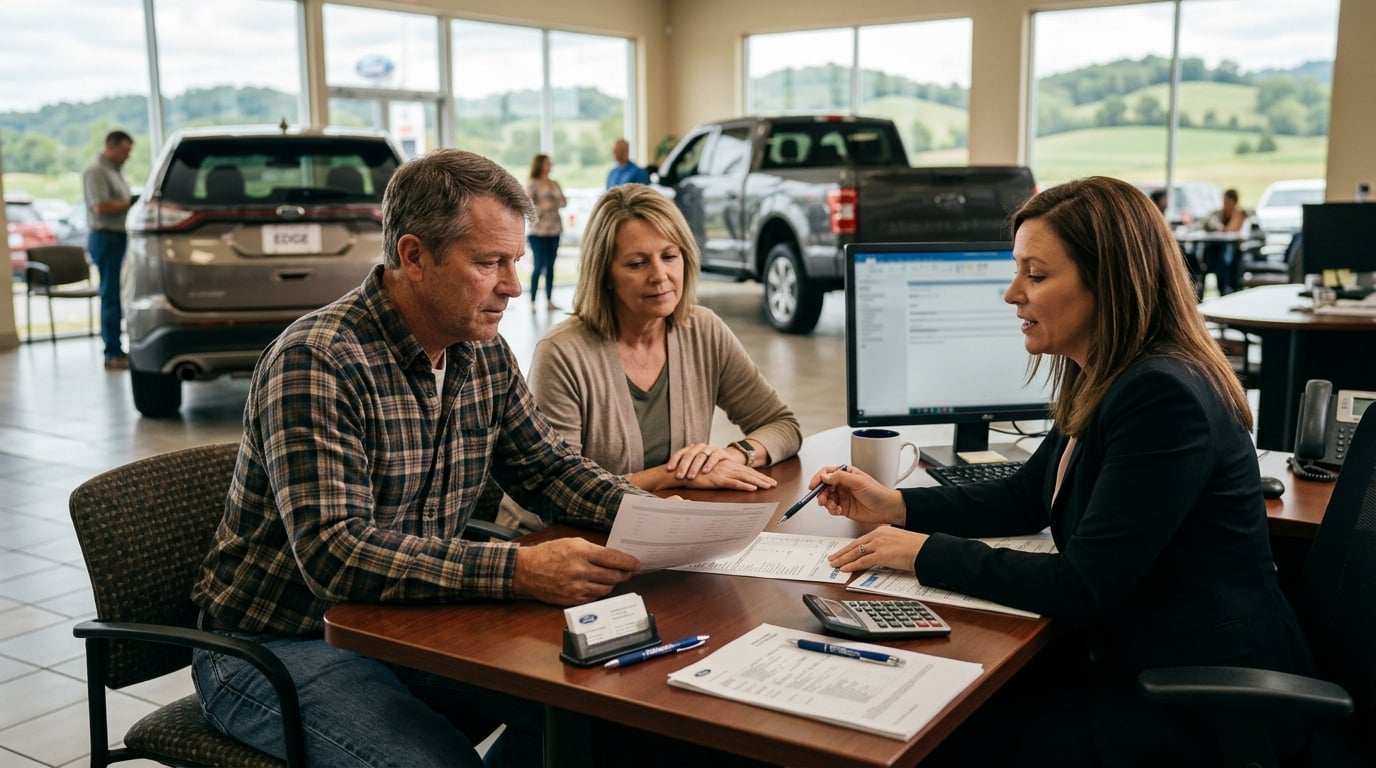
If your vehicle is worth less than what you currently owe on your auto loan, you have negative equity, commonly referred to as being upside-down on your loan. When trading in a vehicle with negative equity, you must cover the financial gap by either paying the difference out of pocket at closing or rolling the remaining balance into the financing of your next vehicle, which will increase your new monthly payment.
When local vehicle owners ask our team about negative equity on a trade-in, we walk them through both options to see what fits their budget. Rolling negative equity into a new loan raises your total borrowed amount and overall interest costs, which can increase your loan-to-value ratio. For instance, if your trade-in is appraised at $15,000 but your payoff amount is $18,000, you have $3,000 in negative equity. Paying that $3,000 upfront clears your original debt completely, letting your new financing cover only the cost of the replacement vehicle.
If paying the difference upfront is not feasible, lenders often allow qualified buyers to consolidate that balance into the new loan structure. To manage this safely, pairing negative equity rollover with a reliable model featuring lower financing rates or manufacturer incentives can help offset the added loan balance. If you are taking on daily commuting across the rolling hills of Tullahoma, choosing a durable vehicle with a strong resale track record helps protect your equity position over time. When your vehicle has an active lien, the dealership handles the title transfer using a secured power of attorney to pay off your lender directly. You can evaluate your options ahead of time by submitting an online credit application or giving us a quick call at (931) 536-4424. You can also visit our showroom at 2811 US, Shelbyville, TN 37160 to go over your payoff statement in person.
Table of Contents
- What Main Factors Determine a Vehicle's Trade-In Value in Middle Tennessee?
- How Do Mileage, Vehicle Color, and Aftermarket Modifications Affect Your Offer?
- How Do Maintenance Records, History Reports, and Past Repairs Impact Dealer Appraisals?
- How Does the Tennessee Sales Tax Advantage Increase Your Trade-In Savings?
- Common Questions About Trading In a Vehicle
- Strategic Steps to Maximize Your Vehicle Trade-In Value
What Main Factors Determine a Vehicle's Trade-In Value in Middle Tennessee?
A vehicle's trade-in value is primarily calculated using its age, cumulative mileage, physical condition, mechanical health, accident history, and regional market demand. Dealerships establish trade appraisals starting from wholesale auction data and industry valuation sources, adjusting for expected reconditioning expenses to reach a fair market offer.
Wholesale auction values reflect what similar vehicles sell for in dealer-only markets. Because a dealership assumes the responsibility of safety inspections, mechanical repairs, detailing, and holding costs, trade-in offers are typically set 10% to 25% below retail listing prices. Optional factory equipment plays a significant role in where your car lands in that range. Advanced driver-assist systems like Ford Co-Pilot360, factory navigation, leather upholstery, or a 3.5L EcoBoost V6 engine can add roughly $1,500 to $4,500 in trade value compared to a base model.
Local utility demands also shape regional appraisals. In pasture-heavy agricultural areas like Shelbyville, four-wheel-drive trucks with factory towing packages retain higher demand and stronger trade value than light-duty two-wheel-drive sedans. To see how your current vehicle compares against available inventory, you can value your trade online, review our current new vehicle inventory, or check our pre-owned vehicle selection.
How Do Mileage, Vehicle Color, and Aftermarket Modifications Affect Your Offer?
Accumulating mileage beyond the industry standard benchmark of 12,000 miles per year, choosing non-standard exterior paint colors, and installing aftermarket modifications generally decrease a vehicle's trade-in offer. Neutral paint finishes preserve resale value best, whereas custom modifications narrow the pool of potential buyers and can complicate warranty coverage.
Valuation guidelines treat 12,000 miles annually as average vehicle usage. Exceeding this baseline accelerates mechanical wear on drivetrain components, suspension bushings, and brake systems, leading to lower condition ratings. Exterior color choice also creates measurable pricing differences:
- Neutral shades like shadow black, oxford white, magnetic gray, and ingot silver appeal to the broadest selection of secondary buyers, holding value consistently.
- Custom bright colors or uncommon paint wraps limit buyer appeal, requiring longer lot times or repainting expenses that reduce trade offers.
- Aftermarket accessories such as non-factory lift kits, loud custom exhausts, or oversized aftermarket wheels often lower a trade offer because they can void original powertrain warranties and cost money to return to factory standards.
Keeping your vehicle close to its original factory specifications maximizes its market appeal. If you are considering trading up to a vehicle that maintains high standards for reconditioning, look through our certified pre-owned inventory to see how factory-backed standards help preserve vehicle value over time.
How Do Maintenance Records, History Reports, and Past Repairs Impact Dealer Appraisals?
Organized, documented maintenance records and a clean CARFAX report directly increase a vehicle's trade-in appraisal by confirming routine oil changes and proper mechanical maintenance. Conversely, reported accident histories reduce trade value even when repairs are performed correctly, because structural or body damage permanently remains on the vehicle history report.
Even minor fender-benders involving cosmetic bumper repairs can diminish a vehicle's trade-in value by 10% to 15% due to reported damage history. Structural or frame damage causes much larger reductions because it restricts how the vehicle can be resold. Open safety recalls do not prevent you from trading in a vehicle, but the dealer must factor in the service scheduling required to perform the recall work before placing the vehicle on the lot.
Providing a complete folder of service receipts reassures appraisers that key service intervals—such as transmission fluid flushes, brake pad replacements, and spark plug changes—were completed on time. If you need to complete routine maintenance or resolve open service items before seeking an appraisal, you can schedule a maintenance inspection with our service department or source factory components through our factory parts department.
How Does the Tennessee Sales Tax Advantage Increase Your Trade-In Savings?
Trading in your vehicle at a licensed Tennessee dealership provides a direct tax credit by calculating the 7% state sales tax only on the net trade difference rather than the full purchase price of the new vehicle. This tax offset reduces your total out-of-pocket costs compared to selling your vehicle privately and purchasing a new one separately.
When you trade in a vehicle, Tennessee tax law subtracts your agreed trade-in allowance from the purchase price of the replacement vehicle before calculating sales tax. For example:
- New Vehicle Purchase Price: $40,000
- Agreed Trade-In Value: $10,000
- Taxable Difference: $30,000
- Tennessee State Sales Tax (7%): $2,100 (compared to $2,800 without a trade-in)
This immediate tax offset saves you $700 in state sales tax on a $10,000 trade allowance. Selling privately requires you to collect funds independently and pay full sales tax on the entire $40,000 purchase price of your next vehicle. Furthermore, when trading in a vehicle with an existing loan, the dealership processes the secured power of attorney paperwork to coordinate directly with your lienholder, clearing your title cleanly while securing your tax savings at closing.
Common Questions About Trading In a Vehicle
Q: What paperwork do I need to bring when trading in a car with an active loan?
You need to bring your valid driver's license, current vehicle registration, proof of auto insurance, account details for your current loan (including your account number and lender payoff details), and all original keys or key fobs. If you hold a clear title without a lien, bring the physical title signed by all listed owners. Having these documents ready allows our team to transfer ownership smoothly and verify your exact loan balance without delay.
Q: Can I trade in a vehicle if the title lists a co-signer who cannot be present?
It depends on how the names are listed on the physical title or loan document. If the owners' names are separated by "OR," either owner can legally sign the title over to the dealership independently. If the names are joined by "AND," both individuals must sign the power of attorney and title transfer documentation. When a co-signer cannot visit the showroom in person, we can arrange secure digital notary paperwork or power of attorney forms ahead of time. Learn more about how we assist customers through every step of ownership by visiting our customer-first dealership values page.
Q: Does paying for professional detailing right before a trade-in give me a full return on investment?
While bringing in a clean vehicle helps appraisers evaluate body panels and upholstery accurately, spending hundreds of dollars on high-end professional detailing rarely yields a full dollar-for-dollar return. A standard home car wash, clearing out personal belongings, vacuuming the carpets, and wiping down interior surfaces is usually all that is needed to help your vehicle present its best condition rating during inspection.
Q: How long does the vehicle inspection and appraisal process take in person?
An in-person appraisal typically takes about 30 minutes. During this time, an appraiser performs a physical walk-around inspection, verifies option packages, assesses tire tread depth and body condition, checks the vehicle history report, and conducts a brief test drive to evaluate transmission shifts and engine performance. Once complete, you receive a written trade offer outlining your vehicle's value and applicable tax savings.
Q: What happens to my unused extended warranty or service contract when I trade in my car?
Unused portions of extended service contracts, tire protection plans, or GAP insurance do not automatically transfer to your trade-in offer, but you can request a prorated refund for the remaining coverage term. After trading in your car, contact the warranty administrator or our financial services department to submit a cancellation request along with your bill of sale. The remaining balance will either be refunded directly to you or credited against your vehicle's original loan balance.
Strategic Steps to Maximize Your Vehicle Trade-In Value
To get the highest possible offer for your trade-in, focus on preparation, documentation, and understanding regional market factors. Collecting complete service records, addressing minor low-cost fixes like replacing burnt-out exterior bulbs, cleaning the cabin, and bringing all original equipment—such as spare keys, floor mats, and owner manuals—ensures your vehicle presents its maximum market value during appraisal.
Combining a transparent appraisal with Tennessee's state sales tax allowance helps protect your budget whether you are clearing an existing lien or applying positive equity toward your next purchase. Our team provides straightforward, real-time appraisals based on live market transaction data to ensure you receive a fair, honest offer every time.
When you are ready to evaluate your trade-in, stop by our Shelbyville location for a quick walk-around appraisal, or start the conversation by calling our finance team at (931) 536-4424 today.