What Main Factors Determine a Vehicle's Trade-In Value in Middle Tennessee?
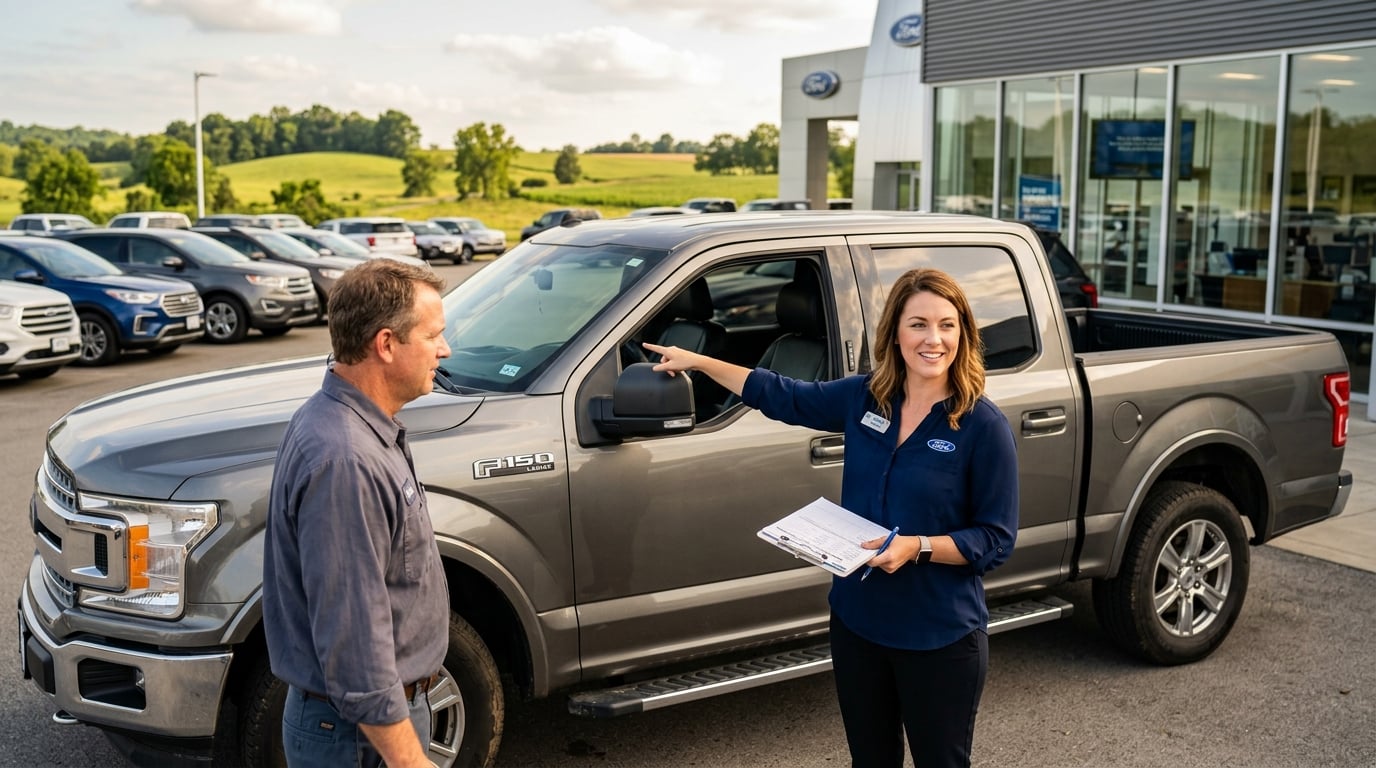
A vehicle's trade-in value in Middle Tennessee is primarily determined by its age, odometer mileage, overall mechanical condition, accident history, factory options, and current localized market demand. Key regional factors like seasonal buying patterns and local inventory supply directly influence appraisal figures, while industry benchmarks from Kelley Blue Book establish baseline expectations before an in-person physical inspection takes place.
When an appraiser evaluates a car, truck, or SUV, the assessment extends far beyond a basic surface check. Odometer readings reflect cumulative mechanical wear on vital components like the engine and an 8-speed automatic transmission. Vehicles with significantly lower mileage relative to their model year command a premium because secondary buyers seek extended reliability. Conversely, elevated mileage requires adjustments for anticipated reconditioning costs, such as brake pad replacements or suspension service.
Physical and cosmetic conditions weigh heavily into final numbers. Body panels free of deep scratches, door dings, and frame damage maintain higher valuation brackets. Interior preservation—including clean upholstery, functioning infotainment electronics, and the absence of persistent odors—demonstrates consistent owner care. For drivers traveling across the rolling elevation around Tullahoma, highway commutes can accumulate steady mileage that impacts depreciation curves differently than harsh stop-and-go driving. Bringing documented maintenance records during an appraisal helps substantiate mechanical integrity, confirming that routine oil changes and multi-point inspections were performed consistently.
Localized market dynamics also create variations between regional trade offers and national online estimates. Dealerships analyze regional wholesale auctions, current used-vehicle demand, and local inventory levels to determine what buyers are actively seeking. A well-equipped 4WD truck or family crossover usually sees heightened demand in Middle Tennessee, elevating its real-world appraisal value above generic regional averages. Getting an accurate estimate starts by visiting our dealership address at 2811 US-231 for a physical evaluation or giving our team a quick phone call to discuss your vehicle details.
Table of Contents
- How Do Vehicle History Reports and Title Records Impact Local Dealer Offers?
- What Is the Real Price Gap Between Trade-In Value and Private Party Sales?
- What Happens When Your Remaining Car Loan Balance Exceeds Your Vehicle's Value?
- How Do You Prepare Your Vehicle to Secure the Highest Appraisal Offer?
- How Long Does a Written Dealership Trade-In Offer Remain Valid?
- How Do Mileage, Vehicle Color, and Aftermarket Modifications Affect Trade-In Value?
- Common Questions About Maximizing Your Vehicle Trade-In Value
- Taking the Next Step with Your Trade-In at Newton Ford
How Do Vehicle History Reports and Title Records Impact Local Dealer Offers?
Vehicle history reports directly shape dealership trade-in offers by verifying title status, structural integrity, and documented maintenance history. A clean CARFAX report yields maximum appraisal value, whereas past accident records, airbag deployments, or branded titles trigger significant value deductions due to heightened secondary market risk.
Appraisers rely on comprehensive vehicle history databases to uncover details that may not be visible during a standard visual walk-around. A history report documents past ownership counts, registration locations, detailed service logs, and reported insurance claims. Vehicles with a single owner and zero reported accidents sit in the highest trade-in value tier because they carry predictable mechanical reliability and present minimal risk to the next buyer. When exploring our new Ford lineup or upgrading to a late-model vehicle, having a documented history report streamlines the entire trade process.
Accident severity plays a massive role in valuation adjustments. A minor fender blemish or cosmetic bumper repair listed on a report results in a modest adjustment, as structural safety remains uncompromised. However, severe collisions involving frame damage, structural repair, or airbag deployment drastically lower an offer. Dealers must factor in structural safety verifications and specialized reconditioning before such vehicles can be resold.
Title records also carry critical weight during an appraisal. A clean, clear title allows for seamless ownership transfer. Conversely, branded titles—such as salvage, flood, rebuilt, or lemon law buyback designations—substantially reduce trade-in value. Many financial institutions refuse to finance branded-title vehicles, which severely restricts the secondary buyer pool. Maintaining clear service documentation and disclosing prior repairs ensures transparency, helping us make the highest fair-market offer when you browse our pre-owned vehicle selection for your replacement ride.
What Is the Real Price Gap Between Trade-In Value and Private Party Sales?
The typical price gap between a vehicle's trade-in value and its private party value ranges from 10% to 15%, with private sales commanding slightly higher gross selling prices. However, trading in a vehicle at a dealership eliminates private listing costs, safety risks, test-drive logistics, and delivers significant state sales tax savings on the replacement vehicle.
Selling a car directly to a private buyer often appears lucrative on paper because you are asking for full retail price without accounting for dealer overhead. A private seller retains the margin that a dealership typically budgeted for vehicle reconditioning, safety inspections, marketing, and title handling. However, achieving that private party price requires considerable time, effort, and financial risk. Private sellers must pay for online listings, respond to low-ball offers, organize safe meeting locations, arrange test drives with strangers, and navigate complex title transfer paperwork without legal protections.
| Sale Method | Gross Value Relative to Retail | Upfront Prep & Marketing Costs | Sales Tax Advantage on Next Vehicle | Time & Safety Risk Level |
|---|---|---|---|---|
| Dealership Trade-In | 85% – 90% | Zero out-of-pocket required | Yes (Tax calculated on price difference) | Immediate transaction / Zero risk |
| Private Party Sale | 95% – 100% | Listing fees, detailing, repairs | No tax offset on separate replacement | High time investment / High safety risk |
When you trade in your vehicle at a dealership, the transaction offers major financial advantages that narrow or eliminate the net price gap. In Tennessee, state sales tax is calculated only on the net difference between your replacement vehicle's purchase price and your trade-in allowance. For example, if you purchase a vehicle for $35,000 and receive $15,000 for your trade-in, you pay sales tax only on the remaining $20,000. That tax savings alone can equal thousands of dollars, effectively offsetting the nominal private-party price delta.
Additionally, trading in offers an immediate, hassle-free transaction. There is no waiting weeks for a qualified buyer or dealing with failed buyer financing at the last minute. Our digital tool allows you to value your trade online in minutes, letting you apply that equity straight toward our certified pre-owned inventory or a new model without transaction friction.
What Happens When Your Remaining Car Loan Balance Exceeds Your Vehicle's Value?
When your remaining auto loan balance exceeds your vehicle's appraised market value—a scenario known as negative equity or being upside-down—you must either pay the difference out of pocket at closing or roll the remaining balance into the financing of your replacement vehicle.
Negative equity occurs when depreciation outpaces loan principal payoff, often resulting from long loan terms, minimal initial down payments, or rolling previous loan balances into a prior purchase. During an appraisal, our finance team calculates your net equity by subtracting your official lender payoff quote from the appraised trade-in value. If your vehicle is appraised at $18,000 but your payoff balance is $20,000, you have $2,000 in negative equity that must be addressed before the title can be released by your lender.
Drivers facing negative equity have several practical options to complete a vehicle purchase:
- Pay the difference in cash: Clearing the negative balance out of pocket prevents carrying old debt into your next vehicle transaction.
- Roll the balance into new financing: Lenders often allow qualified buyers to consolidate the balance into the new loan, subject to approval based on loan-to-value limits.
- Utilize manufacturer incentives: Applying factory rebates or dealer incentives directly against the negative equity balance helps absorb the financial difference.
- Select a replacement vehicle with high incentives: Choosing models with substantial promotional savings helps offset equity deficits more effectively.
Rolling negative equity into a new loan increases your total loan amount and monthly payment, so evaluating long-term financial goals is essential. Submitting a formal online credit application allows our specialists to structure terms that fit your budget. Keeping up with regular vehicle maintenance by scheduling a routine service appointment also protects your current car's value, preventing rapid depreciation while you pay down your existing principal balance.
How Do You Prepare Your Vehicle to Secure the Highest Appraisal Offer?
To secure the highest possible trade-in offer, thoroughly clean the interior and exterior, fix low-cost cosmetic blemishes, gather all maintenance records, bring both original key fobs, and ensure all owner manuals and factory accessories remain with the vehicle.
First impressions matter significantly during a physical trade-in appraisal. A clean, detailed vehicle signals to an appraiser that the owner maintained the car responsibly. Taking time to wash the exterior, vacuum the carpet, wipe down dash surfaces, and clean the inside windows instantly improves visual appeal. Vehicles driven around the horse farms in Shelbyville often collect dust or mud along chassis components, so washing the undercarriage and wheel wells helps showcase a clean mechanical baseline.
Addressing inexpensive repair items prior to your appraisal delivers a strong return on investment. Replacing worn windshield wiper blades, changing burnt-out exterior bulbs, and topping off essential fluids show that the car needs minimal immediate servicing. However, avoid spending large sums on major body repairs or tire replacements right before trading in; dealerships can complete reconditioning work at wholesale costs far more economically than retail body shops.
Completing an appraisal checklist ensures you present all items that maintain vehicle equity:
- Gather all service receipts: Presenting physical records for oil changes, tire rotations, and brake servicing proves documented care.
- Bring all key fobs: Extra factory key fobs cost hundreds of dollars to replace; providing both keys prevents appraisal deductions.
- Include factory equipment: Ensure floor mats, cargo covers, spare tire kits, and owner manual packets are present in the vehicle.
- Order missing minor trim components: Replacements can be sourced through our parts department prior to your appraisal visit.
How Long Does a Written Dealership Trade-In Offer Remain Valid?
A written dealership trade-in offer is typically guaranteed for 7 days or an additional 500 miles, whichever comes first. This window gives vehicle owners sufficient time to compare options, evaluate replacement choices, and gather necessary loan payoff documentation without risking sudden price adjustments.
Trade-in guarantees exist to protect both the consumer and the dealership from short-term market volatility. Used vehicle values fluctuate based on wholesale auction indices, regional supply shifts, and changing economic conditions. By locking in a written appraisal for a full week or 500 miles of driving, vehicle owners gain peace of mind knowing their quoted trade value remains secure while they finalize their purchasing decision.
The 500-mile limit accounts for natural vehicle wear and depreciation during the decision period. If a vehicle incurs excessive mileage, suffers new physical damage, or is involved in an accident after the initial inspection, the appraisal must be updated to reflect its current state. Similarly, allowing an offer to expire past the 7-day mark requires a brief re-evaluation to align with current wholesale market rates.
To maximize your 7-day appraisal window, gather your vehicle title or lender payoff information immediately after receiving your quote. Securing clear title documentation early ensures that when you return to finalize your replacement vehicle purchase, the transaction completes smoothly within the guaranteed rate period.
How Do Mileage, Vehicle Color, and Aftermarket Modifications Affect Trade-In Value?
Excessive mileage, non-neutral paint colors, and unsanctioned aftermarket modifications consistently diminish trade-in valuations by limiting secondary market appeal and increasing dealer reconditioning expenses.
Odometer mileage serves as a primary metric for mechanical wear. Industry standard usage averages 12,000 to 15,000 miles per year. Vehicles accumulating mileage well beyond these thresholds experience accelerated depreciation because key components—such as timing belts, water pumps, suspension struts, and transmission clutches—approach their service lifespans. Lower mileage vehicles retain higher trade values because they require less reconditioning and qualify for certified pre-owned warranty programs.
Exterior color choices influence resale speed and valuation more than many drivers realize. Neutral factory colors like Oxford White, Shadow Black, and Metallic Gray enjoy broad consumer demand, allowing dealerships to turn over inventory quickly. Bold or unusual custom colors narrow the pool of prospective buyers, often requiring price adjustments to sell on the pre-owned market.
Aftermarket modifications generally lower trade-in offers rather than adding value. While custom wheels, suspension lift kits, loud exhaust systems, or ECU performance tunes may appeal to individual enthusiasts, they present significant challenges for dealership resale:
- Warranty compliance issues: Non-factory engine tuning or altered suspensions often void remaining OEM factory powertrain warranties.
- Narrow buyer demographic: Most used-car buyers seek factory-original safety, ride quality, and fuel economy.
- Reconditioning expenses: Returning a heavily modified vehicle back to stock factory specs requires substantial labor and parts costs.
- Emissions and safety compliance: Custom exhaust modifications can prevent vehicles from passing regional safety or emissions checks.
Preserving factory original equipment—such as standard wheels, stock air intake systems, and factory exhaust setups—ensures your vehicle retains peak trade-in equity when evaluated.
Common Questions About Maximizing Your Vehicle Trade-In Value
Q: Does trading in a vehicle reduce the overall sales tax on a replacement purchase in Tennessee?
Yes, under Tennessee tax law, your trade-in allowance directly reduces the taxable purchase price of your replacement vehicle. You pay state sales tax only on the net difference between your new vehicle's price and your trade-in credit. For example, if your new car costs $40,000 and your trade-in is valued at $18,000, you are taxed only on the remaining $22,000 balance, providing substantial savings at signing.
Q: What documentation must I present during an in-person vehicle appraisal?
You should bring a valid driver's license, current vehicle registration, physical title (or lender payoff statement with account numbers if currently financed), both original key fobs, and all available maintenance records. Bringing these items allows our team to verify ownership status, lock in your offer, and complete all transfer paperwork efficiently. You can learn more about our dealership history and core appraisal principles before arriving.
Q: Will minor windshield chips or small door dings severely reduce my trade-in offer?
Minor cosmetic imperfections like small door dings or slight windshield chips result in minimal reconditioning deductions rather than major value drops. Dealership reconditioning teams repair minor body flaws cost-effectively at internal rates. Paying for retail body shop repairs yourself prior to trading in rarely yields a positive return on investment.
Q: Can I trade in a leased vehicle before the lease term expires?
In most cases, yes. Our dealership can request a formal lease payoff quote from your leasing bank, evaluate the vehicle's current market value, and determine your equity position. If the current market value exceeds your payoff amount, that positive equity can be applied directly toward your replacement vehicle purchase.
Q: Why does an online valuation tool estimate differ from an in-person appraisal offer?
Online valuation tools rely on algorithmic regional market averages and self-reported condition inputs. An in-person appraisal inspects real-world paint condition, tire tread depth, mechanical performance, cabin wear, and exact factory options, refining the initial digital estimate into a firm, binding trade-in offer.
Taking the Next Step with Your Trade-In at Newton Ford
Getting the absolute highest value for your pre-owned car, truck, or SUV comes down to transparency, thorough appraisal preparation, and expert local market evaluation. Our team at Newton Ford South makes trading in simple and rewarding with immediate cash-offered appraisals, transparent valuation breakdowns, and streamlined vehicle transitions.
Whether you are looking to upgrade your family commute, clear out an existing auto loan balance, or lower your sales tax burden on a new vehicle purchase, our team is ready to deliver an exceptional experience. You can start your appraisal process from home using Newton Fastpass, or stop by our showroom on US-231 to meet with an appraiser. Give our team a quick phone call today to schedule your in-person valuation and discover how easy maximizing your trade-in value can be.