How Does Real-World Fuel Economy of a Hybrid Crossover Compare with a Similar Gas Model?
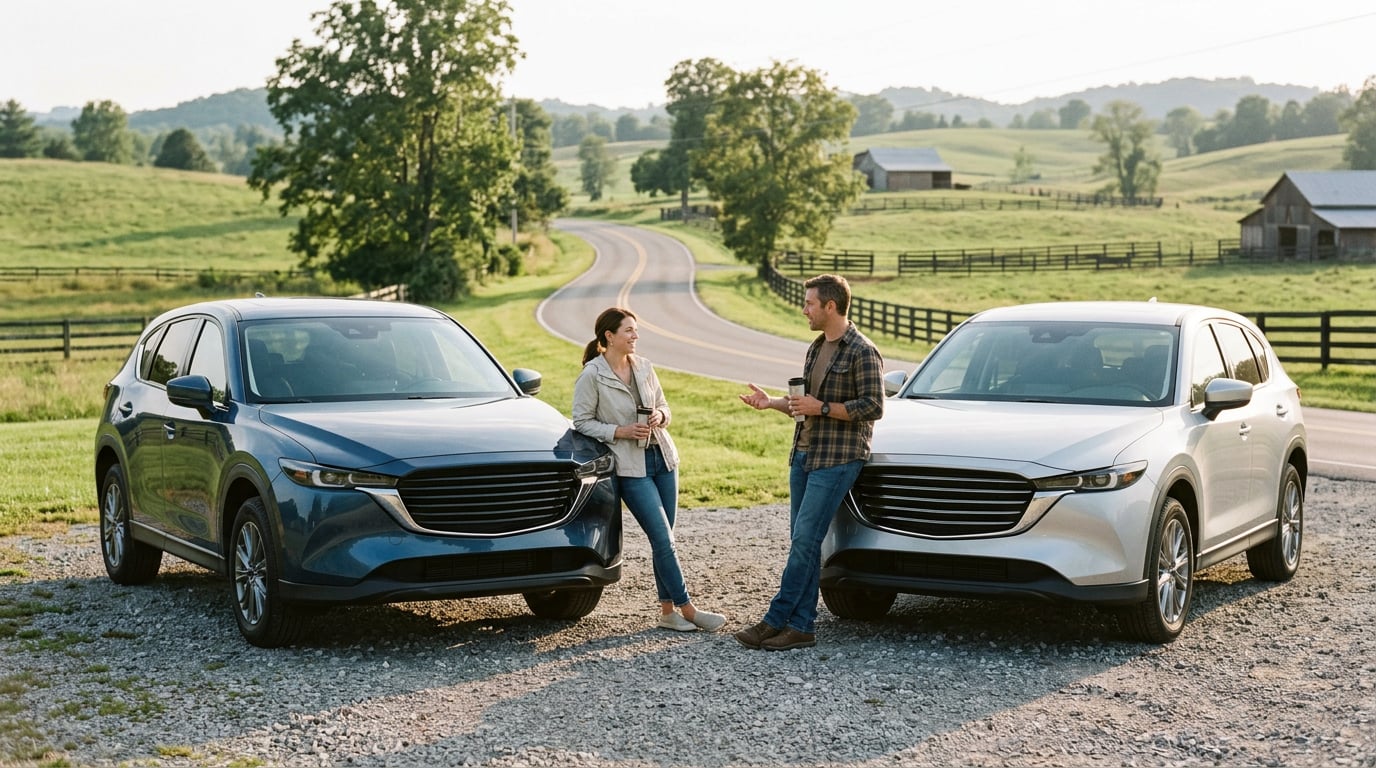
A hybrid crossover delivers roughly 10 to 15 mpg better combined fuel economy than a matching gas-only model, saving owners hundreds of dollars annually at the pump. In daily driving, hybrid crossovers excel during stop-and-go city transit where electric motors handle low-speed propulsion, achieving up to 40 mpg city compared to roughly 27 mpg city for standard gas engines. While highway efficiency gaps shrink slightly at higher cruising speeds, the hybrid still maintains a clear 5 to 8 mpg advantage over traditional gasoline alternatives.
When evaluating window stickers against daily driving realities, driver habits and road conditions influence actual results. Standard gas crossovers rely entirely on an internal combustion engine, which burns fuel continuously during idling and acceleration. In contrast, a hybrid crossover uses regenerative braking to capture kinetic energy during stops, feeding a battery pack that assists the engine during heavy acceleration. For daily drives across hilly county roads toward Tullahoma, this dual-power approach keeps engine load balanced and reduces unnecessary gas consumption.
Commuters testing hybrid crossovers often ask whether real-world fuel efficiency lives up to EPA window stickers in daily traffic. Independent testing shows that while high-speed highway driving can pull a hybrid's combined average down to around 35 or 36 mpg, urban routes easily meet or exceed official ratings. Over a standard 15,000-mile annual driving schedule, that operational difference reduces total fuel consumption by several hundred gallons compared to a conventional gas SUV.
Understanding these efficiency metrics helps buyers determine whether the initial purchase cost of a hybrid fits their long-term budget. To compare available efficiency technologies in person or plan your visit to our Shelbyville location, give our team a call at (931) 536-4424 to speak directly with an expert.
Table of Contents
- What Key Specs Define Compact Crossover Comparisons like Toyota RAV4 vs Honda CR-V?
- Which Compact Hybrid Crossover Offers More Cargo Space and Passenger Utility?
- How Do Truck Towing and Payload Ratings Compare Between Ford F-150 and Chevrolet Silverado 1500?
- Which Engine Options and Integrated Technologies Unlock Maximum Towing Limits?
- What Should Buyers Compare Regarding Factory Warranties and Ownership Costs?
- Frequently Asked Questions About Vehicle Head-to-Head Comparisons
What Key Specs Define Compact Crossover Comparisons like Toyota RAV4 vs Honda CR-V?
Comparing compact crossovers requires evaluating horsepower, powertrain configuration, EPA fuel economy ratings, interior dimensions, and standard active safety systems side by side. Key benchmark models like the Toyota RAV4 and Honda CR-V demonstrate how subtle specification differences shape daily driving dynamics and total utility.
In the compact crossover category, powertrain choice sets the baseline for performance and efficiency. The Toyota RAV4 Hybrid combines a 2.5-liter four-cylinder gas engine with electric motors to generate 219 hp and standard all-wheel drive, achieving an EPA-estimated 39 mpg combined. Its conventional gas counterpart produces 203 hp with an eight-speed automatic transmission but yields a lower 30 mpg combined. Meanwhile, the Honda CR-V offers a 1.5-liter turbocharged gas engine delivering 190 hp or a hybrid setup producing 204 hp with up to 43 mpg city in front-wheel drive configurations.
| Vehicle Model | Powertrain Type | Horsepower | EPA Combined MPG | Standard Drivetrain |
|---|---|---|---|---|
| Toyota RAV4 Gas | 2.5L 4-Cylinder | 203 hp | 30 MPG | Front-Wheel Drive |
| Toyota RAV4 Hybrid | 2.5L Hybrid | 219 hp | 39 MPG | All-Wheel Drive |
| Honda CR-V Gas | 1.5L Turbo 4-Cylinder | 190 hp | 30 MPG | Front-Wheel Drive |
| Honda CR-V Hybrid | 2.0L Hybrid | 204 hp | 40 MPG | Front-Wheel Drive |
Acceleration metrics highlight additional driver feedback differences. A RAV4 Hybrid completes a 0–60 mph sprint in approximately 8 seconds, nearly a full second faster than its gas-only sibling, thanks to instant torque from its electric motor. For drivers reviewing market options across pre-owned years, exploring our pre-owned crossover selection provides a practical way to compare different model years, trim levels, and engine setups in one place.
Which Compact Hybrid Crossover Offers More Cargo Space and Passenger Utility?
The Honda CR-V Hybrid delivers slightly more raw cargo volume behind the rear seats, providing roughly 36 cubic feet of space compared to about 38 cubic feet in the Toyota RAV4 Hybrid. While the gas-only CR-V expands up to 39 cubic feet, its hybrid battery pack slightly reduces the rear load floor depth, whereas the RAV4 maintains identical 38 cubic foot cargo dimensions across both gas and hybrid platforms.
Interior layout and passenger legroom heavily impact family travel comfort. The Honda CR-V offers wider rear door openings and generous back-seat legroom, making it exceptionally easy to install rear-facing child seats or seat tall adults comfortably. The Toyota RAV4 features a slightly higher seating position with durable interior trim materials, rubberized dash storage trays, and folding rear seats, though its rear seat cushions sit lower to the floor.
Loading heavy gear, luggage, or athletic equipment requires examining floor design and hatch lift-over height. Both crossovers feature low lift-over thresholds that simplify loading heavy boxes. However, when the rear seats fold down, the RAV4 leaves a slight upward angle at the seatbacks rather than a completely flat load floor. Shoppers seeking late-model reliability with verified history reports can check our certified pre-owned inventory to inspect well-maintained utility vehicles built for everyday family hauling.
How Do Truck Towing and Payload Ratings Compare Between Ford F-150 and Chevrolet Silverado 1500?
The Ford F-150 leads the half-ton truck class with a maximum towing capacity of up to 13,500 lbs and a maximum payload capacity of 2,445 lbs when properly equipped. In comparison, the Chevrolet Silverado 1500 reaches a maximum tow rating of 13,300 lbs and a peak payload rating of 2,260 lbs.
Achieving peak capability depends on selecting specific cab configurations, axle ratios, and frame packages. The Ford F-150 reaches its 13,500-lb towing threshold when configured with the 3.5L EcoBoost V6 engine and optional heavy-duty tow equipment. The Chevrolet Silverado 1500 requires either its 6.2L V8 gas engine or its 3.0L Duramax Turbo-Diesel engine to reach its 13,300-lb limit, though its maximum payload remains nearly 200 pounds behind the Ford.
For contractors and trailer owners hauling equipment along regional highway routes through Spring Hill, payload capacity dictates how much tongue weight, tools, and cab cargo a truck can support simultaneously. To explore modern electric and traditional half-ton options, browse new F-150 Lightning models or check out the traditional new F-150 lineup to match your job site demands. Regular maintenance keeps tow rigs running safely, so remember to schedule a service appointment for brake inspections and fluid flushes before hauling heavy loads.
Which Engine Options and Integrated Technologies Unlock Maximum Towing Limits?
Unlocking maximum towing capacities requires pairing specific high-output engines with specialized factory towing packages and integrated driver-assist software. On the Ford F-150, maximum pulling power requires the twin-turbocharged 3.5L EcoBoost V6, which produces 400 hp and 500 lb-ft of torque, while the Chevrolet Silverado 1500 relies on its 6.2L V8 or 3.0L Duramax Turbo-Diesel.
Beyond raw mechanical power, modern trailer technology transforms how drivers hitch, back up, and monitor heavy loads. Advanced trailering features streamline difficult maneuvers through automated steering control and real-time weight calculations:
- Pro Trailer Backup Assist: Allows drivers to steer a trailer in reverse using a simple dash knob while the system controls the truck's steering wheel.
- Smart Hitch: Measures payload and trailer tongue weight directly through the onboard scales to ensure proper weight distribution before hitting the highway.
- Transparent Trailer View: Uses multiple camera feeds on rival trucks to create a combined view behind a box trailer.
- Integrated Trailer Brake Controller: Synchronizes the truck's hydraulic brakes with the trailer's electric brakes for smooth, controlled stopping power.
Upgrading to a capable tow vehicle starts with calculating the value of your current truck or SUV. Drivers ready to upgrade their pulling power can value your trade-in online to establish a clear budget before selecting their next truck setup.
What Should Buyers Compare Regarding Factory Warranties and Ownership Costs?
Comparing factory warranties requires looking beyond standard bumper-to-bumper durations to evaluate powertrain coverage, hybrid battery protection, and complimentary scheduled maintenance plans. Standard basic coverage for most major manufacturers spans 3 years/36,000 miles, accompanied by a 5-year/60,000-mile powertrain warranty.
Hybrid and electric powertrains carry extended factory protection required by federal regulations. Hybrid components, including traction batteries and electric drive motors, typically feature an 8-year/100,000-mile hybrid warranty, with coverage expanding up to 10 years/150,000 miles in specific states. Additionally, some manufacturers include 2 years/25,000 miles of complimentary factory maintenance covering routine oil changes and tire rotations, which lowers initial routine service expenses during the first two years of ownership.
Long-term cost of ownership involves calculating insurance premiums, expected fuel costs, routine brake wear, and replacement parts availability. To explore current factory offers and inventory choices, view our new vehicle inventory, explore competitive payment structures when you apply for financing online, or order replacement accessories directly through our order genuine parts portal.
Frequently Asked Questions About Vehicle Head-to-Head Comparisons
Q: Do hybrid crossover batteries require external plug-in charging at home?
Standard hybrid crossovers do not require external electrical outlets or home charging stations. The vehicle recharges its internal battery automatically using kinetic energy captured during braking and surplus power generated by the gas engine during driving. Only plug-in hybrid (PHEV) variants require wall chargers if you wish to utilize their extended all-electric driving range.
Q: How do twin-turbo V6 engines compare to naturally aspirated V8 engines for towing?
Twin-turbo V6 engines, such as Ford's 3.5L EcoBoost V6, deliver maximum torque at much lower engine speeds than traditional naturally aspirated V8 engines. This low-end torque allows the truck to pull heavy trailers up steep grades without revving to high RPMs, resulting in smoother power delivery and improved fuel efficiency under load.
Q: Is standard all-wheel drive included on all compact hybrid crossovers?
All-wheel drive availability depends on the specific make and model. Vehicles like the Toyota RAV4 Hybrid feature standard electronic all-wheel drive, utilizing a dedicated electric motor on the rear axle. Other models, including certain Honda CR-V Hybrid trims, offer front-wheel drive as standard equipment with all-wheel drive available as an optional upgrade.
Q: What documents should I bring to compare trade-in values at the dealership?
When visiting the dealership to evaluate your vehicle's trade-in value, bring your vehicle title or current payoff statement, valid state identification, current registration card, all original key fobs, and service maintenance records. Having these items organized streamlines the appraisal process and helps secure an accurate trade offer.
Q: How does payload capacity differ from maximum towing capacity on a truck?
Payload capacity represents the total weight a truck can carry inside its cab and cargo bed, including passengers, tools, gear, and trailer tongue weight. Towing capacity represents the maximum weight the truck can pull behind its hitch receiver. Exceeding payload limits compromises vehicle handling and braking even if the pulled trailer is within towing limits.
To review vehicle specifications in person, test drive your top choices, or speak with our sales staff, visit our Shelbyville showroom at 2811 US Hwy 231 S. You can also call our sales team at (931) 536-4424 or learn more about our team online to get no-pressure guidance on your next vehicle purchase.