How Often Should You Change the Oil in a Ford?
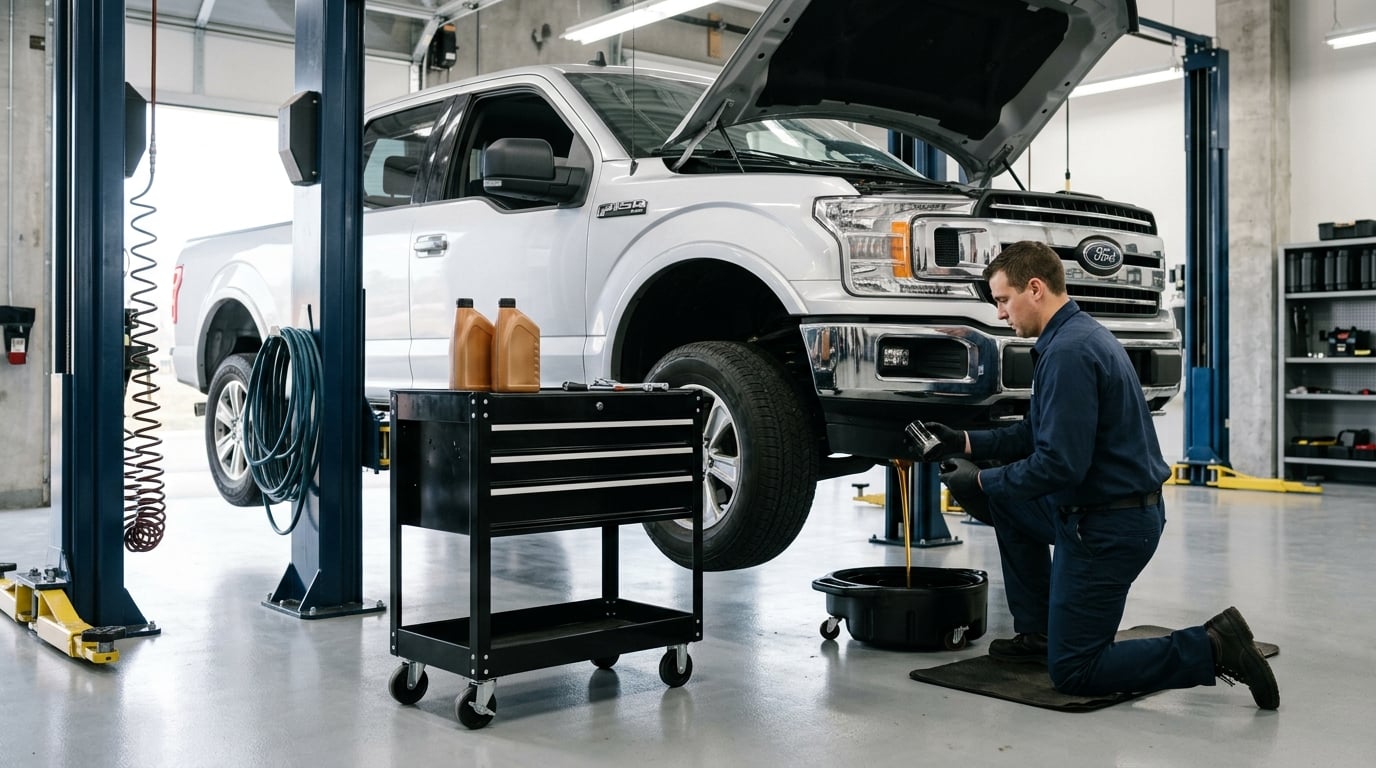
Ford recommends changing the engine oil and filter every 7,500 to 10,000 miles or whenever the instrument cluster's Intelligent Oil-Life Monitor indicates service is due. Vehicles operated under heavy towing, idling, or dusty off-road conditions require shorter service intervals between 3,000 and 5,000 miles. Always change the engine oil at least once per calendar year regardless of total mileage logged.
Modern engine designs rely on advanced synthetic and synthetic-blend oil formulas that hold up under thermal stress far better than older conventional lubricants. On newer models, built-in sensors calculate oil degradation using real-world engine temperatures, revolution counts, and drive times rather than relying on a static mileage counter. When the system alerts you that oil life is low, scheduling service within 500 miles ensures vital engine components stay lubricated and protected against premature friction wear.
If you occasionally push your vehicle beyond everyday commuting, adhering to this interval is essential for maintaining long-term reliability. Neglecting engine oil maintenance allows sludge to accumulate in oil passages, which reduces fuel efficiency and can void coverage provided by Ford's 5-year/60,000-mile powertrain warranty. Keeping up with factory recommendations ensures internal engine seals, timing chains, and turbochargers receive proper flow and cooling.
Drivers needing quick turnarounds for oil and filter updates can visit our Shelbyville showroom address or reach our service team by giving us a quick call to verify your recommended fluid specifications.
Table of Contents
- What Is Included in a Standard 10,000-Mile Ford Maintenance Visit?
- How Do Local Driving Conditions Affect Your Maintenance Schedule?
- Where Can You Schedule Authorized Ford Service in Shelbyville?
- How Do You Track Oil Life and Maintenance Using the Ford App?
- Common Questions About Ford Maintenance and Service Schedules
- Schedule Your Next Ford Service Appointment
What Is Included in a Standard 10,000-Mile Ford Maintenance Visit?
A standard 10,000-mile maintenance service includes an engine oil and filter change, tire rotation, comprehensive brake inspection, and a multi-point vehicle health assessment. Factory-trained technicians test system fluids, check drive belts, clear tire tread debris, and balance tire wear patterns across all four wheels.
During this appointment, mechanics fill the crankcase with motor oil engineered specifically for your powertrain, such as Motorcraft synthetic blend. Rotating the tires every 7,500 to 10,000 miles prevents uneven tread cup wear, extending the usable life of your tire set. The multi-point inspection evaluates high-wear components, including brake pads, rotor surfaces, suspension ball joints, steering linkages, hoses, and battery terminal connections.
Different vehicles in the lineup require distinct inspection checks during this service mark. For example, a 2026 Ford Escape equipped with a 1.5L EcoBoost engine and all-wheel drive receives drive axle and transfer case checks alongside its standard oil update. Larger utility models like the 2026 Ford Explorer with a 2.3L EcoBoost engine and SelectShift automatic transmission get specialized checks on high-capacity cooling hoses and trailer hitch wiring connections.
Commuters bringing their vehicles in for a standard 10,000-mile service often ask if tire rotations are included alongside synthetic blend oil replacement. Performing both tasks in one visit ensures equal tread wear across front and rear axles while preserving original driving dynamics. Drivers considering upgrading their current ride can also browse our new Ford inventory to explore models equipped with updated maintenance tracking software.
How Do Local Driving Conditions Affect Your Maintenance Schedule?
Middle Tennessee's summer heat and varied topography accelerate fluid breakdown, battery degradation, and tire pressure fluctuations beyond standard severe-weather baselines. Extended exposure to ambient temperatures in the 90s paired with humidity reduces average battery lifespan from 3 to 5 years down to roughly 2 years. Every 10-degree increase in outside air temperature raises tire inflation pressure by approximately 1 PSI, making routine tire pressure monitoring crucial during seasonal transitions.
High heat causes brake fluid to absorb atmospheric moisture faster, which lowers the fluid's boiling point and creates a spongy brake pedal feel over time. For drivers who regularly navigate terrain changes, such as commuters traveling past the Arnold Engineering Development Complex around Tullahoma, downhill braking and frequent speed changes put extra thermal stress on pad friction materials and rotors. Severe operating conditions that demand more frequent service checks include:
- Frequent short trips under 10 miles where the engine never reaches full operating temperature
- Regular stop-and-go driving in high summer temperatures
- Towing trailers, campers, or heavy payloads over rolling hills
- Driving extended miles on unpaved or dusty rural roads
Adhering strictly to standard intervals under these severe conditions can lead to accelerated wear on internal seals, air filters, and cooling components. Replacing cabin air filters every 20,000 miles and engine air filters every 30,000 miles keeps dusty particulates out of passenger space and air intake systems. Anyone considering a solid pre-owned vehicle tested for local driving conditions can explore pre-owned models backed by verified maintenance history logs.
Where Can You Schedule Authorized Ford Service in Shelbyville?
Newton Ford South provides authorized factory maintenance performed by factory-certified technicians using genuine Motorcraft components designed for your exact model. Scheduling routine oil updates and vehicle inspections through a certified center ensures software updates and open service bulletins are addressed simultaneously.
Factory diagnostic tools read live data streams directly from your powertrain control module, allowing technicians to spot minor sensor anomalies before they lead to unexpected dashboard warning lights. Independent repair shops often rely on generic multi-vehicle parts that may not meet factory tolerances for seal retention or flow rates. Using genuine OEM oil filters guarantees correct internal relief valve pressure, preventing dry engine starts.
Suburban commuters who travel daily along the corridor near Spring Hill depend on consistent maintenance turnarounds to keep their daily drives reliable. Factory-backed maintenance also preserves coverage under Ford's 3-year/36,000-mile bumper-to-bumper warranty, creating an uninterrupted service record that boosts vehicle resale value down the road. Owners exploring upgraded options can view our collection of certified pre-owned Ford vehicles to see how documented dealer service history maintains long-term vehicle condition.
How Do You Track Oil Life and Maintenance Using the Ford App?
The Ford App tracks real-time oil life percentages, tire pressure levels, and fuel range directly on your smartphone screen. Connected vehicle hardware continuously feeds operational metrics to the application, notifying you when remaining oil life drops below 15 percent so you can plan service appointments before oil degradation affects engine efficiency.
In addition to monitoring health metrics, the mobile platform allows you to lock, unlock, and remotely start your vehicle to prep cabin temperatures in seasonal weather extremes. The app logs completed service history, stores your vehicle identification number, and sends direct alert notifications if sensor faults emerge. You can quickly set a preferred dealer location and submit maintenance requests in seconds without entering vehicle specs manually.
Tracking health alerts through your mobile device takes the guesswork out of maintaining strict service timing. To stay ahead of upcoming maintenance benchmarks, you can easily schedule a service appointment online through our direct service portal. Drivers thinking about upgrading to a newer connected model can also value your trade-in to see how current market value applies toward a new vehicle purchase.
Common Questions About Ford Maintenance and Service Schedules
Q: How long can you drive after the oil life warning appears on the dash?
You should schedule an oil change within 500 miles after the Intelligent Oil-Life Monitor displays a low oil life message. While the system alerts you before oil loses its protective properties completely, continuing to drive thousands of miles past the zero percent mark allows engine friction to build, accelerating internal wear on turbochargers, bearings, and timing components.
Q: What is the difference between synthetic blend and full synthetic oil for my engine?
Synthetic blend oil combines conventional mineral oils with synthetic basestocks to offer improved thermal resistance and wear protection at a practical price point. Full synthetic oil contains zero conventional fluids, providing maximum resistance to high-temperature breakdown, superior cold-weather flow, and enhanced protection for high-output turbocharged EcoBoost engines operating under heavy loads.
Q: Does my vehicle warranty require me to perform service at a dealer?
Federal law allows you to perform routine maintenance at independent facilities without voiding your 3-year/36,000-mile bumper-to-bumper warranty. However, you must keep detailed receipts proving services were performed on schedule using correct fluid specifications. Servicing at an authorized center ensures all records upload automatically to Ford's central database while keeping your warranty file complete. You can learn more about our team and factory certifications online.
Q: How often should engine air filters and cabin air filters be replaced?
Engine air filters should generally be replaced every 30,000 miles, while cabin air filters require replacement every 20,000 miles. If you drive regularly on unpaved rural roads or in heavy traffic conditions, inspecting both filters every 10,000 miles ensures clean airflow to the engine intake and maintains fresh, debris-free air inside the passenger cabin.
Q: Can maintenance services be included when financing a purchase?
Prepaid maintenance plans can often be structured into your monthly vehicle payment schedule during purchase financing. Including routine maintenance coverage up front protects you against future parts price inflation and ensures your scheduled service visits are pre-funded. Customers interested in exploring payment structures can apply for financing online to review current options with our finance team.
Schedule Your Next Ford Service Appointment
Staying current with oil changes, fluid flushes, and tire rotations protects your engine investment and maintains peak driving safety across every mile. Following prescribed maintenance intervals keeps your vehicle running efficiently while preserving factory warranty protection and vehicle resale value over time.
Our service department is equipped with factory diagnostic tools, master technicians, and genuine Motorcraft parts engineered specifically for your vehicle. Whether you need a quick engine oil replacement, brake service, battery test, or routine 10,000-mile inspection, our team handles your vehicle with professional care and efficient turnarounds.
To set up your upcoming maintenance visit, locate our showroom at 2811 US, Shelbyville, TN 37160, give our service desk a quick call directly, or order OEM Ford parts for your own DIY maintenance project today.