Which F-Series Trim Is Best for Hauling Feed, Tools, and Small Equipment?
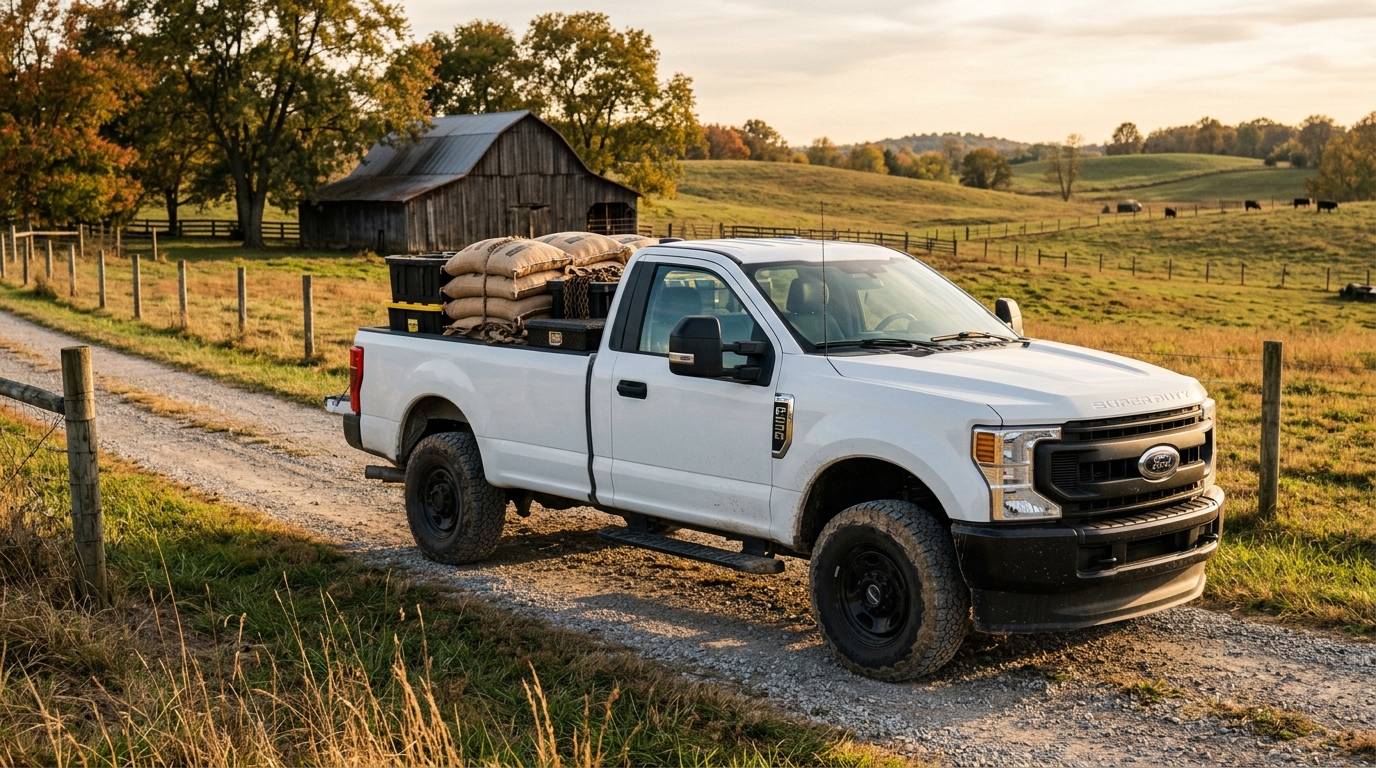
The Ford F-150 XL and F-150 XLT equipped with the 3.5L EcoBoost V6 or 3.5L PowerBoost Hybrid engine offer the best overall balance for hauling feed, tools, and light agricultural machinery. These mid-range work configurations deliver up to 2,440 pounds of maximum payload capacity and 13,500 pounds of maximum towing capability without forcing buyers to pay for high-end interior luxury features that daily farm work quickly wears down.
When selecting a truck for daily farm chores, balancing durability with functional utility is essential. Across the pastures and working farms of Bedford County, agricultural work requires heavy-duty payload capabilities, durable vinyl or cloth seating, and straightforward bed tie-down systems. The F-150 XL serves as a dependable baseline workhorse, featuring wipe-clean rubberized flooring, durable steel wheels, and black synthetic bumpers that resist scratches from fence posts, equipment loading, and livestock gates.
Stepping up to the F-150 XLT adds practical technology that improves daily efficiency around the farm. The XLT trim incorporates the SYNC 4 system with a 12-inch center touchscreen, an integrated trailer brake controller, and power-locking tailgate features that secure equipment boxes when parked in distant pastures. For operators who need to transform their cab into a field office, both trims can be outfitted with the available Interior Work Surface, creating a flat desk space over the center console for managing bill-of-lading paperwork, seed logs, or handheld tablet devices.
For farms that handle heavier cargo demands, the Super Duty F-250 XL or XLT with the 6.8L V8 or 7.3L V8 gas engine provides higher frame strength and enhanced bed volume. When growers stop by to compare trim options on our lot, they usually look at the bed access steps, tie-down cleats, and interior material durability before deciding between a half-ton or heavy-duty model. To explore our working truck lineup in person, drop by our Shelbyville showroom address or give our staff (931) 536-4424 a quick call to check current trim availability.
Table of Contents
- How Much Can a 2026 Ford F-150 Tow and Haul for Farm Work?
- When Should a Farm Buyer Step Up to a Ford Super Duty?
- What Wattage Options Are Available with Pro Power Onboard for Field Work?
- What Are the Most Common Wear Items on Agricultural Work Trucks?
- Common Questions About Ford Work Trucks, Commercial Pricing, and EV Credits
- Putting Your Agricultural Ford Truck to Work
How Much Can a 2026 Ford F-150 Tow and Haul for Farm Work?
When properly configured with the 3.5L EcoBoost V6 engine and the Max Trailer Tow Package, the 2026 Ford F-150 achieves a maximum available conventional towing capacity of 13,500 pounds and a peak payload capacity of 2,440 pounds. The available 3.5L PowerBoost Hybrid powertrain maintains a strong towing rating of 11,200 pounds while generating 430 horsepower and 570 lb-ft of torque for demanding agricultural applications.
The precise towing and payload capacity of any half-ton truck depends heavily on the engine selection, cab style, bed length, and axle ratio. The 2.7L EcoBoost V6 provides an efficient option for light feed hauling and utility trailers, offering strong city and highway mileage. However, farms that regularly transport round hay bales, dual-axle livestock trailers, or skid steers require the twin-turbocharged 3.5L EcoBoost V6 to maximize pulling performance on steep farm grades.
For livestock operations near Unionville, managing heavy grain loads and moving utility equipment along rural connectors requires sustained low-end torque. The Max Trailer Tow Package plays a crucial role in maintaining mechanical durability under these heavy loads. This package equips the truck with an upgraded rear axle ratio, an enhanced engine cooling radiator, heavy-duty rear bumper reinforcement, and an integrated trailer brake controller.
| Powertrain Configuration | Maximum Towing Capacity | Maximum Payload Capacity | Horsepower / Torque Specs |
|---|---|---|---|
| 2.7L EcoBoost V6 | 10,100 lbs | 1,785 lbs | 325 hp / 400 lb-ft |
| 5.0L Ti-VCT V8 | 13,000 lbs | 2,230 lbs | 400 hp / 410 lb-ft |
| 3.5L EcoBoost V6 | 13,500 lbs | 2,440 lbs | 400 hp / 500 lb-ft |
| 3.5L PowerBoost Hybrid | 11,200 lbs | 1,755 lbs | 430 hp / 570 lb-ft |
Farms considering pure electric options for short-distance pasture checks and daily farm route chores can explore new F-150 Lightning models, which deliver instant electric torque and low operating maintenance. You can also view our full range of new F-150 inventory online, or search our pre-owned truck selection to find working vehicles that match your budget.
When Should a Farm Buyer Step Up to a Ford Super Duty?
A farm buyer should step up to a Ford Super Duty when regular trailer weights consistently exceed 10,000 to 12,000 pounds, or when heavy gooseneck trailers, multi-horse trailers, and wide seed drills exceed half-ton payload limits. The Super Duty F-250 and F-350 lineup offers up to 40,000 pounds of gooseneck towing, 35,000 pounds of fifth-wheel towing, 30,000 pounds of conventional towing, and a maximum gas payload rating of 8,000 pounds.
While the F-150 is exceptionally capable for light hauling and daily transport, agricultural operations frequently cross the threshold where a heavy-duty chassis becomes mandatory for mechanical safety and vehicle longevity. The primary differentiator is frame rigidity and axle ratings. The Super Duty utilizes a high-strength steel fully boxed frame, solid front and rear commercial axles, larger brake rotors, and heavy-duty leaf spring suspensions designed to support heavy tongue weights without sagging.
Powertrain demands also dictate when to step up. The Super Duty lineup offers the massive 7.3L V8 gas engine delivering 430 horsepower and 485 lb-ft of torque, alongside the legendary 6.7L High Output Power Stroke V8 Turbo Diesel producing 500 horsepower and 1,200 lb-ft of torque. High-torque diesel power is essential for pulling multi-ton livestock trailers or heavy farm machinery up rolling pasture slopes without overheating the transmission or overworking the engine.
Furthermore, features like integrated bed side steps, rear corner bumper steps, and available PowerScope trailer tow mirrors with LED spotlights make hitching and loading gooseneck trailers significantly easier during late-night farm work. To compare half-ton and heavy-duty trucks side by side, review our new vehicle inventory or browse our certified pre-owned Ford inventory for reliable, thoroughly inspected alternatives.
What Wattage Options Are Available with Pro Power Onboard for Field Work?
Pro Power Onboard is available in three distinct power outputs: a 2.0-kW system for standard gas engines, a 2.4-kW system standard on the 3.5L PowerBoost Hybrid, and an optional 7.2-kW system on hybrid models. The 7.2-kW configuration converts the truck bed into a heavy-duty mobile generator supplying 120-volt and 240-volt electrical outlets directly in the field.
In farm operations, remote power availability saves hours of downtime by eliminating the need to haul heavy, noise-polluting standalone gas generators into distant pastures. The wattage level you select depends entirely on the tools and equipment required for your remote work:
- 2.0-kW System: Standard on gas models like the 5.0L V8 or 3.5L EcoBoost V6. It delivers 2,000 watts of 120-volt power, which easily handles electric drills, handheld angle grinders, battery chargers for power tools, and high-intensity LED field lights.
- 2.4-kW System: Standard on the 3.5L PowerBoost Hybrid. Providing 2,400 watts of 120-volt exportable power, it can run circular saws, portable air compressors, and small rotary tools simultaneously during fence line maintenance.
- 7.2-kW System: Optional on PowerBoost Hybrid models. Delivering 7,200 watts of exportable electricity, this system includes a 240-volt 30-amp outlet alongside multiple 120-volt outlets. It produces enough electrical output to power heavy MIG or stick welders, plasma cutters, large air compressors, or even emergency backup circuits for well pumps and farm structures during utility power outages.
The Pro Power Onboard monitoring screen inside the cabin or on the Ford App allows operators to monitor real-time wattage draw, track battery reserve levels, and prevent circuit overloads. If you need system diagnostics or electrical updates on your working truck, you can easily schedule a service appointment with our factory-trained technicians.
What Are the Most Common Wear Items on Agricultural Work Trucks?
The most common wear items on farm work trucks are all-terrain tires, heavy-duty brake pads and rotors, suspension bushings and shock absorbers, chassis fluids, and trailer hitch components. Daily exposure to unpaved barn driveways, deep mud, heavy tongue weights, and agricultural dust accelerates wear on mechanical components far faster than standard highway driving.
Navigating mud, gravel, and unpaved field conditions places extreme mechanical stress on specific vehicle systems. Understanding these accelerated wear points helps farm operators stay proactive with preventative maintenance:
- Tires and Tread Compound: Farm trucks frequently drive over sharp rocks, corn stubble, and unpaved lanes. Standard highway tires wear out quickly or suffer sidewall punctures; heavy-duty all-terrain tires with reinforced load range ratings (Load Range E) are necessary to handle heavy payload weights and gravel friction.
- Braking Systems: Towing heavy livestock trailers and feed wagons generates immense heat in brake pads and rotors. Glazing, pad thinning, and rotor warping occur rapidly if trailer brakes are improperly adjusted or if braking friction materials are not inspected regularly.
- Suspension and Steering Components: Continuous heavy bed loads compress springs and wear out shock absorbers, ball joints, tie-rod ends, and sway bar bushings. Worn shocks cause excessive body bounce and uneven tire wear when carrying full payload weight.
- Engine and Cabin Air Filters: Chaff, field dust, and soil particles quickly clog air intake filters during harvest season. A choked engine air filter reduces fuel efficiency and engine power, while dirty cabin filters restrict HVAC airflow inside the cab.
- Chassis Fluids and Differential Oil: Towing heavy loads at low speeds creates high thermal stress inside the rear differential and transmission. Severe-duty operating conditions require more frequent fluid drains and refills to protect gears and clutches from heat breakdown.
Keeping up with routine maintenance protects vehicle resale and trade-in value when it comes time to upgrade your farm fleet. You can easily value your trade-in online to see how your current vehicle's condition translates toward a new truck purchase.
Common Questions About Ford Work Trucks, Commercial Pricing, and EV Credits
Q: Does the federal EV tax credit apply to the Ford F-150 Lightning purchased today?
No, federal clean vehicle tax credit eligibility has changed, so buyers should confirm current rules with our finance team and a tax professional. Vehicles acquired after September 30, 2025 no longer qualify for federal clean vehicle tax credits. Buyers who entered into a binding written purchase contract and paid a deposit on or before September 30, 2025 may still qualify upon vehicle delivery; speak with our finance team and your tax preparer to confirm your eligibility status.
Q: Should I ask for fleet or commercial pricing when buying farm trucks?
Yes, agricultural businesses, farm owners, and commercial operators purchasing work trucks should inquire about commercial purchasing incentives and Fleet Identification Number (FIN) registration. Qualifying agricultural buyers gain access to current pricing details, upfit allowances for flatbeds and service bodies, and warranty options tailored for commercial usage.
Q: Does the hybrid PowerBoost engine reduce the F-150's towing capacity?
The 3.5L PowerBoost Hybrid maintains a very competitive maximum towing capacity of 11,200 pounds while delivering 430 horsepower and 570 lb-ft of torque. While the conventional gas 3.5L EcoBoost V6 holds the absolute maximum half-ton towing rating of 13,500 pounds, the hybrid model compensates by offering integrated Pro Power Onboard generator capabilities that benefit remote field work.
Q: What trailer packages are recommended for maximum towing capacity?
The Max Trailer Tow Package is strongly recommended for heavy farm trailering. This package adds an upgraded rear axle ratio, an integrated trailer brake controller, heavy-duty rear axle components, and enhanced engine cooling systems necessary to sustain high Gross Combined Weight Ratings (GCWR) under high summer temperatures.
Q: How do farm work conditions impact recommended truck maintenance schedules?
Agricultural trucks operating in high-dust environments, hauling heavy payloads, or idling in pastures fall under severe-duty maintenance schedules. Engine oil, air intake filters, transmission fluids, and differential lubricants require more frequent replacement intervals—typically every 5,000 miles for oil and filter checks—to prevent premature engine wear and component breakdown.
If you have additional questions regarding vehicle financing or commercial programs, you can complete our online credit application to get pre-qualified. You can also learn more about our team and history in Middle Tennessee, or contact our parts department to order genuine heavy-duty Ford accessories and filters for your truck.
Putting Your Agricultural Ford Truck to Work
Choosing the right Ford truck for farm work comes down to matching your daily payload, towing, and power generation requirements with a vehicle chassis built to handle rural workload demands. Whether you need an F-150 XLT with Pro Power Onboard for mobile repairs or a heavy-duty Super Duty F-350 Diesel for multi-ton gooseneck hauling, our dedicated sales team is here to help you configure the ideal setup.
At Newton Ford South, we treat every customer like family because we are part of this community. We understand the daily realities of local agriculture, and we are committed to providing current pricing information, current financing information, and reliable service to keep your equipment running strong.
Ready to test drive your next work truck? Come visit our Shelbyville showroom today, or call our friendly team directly at (931) 536-4424 to discuss your farm truck requirements.
© 2026 Newton Ford South. All rights reserved.