How Do Reliability and Long-Term Ownership Costs Compare Among Top Compact SUVs Like the RAV4, CR-V, and Forester?
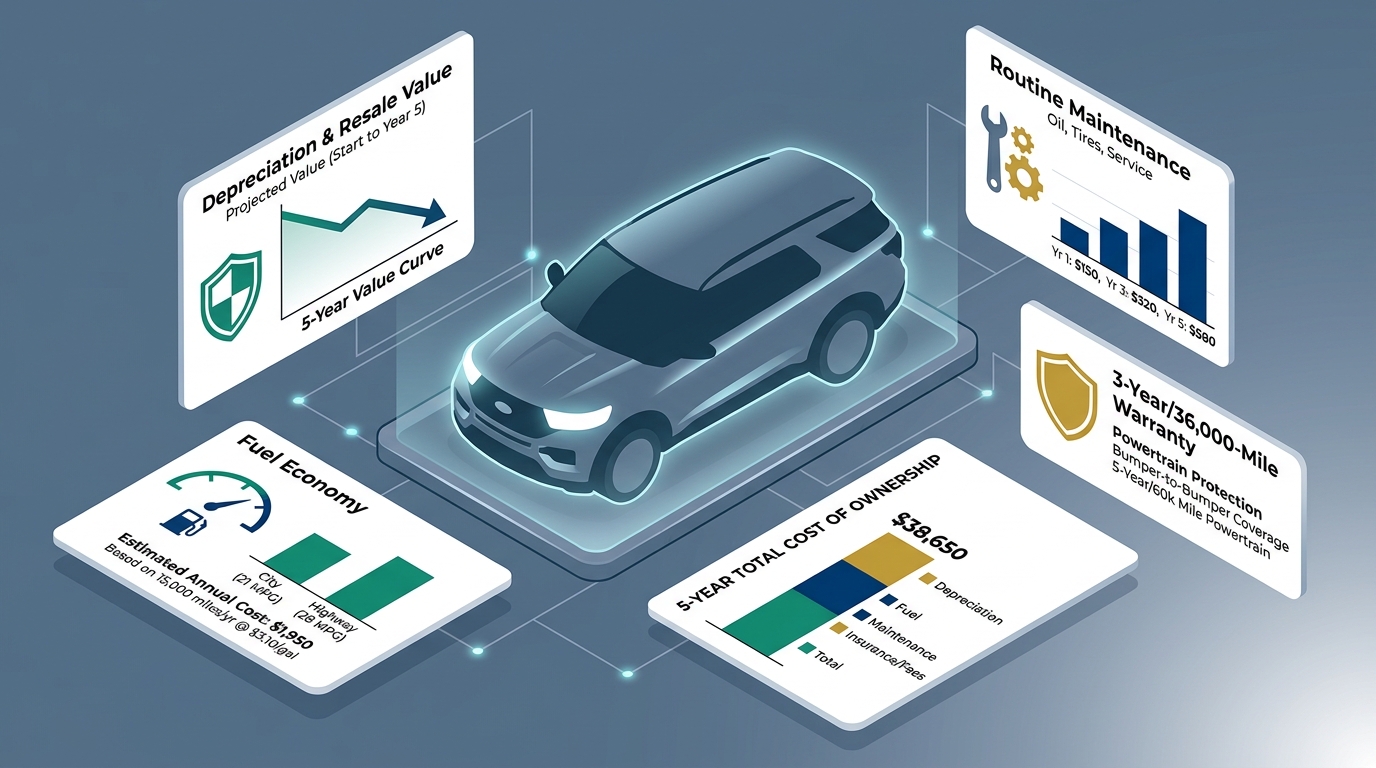
Among top-selling compact crossovers, the Toyota RAV4 and Honda CR-V are often compared for long-term reliability and hold higher resale value, while the Subaru Forester delivers competitive initial value with standard all-wheel drive but incurs higher routine maintenance costs over time. All three feature matching 3-year/36,000-mile basic warranty and 5-year/60,000-mile powertrain warranty coverage, though Toyota includes complimentary factory maintenance for two years or 25,000 miles. Fuel economy, brake wear, and long-term resale remain the primary drivers of total five-year ownership expenses.
Evaluating a vehicle’s true long-term value requires looking beyond the initial sticker price to consider scheduled maintenance, repair frequency, and depreciation. The Toyota RAV4 has built a reputation for mechanical dependability, backed by a strong hybrid system that minimizes brake wear through regenerative braking. RepairPal rates the Subaru Forester at 3.5 out of 5 stars for reliability, ranking it 22nd out of 29 compact SUVs, with an average annual repair cost of $525 compared to the segment average of $465.
While Japanese compact crossovers perform well in consumer surveys, long-term ownership costs are equally compelling across the American crossover lineup. For example, Ford models deliver robust build quality, readily available replacement parts, and lower routine servicing fees. The Ford Escape offers efficient powertrain options and advanced driver-assist technology designed for everyday dependability without premium maintenance costs.
For commuters driving between the rolling hills around Tullahoma and local job sites, evaluating annual fuel savings alongside routine maintenance costs gives a clearer picture of five-year ownership value. Comparing factory warranty coverage terms and scheduled maintenance requirements ensures you select a crossover that fits both your daily commute and your long-term budget. If you want to compare warranty terms or inspect a vehicle in person, stop by our showroom on Highway 231 or give our team a quick call to discuss current options.
Table of Contents
- How Much More Do Hybrid Versions of Popular Crossovers Cost Than Gas-Only Models?
- What Are the Key Specs, Cargo Capacities, and Hybrid Ratings to Compare in Compact SUVs?
- How Does Towing Capacity Compare Between Half-Ton Trucks Like the Ford F-150 and Chevrolet Silverado 1500?
- What Questions Should You Ask to Ensure an Honest Head-to-Head Comparison?
- How Should You Structure a Back-to-Back Test Drive Near Shelbyville, TN?
- Frequently Asked Questions About Comparing Vehicles Head to Head
- Find Your Next Vehicle with Confidence at Newton Ford South
How Much More Do Hybrid Versions of Popular Crossovers Cost Than Gas-Only Models?
Hybrid versions of compact crossovers like the Toyota RAV4 and Honda CR-V generally cost between $1,500 and $3,000 more upfront than their gas-only trim counterparts, a price difference that buyers typically recoup within three to five years through fuel savings. The base Toyota RAV4 Hybrid LE carries a starting MSRP of $34,300 with standard all-wheel drive, representing a modest premium over a comparable non-hybrid trim. Honda follows a similar structure, placing its hybrid powertrain on upper-level CR-V trims in the low-to-mid-$30,000 range.
The primary financial return on a hybrid crossover comes from superior fuel efficiency, particularly during stop-and-go city driving. A gas-only RAV4 achieves an EPA rating around 28 mpg combined, whereas the RAV4 Hybrid reaches an EPA-estimated 38 mpg combined and up to 41 mpg city. Similarly, the Honda CR-V Hybrid delivers up to 43 mpg city in front-wheel drive, outperforming the gas-only model’s 30 mpg combined rating. For drivers covering 12,000 to 15,000 miles annually, these efficiency gains save hundreds of dollars at the pump each year.
Beyond fuel savings, hybrid crossovers often provide superior driving dynamics. Electric assist motors supply immediate low-end torque, making highway merging and urban acceleration smoother and more responsive than naturally aspirated four-cylinder gas engines. Regenerative braking systems also reduce wear on traditional brake pads and rotors, helping extend maintenance intervals.
Shoppers evaluating crossover efficiency can explore our current new-vehicle inventory to compare hybrid and EcoBoost® gas engines side by side. For drivers seeking maximum initial savings, reviewing our pre-owned vehicle selections provides access to well-maintained hybrid and efficient gas models at attractive price points. Our parts and accessories department can also help customize your crossover with all-weather floor liners and cargo organizers to protect your investment.
What Are the Key Specs, Cargo Capacities, and Hybrid Ratings to Compare in Compact SUVs?
When evaluating compact crossovers head to head, cargo volume behind the second row ranges from about 30 cubic feet in the Subaru Forester up to about 39 cubic feet in the Honda CR-V, while hybrid fuel economy peaks at an EPA-estimated 43 mpg city in front-wheel-drive configurations. Comparing utility specs side by side reveals significant differences in cabin usable space, passenger legroom, and towing flexibility across the segment.
The Honda CR-V leads on rear cargo dimensions, offering about 39 cubic feet behind the second row in gas models and about 36 cubic feet in hybrid variants. The Toyota RAV4 provides 37.5 to about 38 cubic feet of cargo room, keeping its battery pack situated beneath the rear seats so luggage capacity remains identical between gas and hybrid models. The Subaru Forester lists between 26.9 and about 30 cubic feet behind the rear seats, though its wide rear gate opening and boxy roofline make loading bulky equipment straightforward.
- Honda CR-V: Features a 190-hp turbocharged engine or a 204-hp hybrid system, paired with up to about 39 cubic feet of rear cargo space.
- Toyota RAV4: Powered by a 203-hp gas engine or a 219-hp hybrid system with standard electronic all-wheel drive and about 38 cubic feet of cargo room.
- Subaru Forester: Uses a 180-hp 2.5L engine or a 194-hp hybrid powertrain, featuring standard all-wheel drive and 8.7 to 9.3 inches of ground clearance.
- Ford Explorer: Offers a larger three-row crossover alternative with a 2.3L EcoBoost® engine, SelectShift® 10-speed automatic transmission, about 16 cubic feet of cargo room behind row three, and up to 5,000 pounds of towing capacity when equipped with the standard Class III Trailer Tow Package.
Powertrain performance also varies depending on your towing and highway needs. While most compact hybrid crossovers limit towing to 1,750 or 2,000 pounds, stepping up to a midsize utility vehicle like the Ford Explorer unlocks serious hauling capability for boat trailers and campers. If you prefer high-value pre-owned crossovers backed by factory standards, check out our certified pre-owned inventory options to find vehicles that have passed rigorous multi-point inspections.
How Does Towing Capacity Compare Between Half-Ton Trucks Like the Ford F-150 and Chevrolet Silverado 1500?
The Ford F-150 delivers a maximum towing capacity of up to 13,500 pounds when properly equipped with the 3.5L EcoBoost V6, edging out the Chevrolet Silverado 1500 max tow rating of 13,300 pounds. Choosing the right full-size truck requires analyzing engine options, frame strength, payload limits, and integrated towing technology to ensure safe hauling on the job.
Ford provides a diverse range of powerful engine choices designed for heavy work and recreational towing. The available 3.5L PowerBoost Hybrid V6 in a 4x4 configuration delivers a strong combination of efficiency and muscle, offering up to 11,600 pounds of maximum towing capacity and a 1,740-pound maximum payload limit. It also features available Pro Power Onboard, turning the truck bed into a mobile generator to power tools and equipment at remote work sites.
Chevrolet’s Silverado 1500 reaches its 13,300-pound peak tow rating using its 6.2L V8 or Duramax 3.0L turbo-diesel engine. However, the F-150 maintains an advantage in smart towing technology. Features like Smart Hitch measure tongue weight directly in the truck bed, while Pro Trailer Backup Assist lets drivers steer a trailer effortlessly using a simple control knob on the dash.
Shoppers interested in advanced electric capability can check out new F-150 Lightning models for instant electric torque and modern cab features. To browse traditional gas and hybrid powertrains, view our new F-150 truck inventory to compare cab styles and bed lengths. If you already own a truck and need towing setup assistance or routine maintenance, you can easily schedule a service appointment with our factory-trained technicians.
What Questions Should You Ask to Ensure an Honest Head-to-Head Comparison?
To ensure a fair head-to-head comparison between competing models, ask the salesperson for an itemized out-the-door price breakdown, verification of equipment parity between trim levels, explicit warranty coverage details, and a clear list of any dealer-installed accessories. Asking targeted questions eliminates unexpected fees and helps you evaluate vehicles on equal footing.
When buyers evaluate two competing vehicles on our sales lot, our team usually recommends comparing the exact window stickers side by side first to confirm that feature packages match before discussing trade-in values or current payment information.
- What is the complete out-the-door price? Request a full itemization including taxes, registration fees, and document charges to avoid surprises later.
- Are feature packages equivalent between trims? Verify that both vehicles include comparable safety suites, seating materials, infotainment touchscreens, and driver aids.
- What factory warranty and maintenance coverage is included? Ask about bumper-to-bumper limits, powertrain coverage duration, roadside assistance terms, and whether scheduled oil changes are complimentary.
- Are there any dealer-installed options or market adjustments? Confirm whether accessories like mudguards, window tint, or wheel locks are included in the quoted selling price or added as separate line items.
- How will my trade-in be evaluated? Ensure you receive an objective appraisal based on live market data for your current vehicle's exact year, mileage, and condition.
Getting clear answers upfront empowers you to calculate accurate ownership costs. You can begin the trade appraisal process from home by choosing to value your trade-in online to receive a transparent estimate before setting foot in the showroom.
How Should You Structure a Back-to-Back Test Drive Near Shelbyville, TN?
The most effective back-to-back test drive structure involves driving your top vehicle choices on the same day over an identical test route that combines stop-and-go town traffic, rougher pavement, and highway acceleration. Testing vehicles back to back highlights differences in steering effort, cabin noise, seat support, and visibility that might go unnoticed days apart.
Driving across the valley roads and open farmland around Shelbyville provides an ideal test loop to evaluate how comfortably a suspension absorbs uneven pavement and how quietly the cabin isolates road noise at highway speeds.
Start your test drive in the parking lot by adjusting the driver seat, steering wheel, and mirrors to your preferred position. Check whether touchscreen controls and physical climate dials are easy to reach without taking your eyes off the road. Next, test second-row legroom and headroom, and practice folding the rear seats to evaluate cargo loading height.
On the road, pay attention to throttle response during highway merging and test brake pedal feedback during gradual stops. Listen for wind noise around side mirrors and tire hum over coarse pavement. To streamline your shopping day, you can apply for competitive financing online prior to your visit, leaving you free to focus entirely on evaluating vehicle comfort and performance.
Frequently Asked Questions About Comparing Vehicles Head to Head
Q: Does a hybrid powertrain require special home charging equipment or electrical upgrades?
Standard hybrid vehicles, such as the Toyota RAV4 Hybrid or Ford F-150 PowerBoost, do not require plug-in charging or home electrical modifications. Their onboard battery packs recharge automatically through regenerative braking and gas engine operation while driving. Only plug-in hybrid (PHEV) or battery electric vehicles (BEV) require external charging cords or 240-volt home wall outlets for electric driving range.
Q: How long does a formal trade-in appraisal and credit application take at the dealership?
Arriving with your current pay stubs, proof of residence, vehicle title or payoff quote, and auto insurance details streamlines the entire process. An online financing prequalification takes only a few minutes, while a physical trade-in appraisal and vehicle walk-around typically require 20 to 30 minutes to complete.
Q: What documentation should I bring for a back-to-back test drive and vehicle consultation?
You should bring a valid driver's license, your current vehicle insurance card, and any child safety seats or bulky cargo items you transport daily. Testing child seat fitment in the second row during your visit confirms anchor accessibility and legroom clearance before finalizing your purchase decision.
Q: How does warranty coverage for hybrid battery components compare to standard powertrain warranties?
Standard powertrain warranties cover internal engine and transmission components for 5 years or 60,000 miles. Factory hybrid battery components receive extended warranty protection, with major manufacturers providing an 8-year/100,000-mile hybrid warranty or 10-year/150,000-mile hybrid warranty depending on state emissions regulations and model year guidelines.
Q: Is roadside assistance included with new vehicle purchases or factory warranties?
New Ford models include factory roadside assistance covering flat tire changes, lockout service, fuel delivery, and towing for 5 years or 60,000 miles. If you encounter an emergency on the road, you can request prompt manufacturer-backed help by calling Ford Roadside Assistance: 1-800-241-3673 anytime assistance is needed.
To ask additional questions or speak with our sales staff directly, feel free to (931) 536-4424 or visit our dealership address. You can also learn more about our team and our commitment to serving Middle Tennessee drivers with honest, community-focused service.
Find Your Next Vehicle with Confidence at Newton Ford South
Mastering a head-to-head automotive comparison comes down to clear facts, objective testing, and straightforward pricing. By evaluating five-year ownership costs, comparing real-world cargo dimensions, testing towing specs, and conducting structured back-to-back test drives, you can select the perfect crossover or truck with complete confidence.
At Newton Ford South, our team treats every customer like family. We provide transparent pricing, straightforward trade appraisals, and a straightforward buying experience where you can explore our full lineup at your own pace. Whether you need a fuel-efficient crossover for your daily commute or a durable Ford trucks truck ready for tough workdays and weekend family adventures, we are here to help you every step of the way. Contact our sales department today to schedule your back-to-back test drive and experience the honest, dependable service our local community trusts.
© 2026 Newton Ford South. All rights reserved.