How Often Should Diesel Engine Oil and Filters Be Changed?
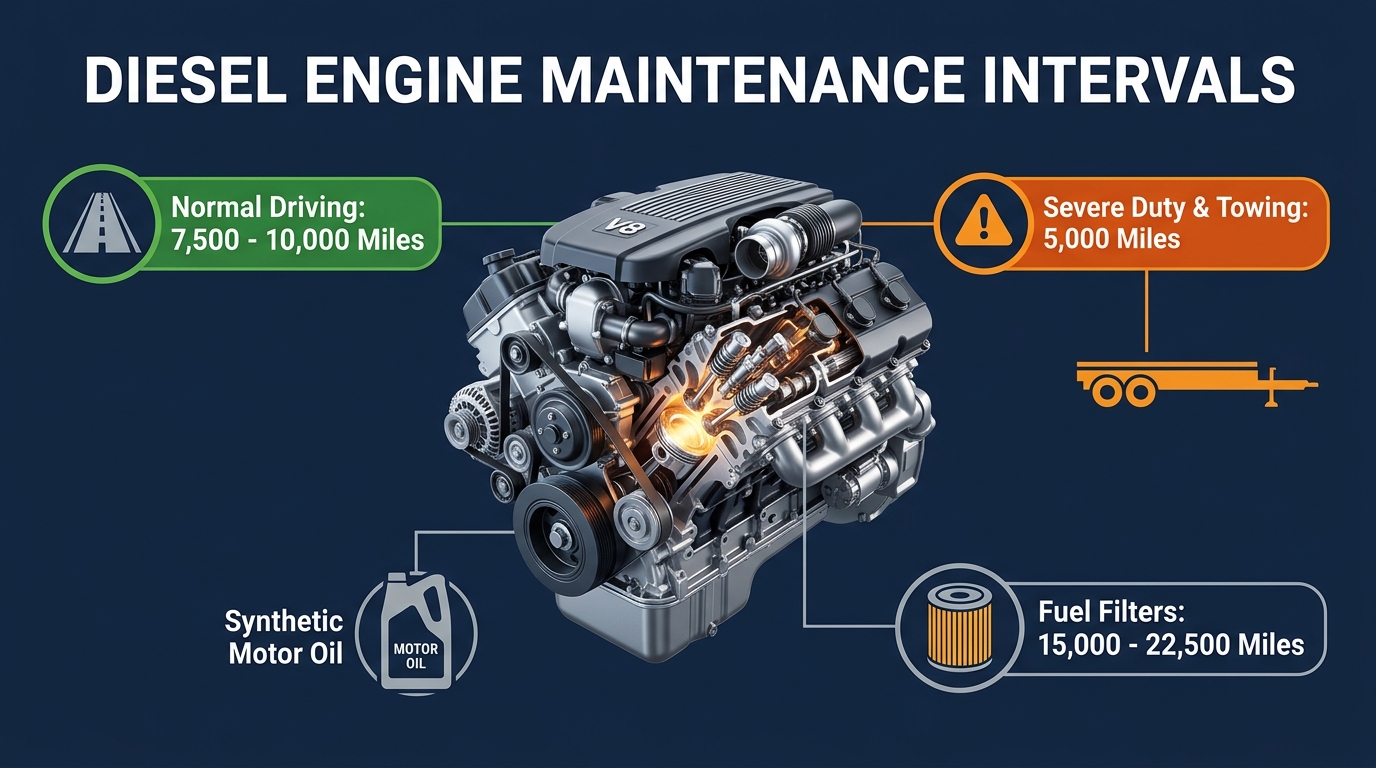
Diesel engine oil and filters should be changed every 7,500 to 10,000 miles under normal driving conditions, or down to 5,000 miles for trucks frequently pulling heavy loads or idling for extended periods. Most modern diesel engines require fresh oil and filters at least once every 12 months or 350 engine hours, alongside dual fuel filter replacements every 15,000 to 22,500 miles.
Maintaining a strict oil change schedule is the most vital step in preserving diesel engine longevity. Modern Ford diesel platforms, such as the 6.7L Power Stroke V8 Turbo Diesel available in the 2026 Ford Super Duty F-250, rely on an Intelligent Oil-Life Monitor to track engine revolutions, operating temperatures, and workload. Under light-duty highway driving, this system allows service intervals to stretch up to 10,000 miles. However, when working hard on farm acreage around Shelbyville or hauling horse trailers, operating under severe-duty conditions triggers service notifications closer to 5,000 miles.
Using the exact manufacturer-specified oil weight and specification is equally important. Ford specifies heavy-duty diesel motor oil meeting the WSS-M2C171-F1 specification. For normal operating conditions, 10W-30 weight engine oil is recommended, whereas 5W-40 full synthetic oil is required for severe-duty operation, heavy towing, or extreme temperature variations. Failing to use approved oil specifications can lead to accelerated wear on high-pressure oil pumps and turbocharger bearings.
Primary frame-mounted fuel and water separators along with secondary engine-mounted fuel filters must be changed every second oil change, roughly every 15,000 to 22,500 miles. Draining water from the fuel separator monthly prevents moisture from reaching sensitive injectors. Our team is available to help keep your maintenance on track at our Shelbyville showroom or by giving us (931) 536-4424 a quick call.
Table of Contents
- Which Diesel Maintenance Tasks Are Suitable for DIY Owners?
- What Is DPF Regeneration and How Often Does It Occur?
- Why Diesel Engines Excel at Heavy Towing and When Remanufacturing Is Best
- Light-Duty vs Commercial Heavy-Duty Diesel Service and Diagnostics
- Are ASE Certifications Specifically Tailored for Diesel Technicians?
- Common Questions About Professional Diesel Maintenance and Repair
Which Diesel Maintenance Tasks Are Suitable for DIY Owners?
DIY diesel owners can safely handle routine fluid level checks, engine air filter replacements, diesel exhaust fluid top-offs, and basic battery terminal maintenance. Complex maintenance involving high-pressure common rail fuel systems, electronic diagnostics, or emissions aftertreatment requires specialized equipment and should be left to certified technicians.
Checking engine oil levels, monitoring coolant strength, and inspecting serpentine belts are simple, effective tasks every truck owner can perform in their driveway. Replacing engine air filters and cabin filters requires basic hand tools and protects internal components from abrasive dust. Topping off diesel exhaust fluid is straightforward, provided owners use fresh, API-certified fluid and avoid spilling it on body paint or electrical connectors.
Task suitability changes when working on fuel filters or engine sensors. Modern high-pressure fuel systems operate at pressures exceeding 30,000 PSI. Replacing fuel filters without following precise priming and bleeding procedures can trap air inside fuel lines, potentially damaging expensive high-pressure fuel pumps. Draining the primary fuel-water separator is a manageable DIY job, but replacing internal filter elements requires care to avoid introducing contaminants into the fuel supply.
For components beyond basic home maintenance, ordering original equipment manufacturer parts through our genuine Ford parts department ensures exact fitment and factory durability. If routine maintenance reveals that your current truck is nearing the end of its work life, browsing our new Ford inventory can help you find a reliable replacement built for heavy workloads.
What Is DPF Regeneration and How Often Does It Occur?
Diesel particulate filter regeneration is an automated process that burns off trapped soot from exhaust gases at internal temperatures reaching roughly 1,100 degrees Fahrenheit. It occurs automatically every 100 to 300 miles depending on driving habits, vehicle load, and engine operating temperature.
The diesel particulate filter captures harmful soot particles before exhaust exits the tailpipe. Over time, accumulated soot restricts exhaust flow and creates backpressure. To clear this buildup, the engine control module initiates regeneration. Passive regeneration happens naturally when driving at highway speeds with heavy loads, as exhaust temperatures rise high enough to burn off soot without intervention.
Active regeneration occurs when passive burn-off is insufficient, such as during frequent stop-and-go driving or short commutes. The engine control computer injects small amounts of extra fuel into the exhaust stroke to manually raise filter temperatures. Drivers may notice a slight change in engine tone, elevated idling speeds, and a warm metallic smell while active regeneration takes place. Interrupting active regeneration cycles repeatedly by shutting off the engine prematurely can cause soot accumulation, eventually triggering check engine lights and reduced engine power modes.
Ensuring your truck completes regular highway drives allows active regeneration cycles to finish cleanly, preventing costly manual regeneration service in a shop setting. If you are cross-shopping used commercial trucks, inspecting service history records in our pre-owned diesel inventory provides peace of mind that prior owners maintained the exhaust aftertreatment system properly.
Why Diesel Engines Excel at Heavy Towing and When Remanufacturing Is Best
Diesel engines outlast gasoline engines under heavy towing conditions because they feature heavy-duty iron block castings, forged internal components, and lower operating RPMs that reduce mechanical wear. When catastrophic internal failure occurs, replacing the assembly with a factory-remanufactured diesel engine is often significantly cheaper and faster than a full custom rebuild.
The structural design of a diesel engine is engineered for immense torque and thermal stress. For instance, the 6.7L High Output Power Stroke V8 Turbo Diesel produces 1,200 lb-ft of torque, delivering massive pulling power at low engine speeds. Because diesel engines operate at lower RPMs than gasoline engines to produce peak torque, internal components endure fewer mechanical cycles per mile. Heavy-walled engine blocks, forged steel crankshafts, and heavy-duty connecting rods allow well-maintained diesel engines to routinely operate for 300,000 to 500,000 miles.
Long-term durability depends heavily on cooling system maintenance. Checking yellow OAT coolant strength every 15,000 miles and completing a full coolant flush around 100,000 miles prevents internal cylinder liner pitting and oil cooler clogging. For drivers regularly towing heavy equipment up the rolling hills around Tullahoma, maintaining clean engine coolant and changing automatic transmission fluid at 60,000 miles preserves drivetrain life.
When high-mileage engines experience severe failure, installing a factory-remanufactured engine block is usually the most cost-effective solution. Remanufactured engines are completely disassembled, machined to original factory tolerances, fitted with new internal components, and backed by manufacturer warranty coverage. This process eliminates weeks of custom machine shop labor while delivering brand-new reliability. You can learn more about why Newton Ford South stands behind every repair or explore our factory-supported certified pre-owned trucks to compare long-term ownership options.
Light-Duty vs Commercial Heavy-Duty Diesel Service and Diagnostics
Light-duty diesel service focuses on compact emissions systems and passenger-truck fluid capacities, while commercial heavy-duty diesel maintenance handles larger fluid volumes, high-capacity cooling circuits, and heavy-duty drivetrain components. Diagnostics on heavy-duty units rely on specialized protocols and software rather than standard OBD-II systems.
Servicing a light-duty diesel truck, like a 3.0L Power Stroke or a 2026 Ford Transit Cargo Van, involves fluid capacities similar to passenger vehicles, typically holding 7 to 13 quarts of engine oil. Heavy-duty platforms like the 2026 Ford Super Duty F-250 require up to 15 quarts of oil, high-capacity transmission fluid circuits, and secondary cooling systems designed for severe payload stress.
Diagnostic procedures also differ significantly between light and heavy-duty applications. Light-duty vehicles communicate via standard OBD-II ports, using automotive diagnostic scanners to read fault codes and sensor data. Commercial heavy-duty engines require specialized diagnostic software platforms to communicate across J1939 data protocols. These tools allow technicians to perform forced DPF regenerations, run individual injector cutout tests, and recalibrate electronic variable-geometry turbochargers.
When commercial fleet managers walk through our service bays, they usually ask about diagnostic turnaround times before discussing maintenance pricing. Quick diagnostic routines ensure minimal operational downtime for fleet operators. If you are balancing fleet maintenance expenses against vehicle replacement, evaluating your trade-in value can show whether upgrading to a newer platform makes financial sense for your business.
Are ASE Certifications Specifically Tailored for Diesel Technicians?
Yes, the National Institute for Automotive Service Excellence offers specialized certification tracks specifically engineered for diesel technicians. These include the A9 Light Vehicle Diesel Engines test and the T2 through T8 certification series for medium and heavy-duty truck engines, electrical systems, and drive trains.
ASE certifications validate a technician's technical competence through rigorous testing and required hands-on industry experience. The A9 Light Vehicle Diesel Engines certification focuses on light-truck diesel engine diagnosis, fuel injection systems, and electronic emissions controls. For larger commercial trucks, the T2 Diesel Engines certification covers heavy-duty engine block repair, cylinder head servicing, and turbocharger diagnostics.
Choosing a service facility with certified diesel technicians ensures your truck is serviced according to precise manufacturer specifications. Certified technicians possess the expertise to diagnose complex high-pressure fuel leaks, trace electrical harness issues, and service DEF dosing systems accurately the first time. This expertise reduces diagnostic errors, prevents premature component failure, and protects your vehicle warranty. If you are planning a major repair or purchasing a replacement engine, applying for financing online provides flexible options to manage service expenses easily.
Common Questions About Professional Diesel Maintenance and Repair
How often does diesel exhaust fluid need to be refilled?
Q: How often does diesel exhaust fluid need to be refilled?
Diesel exhaust fluid typically needs to be refilled every 5,000 to 10,000 miles, usually coinciding with scheduled oil change intervals. Fluid consumption varies based on fuel economy and engine workload, meaning trucks frequently pulling heavy trailers will consume fluid faster than light-duty highway commuters. Most truck driver displays provide fluid level indicators and early warning alerts hundreds of miles before the tank empties.
What causes black exhaust smoke in a diesel engine?
Q: What causes black exhaust smoke in a diesel engine?
Black exhaust smoke indicates incomplete fuel combustion caused by an excessively rich fuel mixture. Common causes include restricted engine air filters, failing fuel injectors delivering too much fuel, a sticking exhaust gas recirculation valve, or leaks in turbocharger boost hoses. Promptly diagnosing black smoke prevents unburned fuel from clogging the diesel particulate filter.
How often should the fuel-water separator be drained?
Q: How often should the fuel-water separator be drained?
The primary frame-mounted fuel-water separator should be drained monthly or whenever the water-in-fuel light illuminates on the instrument cluster. Draining collected moisture takes only a few minutes and prevents trapped water from entering high-pressure fuel lines, where it can cause severe rust and catastrophic fuel injector failure.
What is the benefit of a full coolant flush on a diesel truck?
Q: What is the benefit of a full coolant flush on a diesel truck?
A full coolant flush removes scale deposits, degraded corrosion inhibitors, and accumulated debris from the cooling system. Performing a yellow OAT coolant flush around 100,000 miles preserves cylinder liner walls against cavitation corrosion, protects water pump seals, and keeps EGR coolers and oil coolers operating efficiently under heavy thermal loads.
How does cold weather affect diesel engine starting and fuel flow?
Q: How does cold weather affect diesel engine starting and fuel flow?
Cold weather causes untreated paraffin wax in diesel fuel to gel, plugging fuel filters and starving the engine of fuel. Utilizing winter-blend fuels, anti-gel additives, functioning glow plugs, and block heaters ensures smooth engine cranking and reliable fuel flow during low-temperature morning starts.
Keeping your diesel engine in peak operating condition requires proper oil change intervals, regular fuel filter maintenance, and expert service when diagnostics arise. Whether you need routine maintenance or complete engine repairs, our team delivers dependable care you can trust. Visit us at 2811 US, Shelbyville, TN 37160, call our service team at (931) 536-4424, or take the next step by scheduling a service appointment online today.
© 2026 Newton Ford South. All rights reserved.